
Curious how TeamOhana can help you? Talk to us.
In this article
Never miss new content
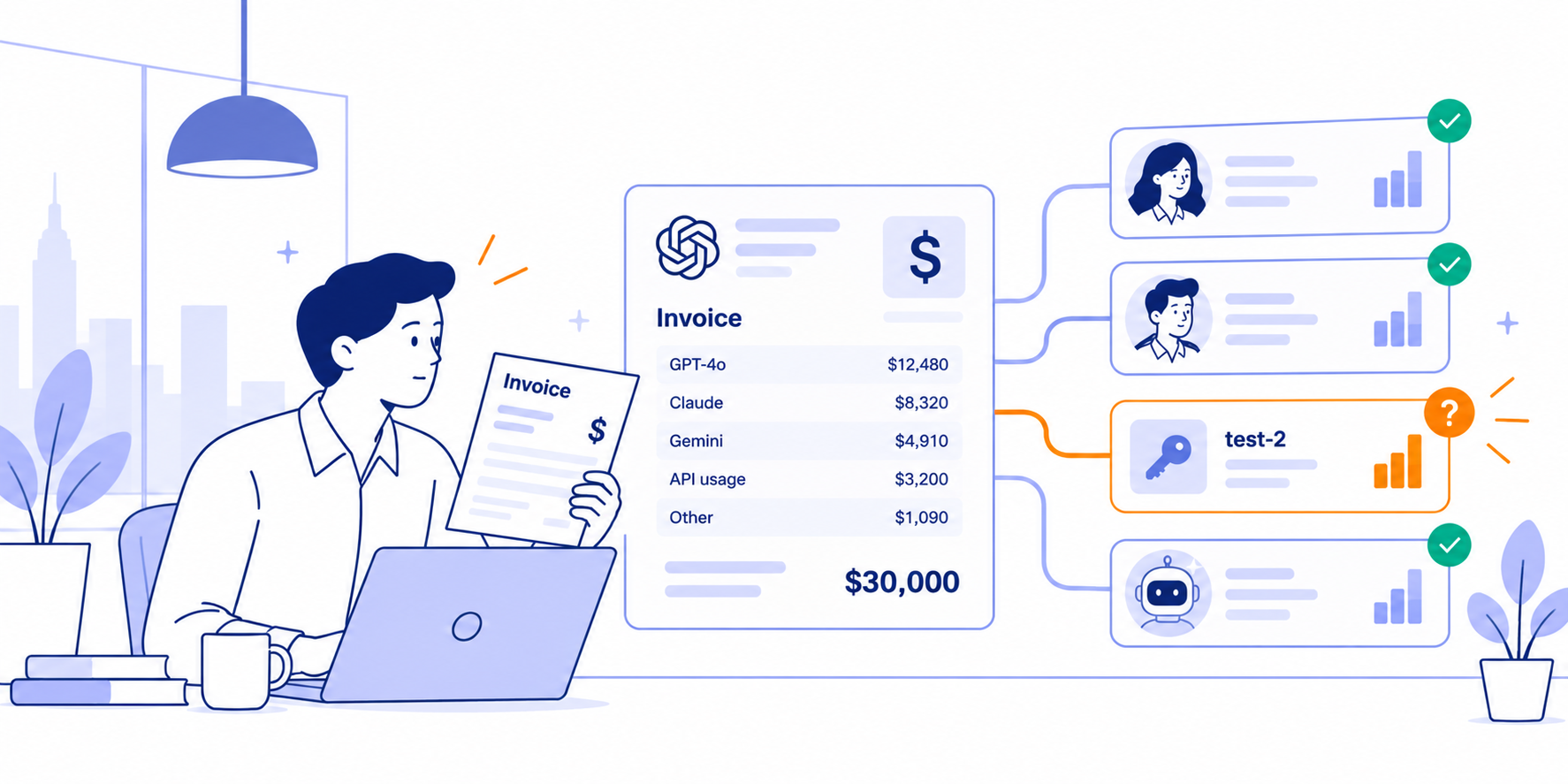
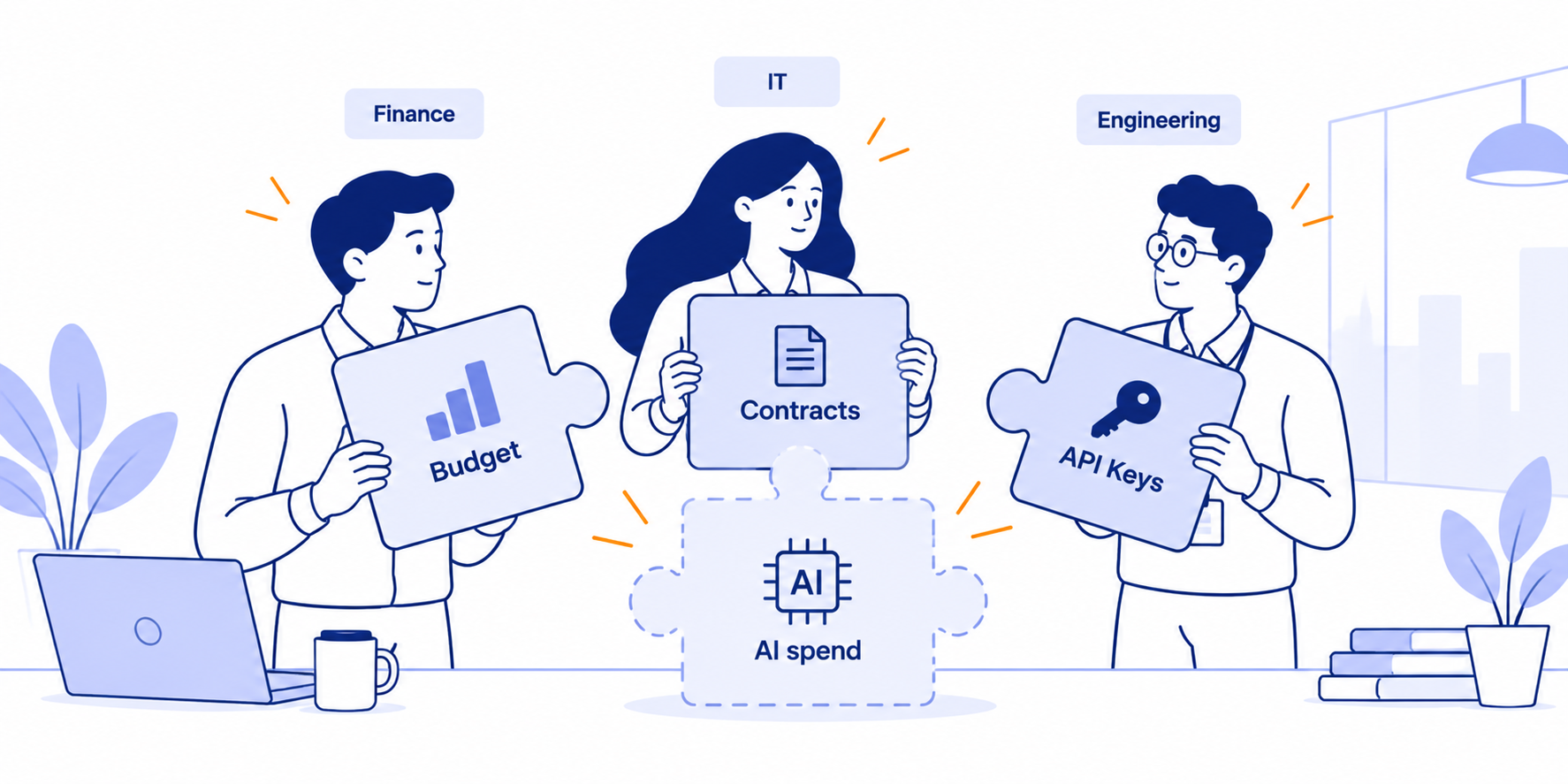
AI spend has three owners at most companies, and none of them has the whole picture. Engineering holds the API keys and the usage data. IT holds the contracts and the security review. Finance holds the budget and answers to the board for the number.
The result is a negotiation over billing keys and dashboards. A People and Talent leader at a health tech company summed it up:
"It's just arguing with engineering about where that data lives."
This article covers why AI spend ownership splits this way, what each team needs to see, and how to set it up so Finance gets one number without taking the keys away from the people who use them.
Key takeaways
- AI spend usually splits three ways: engineering holds the usage data, IT holds the contracts and Finance holds the budget.
- Moving attribution from one team to another does not fix it. A leader at a blockchain company called that "shifting the bottleneck."
- Each team needs a different view. IT often needs spend by employee and tool without seeing salaries. Finance needs spend tied to roles and comp.
- An in-house build works when it can answer Finance's planning questions, not only engineering's usage questions.
- The workable model is one ledger with role-based views: Finance owns the number, source owners own the keys, and budget owners own their team's spend.
Why does nobody own AI spend?
AI spend arrived through engineering, so the data lives there. The first API keys were created by engineers, billed to an engineering card, and tracked in engineering tools. By the time the bill was large enough for Finance to notice, the data, the keys and the habits were already set.
Across conversations with more than 20 companies between August and October 2026, the same split came up repeatedly:
- At a networking software company, every AI request runs through a cloud gateway that IT controls. The planning lead told us he would only forward the data.
- At a legal technology company, AI spend sat between IT and a newly hired director of AI operations.
- At a healthcare AI company, the People team was leading the AI spend conversation while the CFO still saw AI as a vendor expense: "it's an expense, it's a tool, it's a vendor."
- At a payments company, Finance asked engineering for admin or billing keys. Engineering chose to build its own view instead.
Why doesn't moving the problem to another team fix it?
Handing attribution to one team without changing the data only moves the queue. A recruiting and talent leader at a blockchain company described his company's setup, where SecOps and Finance shared attribution:
"All we're doing is just shifting the bottleneck from one place to another."
The people who hold the data are not the people who need the answer. Engineering can tell you tokens by key. Finance needs dollars by person, team and role. Unless one system holds both, every monthly question becomes a request to another team.
What does each team need to see?
Finance
Total AI spend by person and team, tied to role and comp, so it can be compared to payroll and carried into the plan. Finance owns the number that goes to the board.
IT and security
Spend by employee and tool, plus the contract and seat data. Often without salary data. A leader at an energy company asked for exactly that split: IT should see AI spend by employee and tool, and someone on his own team should forecast AI spend by department, with neither seeing payroll data.
Engineering
Keys, models and usage, so it can choose models and fix runaway jobs. Engineering keeps admin access to the providers.
Budget owners
Their own team's spend against its baseline and budget, so the person who approves the work also sees what it costs.
Should engineering build AI spend tracking in-house?
Sometimes. If your AI spend is tied to customers and contracts, internal tooling built for that purpose can be the right answer. A planning lead at a data company told us their AI use is tracked against customer contracts, and per-person attribution was not a fit for them.
For most companies, the test is whether the in-house view answers Finance's questions. The head of finance at the payments company set that bar himself:
"If they can answer the questions that finance needs, then I'll propose moving on."
Use these questions as the test:
- What did each team spend on AI last month, across every tool, with no double counting?
- Who owns each API key, and what is it for?
- What is AI spend as a percentage of payroll for each team?
- If we hire ten engineers next year, what AI spend comes with them?
If the in-house build answers all four, keep it. If it answers only the first two, Finance still has a planning gap.
How to set up AI spend ownership
- Name Finance as the owner of the AI spend number and the AI line in the plan.
- Name an owner for each source: the admin of each provider account, seat contract and cloud account.
- Give each department head ownership of their team's spend against its baseline.
- Put every source into one ledger, attributed to people and teams.
- Set views by role, so IT and engineering see spend and usage without salary data, and Finance sees both.
- Review outliers and owners monthly, in the same meeting as headcount.
How TeamOhana helps
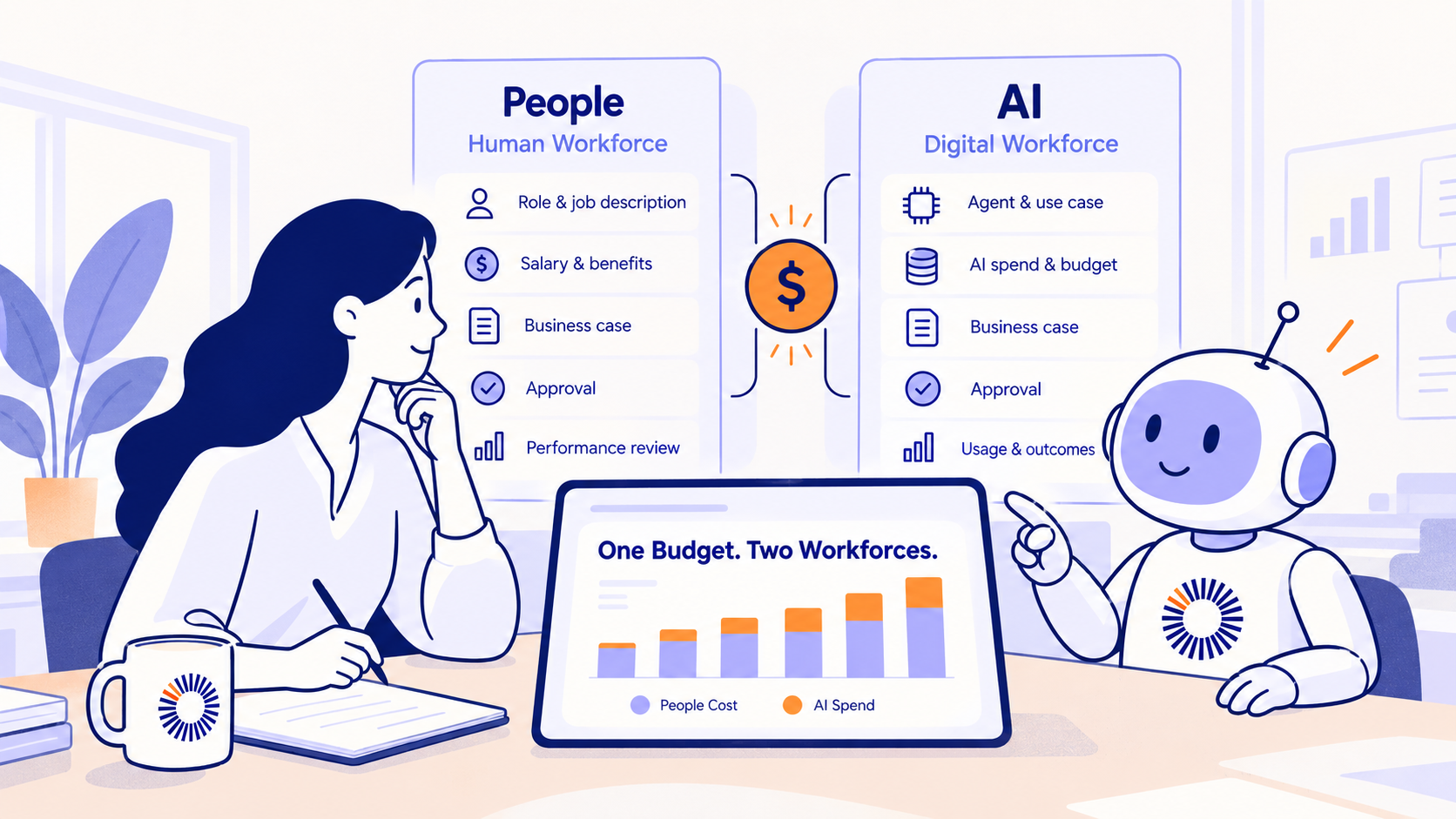
TeamOhana is workforce management for human and digital workers. It puts token data and the employee record in one ledger, so Finance, IT and budget owners work from the same number. Every key and digital co-worker has an owner. Access is set by role, so a team can see AI spend without seeing comp. Give Finance and IT the same AI spend number.
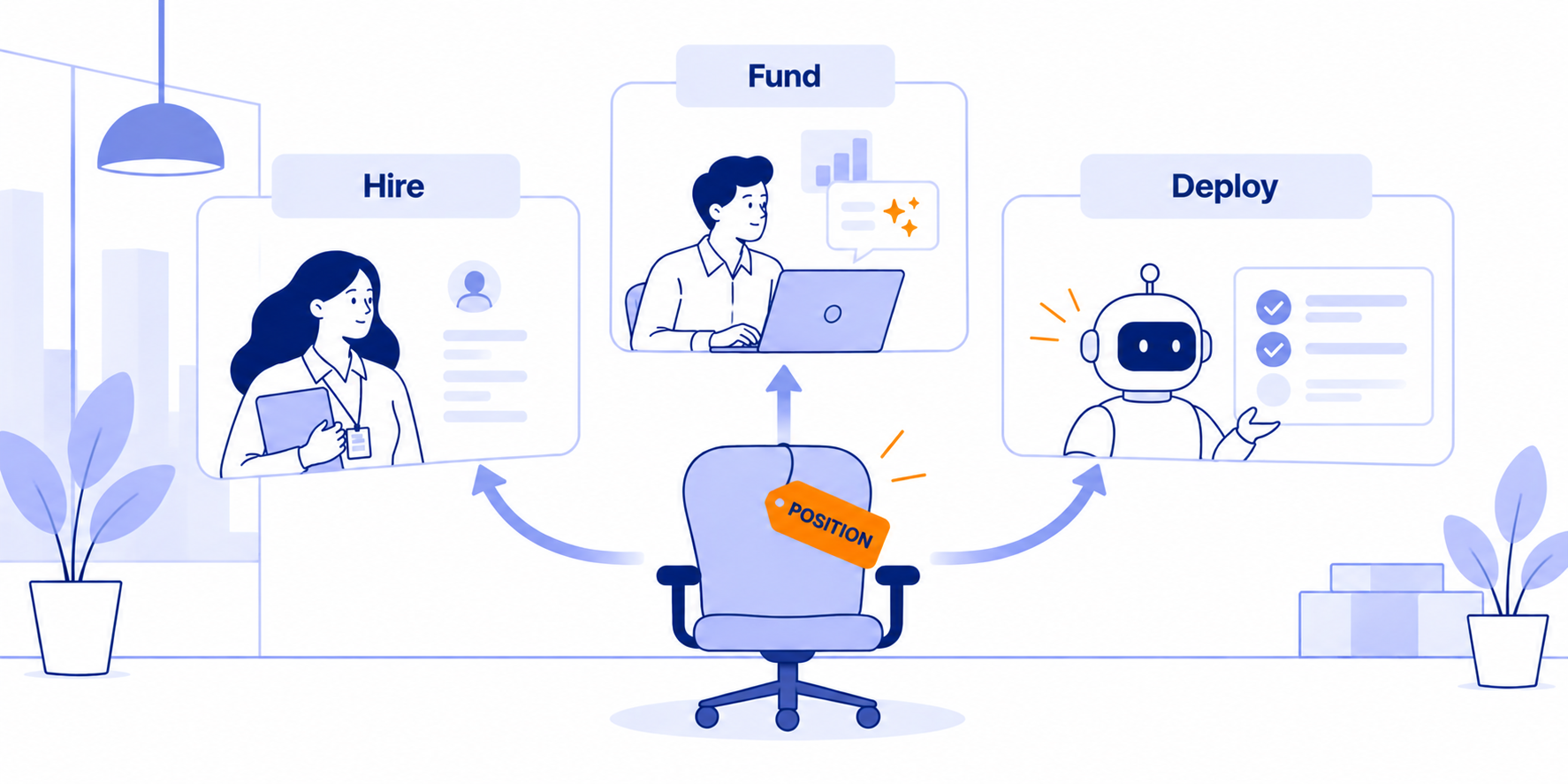
Related: Who spent it? Why AI cost attribution breaks at the invoice, Hire, fund, or deploy? How to price a backfill against AI and why AI spend belongs in the headcount plan.
Sources
- TeamOhana conversations with finance, People and IT leaders, Aug to Oct 2026 (anonymized)
Take control of your headcount spend

AI spend ownership FAQs
Simplifying TeamOhana: your questions, answered.
Finance should own the number and the plan. IT and engineering should own the sources and keys. Department heads should own their team's spend against budget. All of them should work from one ledger.
Each dashboard covers one provider and shows usage by user or key. None of them ties spend to role and comp or combines every provider into one number.
Yes, if the system supports role-based views. Spend by employee and tool can be shown without compensation data.
When it answers Finance's planning questions as well as engineering's usage questions, or when AI spend is tied mainly to customer contracts rather than people.
It should show what each team spent on AI last month across every tool with no double counting, who owns each API key, AI spend as a percentage of payroll by team, and what AI spend comes with planned hires. A tool that answers only the first two leaves a planning gap.