
Curious how TeamOhana can help you? Talk to us.
In this article
Never miss new content
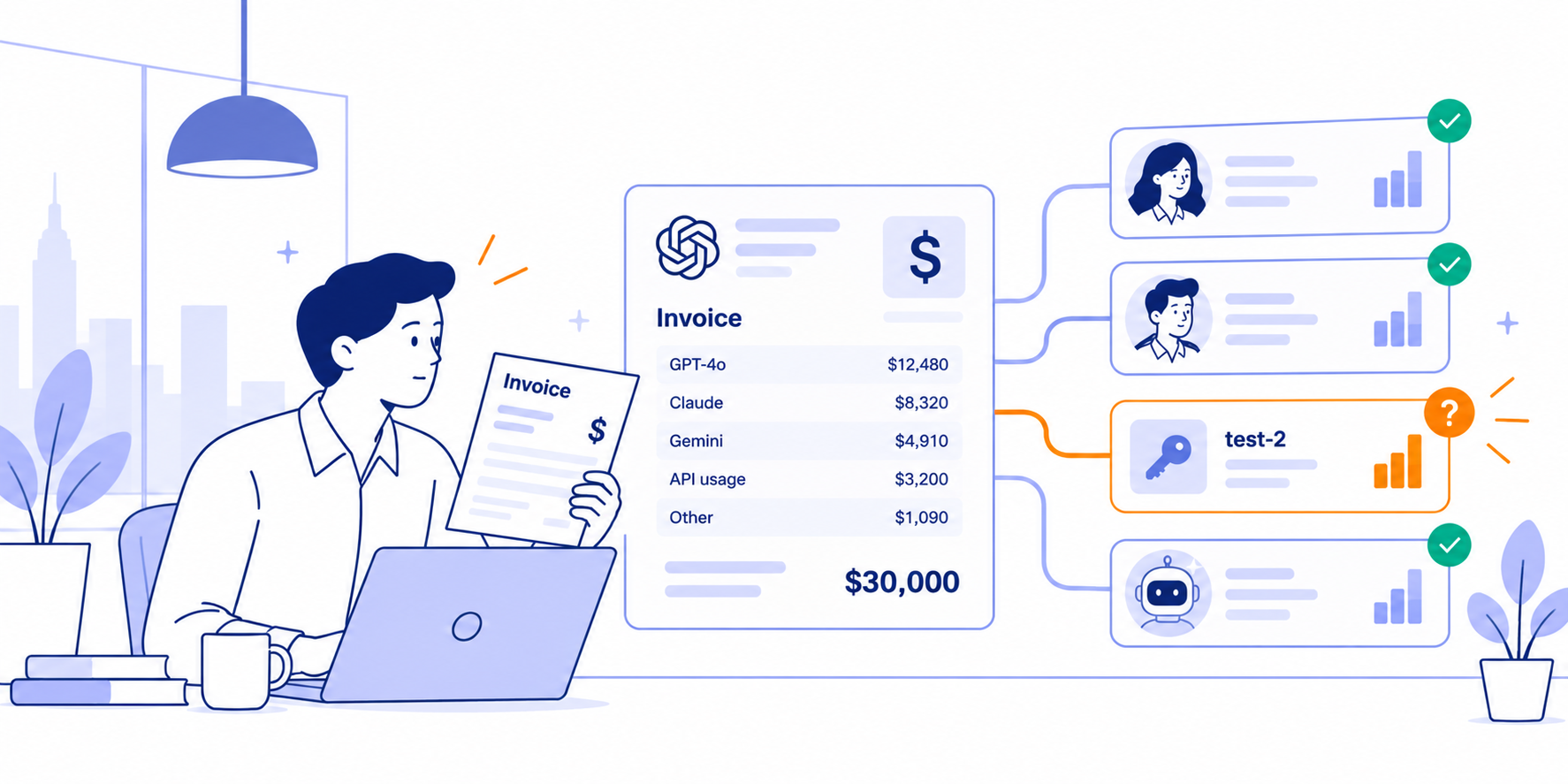
Ask Finance who drove last month's AI bill and you will usually get a cost center: engineering. The invoice lists models and dates. The API keys have names like "test-2" and "jon-local". The person who created half of them left in the spring.
Most AI cost attribution advice is written for engineers. It says to tag every request at a gateway with a team and a project. That helps but it does not answer Finance's question, which is about people, roles and the plan.
Keep reading and you will learn why the invoice cannot tell you who spent it, where attribution breaks, and what Finance-grade attribution looks like.
Key takeaways
- An AI invoice shows spend by model and month. It does not show which person, team or automated workflow drove it.
- Engineering attribution tags requests. Finance attribution ties every dollar to a person in the HRIS and an owner who can explain it.
- API keys with no owner are the most common gap. One company we spoke with had 50 to 60 keys it could not reconcile.
- The same usage often appears twice, once in a provider export and once in a cloud invoice.
- Attribution is finished when every dollar has a person or team, a named owner and a role it can be planned against.
What is AI cost attribution?
AI cost attribution is assigning each dollar of AI spend to the person, team, project or automated workflow that generated it. For Finance, it is finished when every dollar connects to a name in the HRIS and an owner who can answer for it.
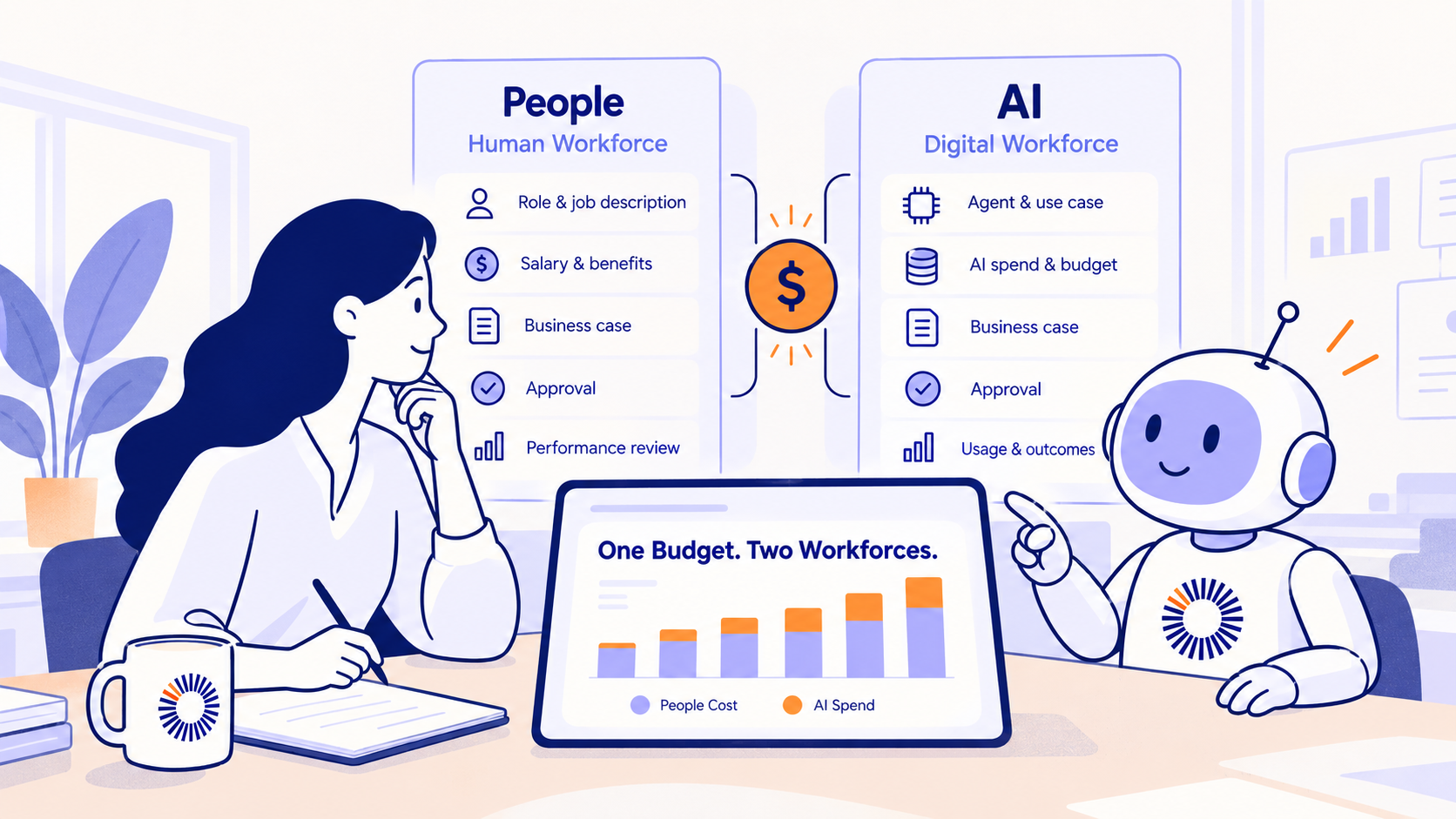
Engineering and Finance want different cuts of the same data. Engineering wants spend by feature, request and model, so it can tune what it builds. Finance wants spend by person, team and role, because that is how the budget and the headcount plan are built.
Why can't you see who spent it from the invoice?
Invoices aggregate. They are built to bill one customer, so they total usage by model, product and month. Nothing on the invoice maps back to the employee record.
The head of finance at a payments company described the gap in one sentence:
"You don't know how much each person's using, how much is agents, how much is individual token usage."
A finance analyst at a software company said the bill for two fast-growing coding tools had no home other than one department:
"Right now it's all just sitting in engineering, where it's all charged to."
Cloud bills are no better by default. One customer's cloud invoices broke model spend down by model and month only, with no user data at all. Their team had started pulling per-user data from a separate monitoring tool, and the two sources did not match.
Where does AI cost attribution break?
Keys with no owner
Every provider issues API keys, and every team creates more of them. Keys get named for a test, shared across a project, or left behind when someone changes jobs. A People leader at a healthcare AI company was working through the list one key at a time:
"I don't want to have 50 or 60 unreconciled in here all the time."
Card data that only shows the bill
Corporate card and spend tools see the charge, not the usage behind it. The same People leader put it plainly: the card data "is just telling you how much the bill is, which you already know."
The same dollars counted twice
Usage of one model can be billed directly by the model provider and also through a cloud marketplace. If both sources land in the same spreadsheet, the total doubles. Attribution needs a rule for which source wins.
Too many dashboards
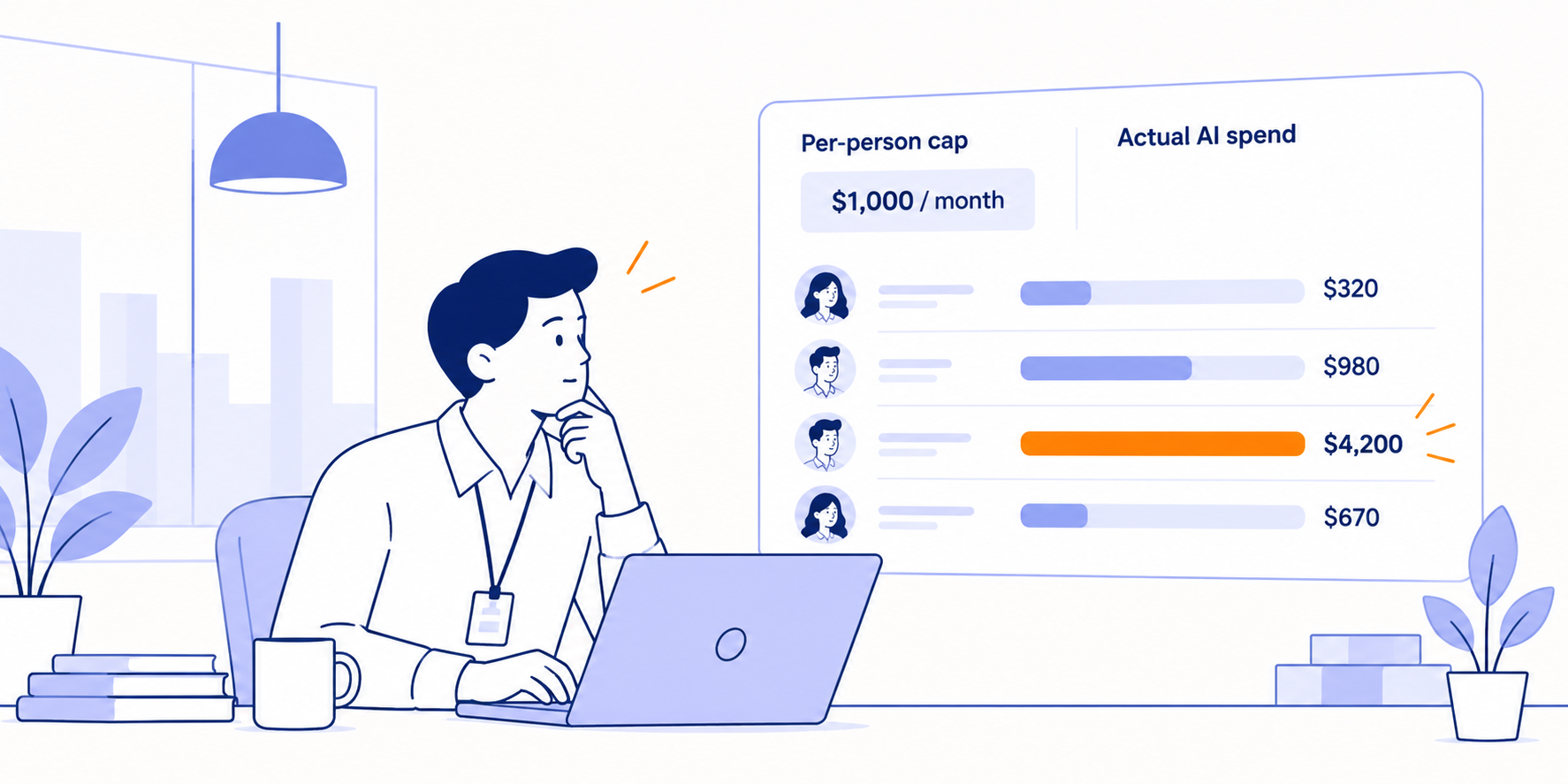
When nobody owns attribution, everyone builds their own view. A finance contact at a developer tools company described "five or six different dashboards from different people." Their CFO's ask was simpler: "I want to see a P&L by employee."
Seats and contracts that hide in a lump sum
Enterprise plans and annual contracts arrive as one payment. Unless the cost is spread across the people using it, a seat license looks free in eleven months and expensive in one.
What does Finance-grade attribution look like?
- Every source is included: API accounts, seat licenses, enterprise plans, cloud bills and expensed tools.
- Every key and seat maps to a person or team in the HRIS.
- Every key has a named owner, including keys used by automated workflows.
- When two sources report the same dollars, one clean number remains.
- Seat and contract costs are spread daily, so a license reads as what it costs per day.
- Spend sits next to role and comp, so it can be planned.
How to get to clean attribution in 30 days
- Inventory every AI source and who administers it.
- Export the full key list from each provider and assign an owner to every key. Retire keys nobody claims.
- Adopt a naming rule for new keys that includes team and purpose.
- Match provider users to employees in the HRIS by work email.
- Decide how shared keys and automated workflows are split, and write the rule down.
- Reconcile the attributed total to the invoices every month.
How TeamOhana handles attribution
TeamOhana puts token data and the employee record in one ledger. Every dollar is attributed to a person, a team or a digital co-worker, with an owner to contact. When two sources report the same dollars, the ledger keeps one number. Seats and annual contracts are amortized daily. Because spend sits next to role and comp, Finance can see AI spend as a percentage of payroll for every person and team. See every AI dollar by person and team.
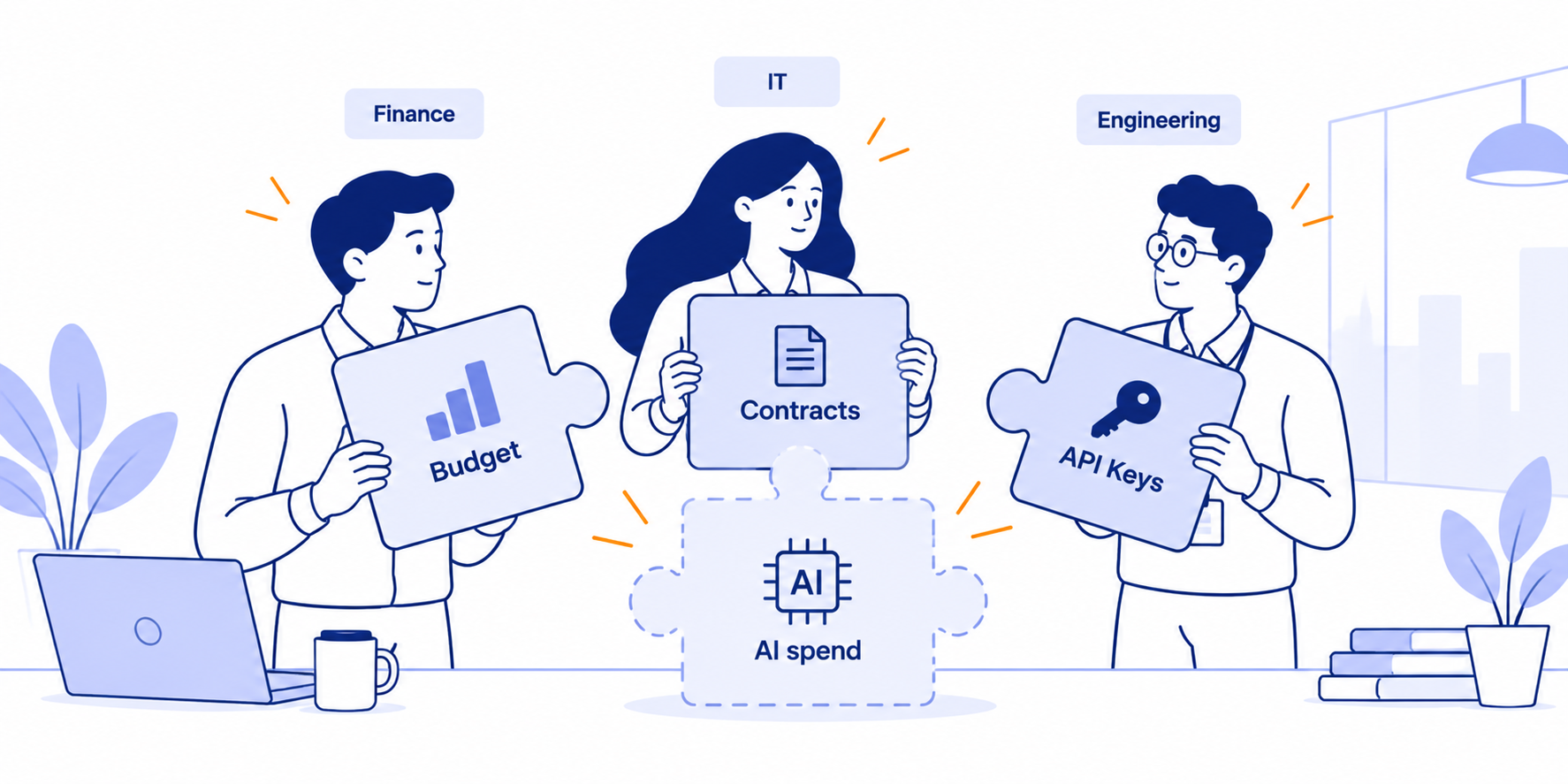
Related: AI spend over budget? Why per-person caps don't fix it, Finance owns the budget. Engineering owns the keys. Who owns AI spend? and why AI spend belongs in the headcount plan.
Sources
- TeamOhana conversations with finance, People and IT leaders, Aug to Oct 2026 (anonymized)
Take control of your headcount spend

AI cost attribution FAQs
Simplifying TeamOhana: your questions, answered.
It is assigning each dollar of AI spend to the person, team, project or automated workflow that generated it, with a named owner. For Finance, it should connect to the employee record so spend can be planned by role.
Pull usage by user from each provider's admin console or API, match each user to the HRIS by work email, and assign an owner to every API key. Seat licenses need to be spread across the people who hold them.
Showback reports each team's AI spend back to it. Chargeback moves the cost into that team's budget. Most companies start with showback until the attribution is trusted.
Give each one a named owner and a team, the same as a person. Track its spend as its own line so it can be budgeted like the work it replaces.
Usage of one model can be billed directly by the model provider and also through a cloud marketplace. If both exports land in the same spreadsheet, the total doubles. Set a rule for which source wins so one clean number remains.