.svg)


.svg)


You describe the outcome. It does the rest.
Every headcount question sits behind someone: the person who knows which view holds the number, whether the offer clears the band, or which recruiter is already underwater. Computer answers it directly, on your live plan.
Describe what you need in plain language and it takes the job from there.
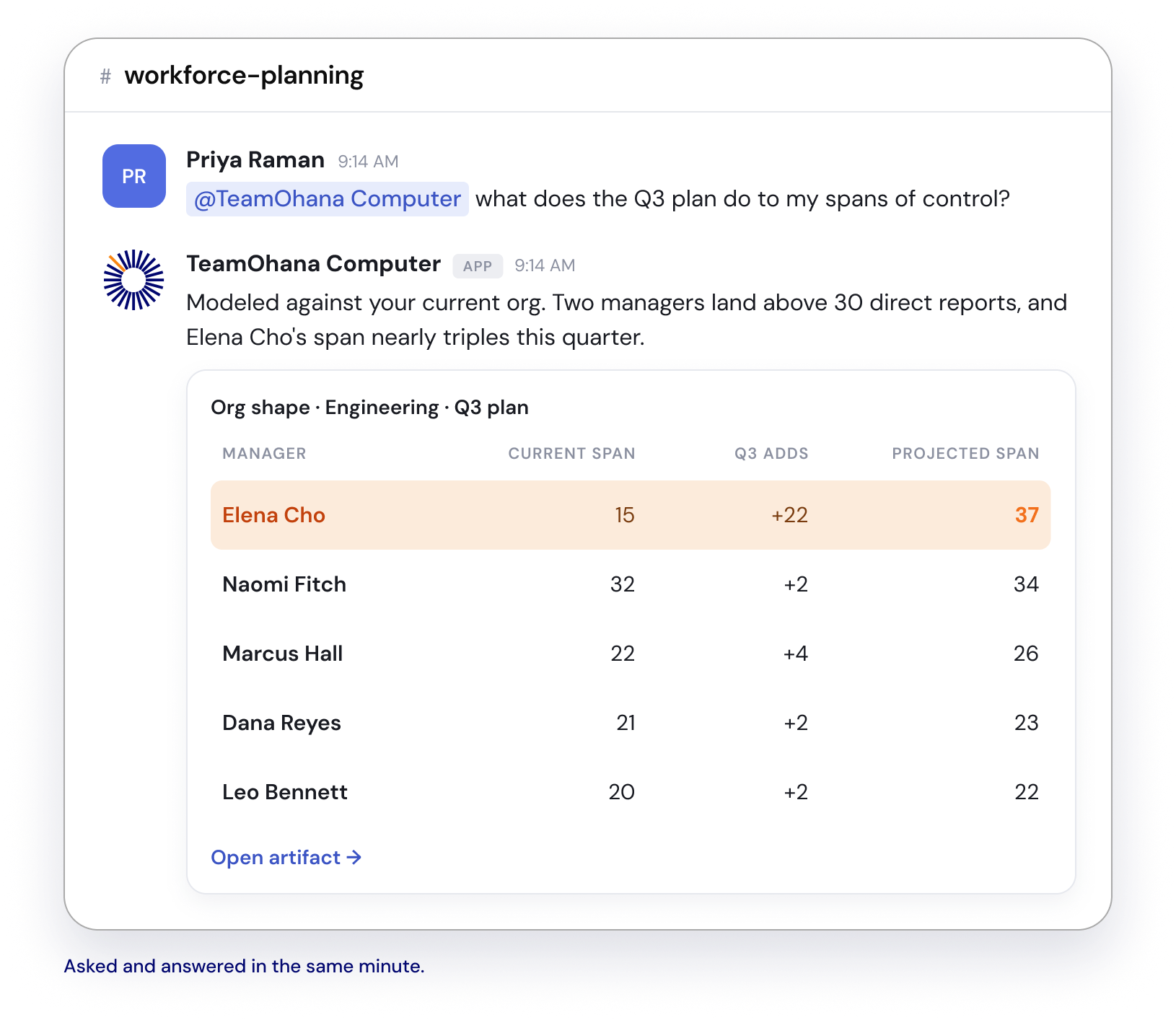
In Slack
Ask in the channel where the hiring conversation already happens. The work comes back in thread, ready to share.
On the web
The same co-worker with room to work. Every output is saved, versioned, and yours to send.
Through MCP
TeamOhana runs a Model Context Protocol server. Connect Claude or any MCP-compatible agent and it works with your plan through the same permissions Computer enforces. Your AI stack gets the data; your access controls stay in charge.
You could ask a general AI agent to do this. Here's what it can't do.
A general agent can draft the analysis. It can't see your live plan, respect who's allowed to see comp, or write the answer back where it needs to live. It hands you a draft. Computer writes the work back to the plan.
| General AI agents | TeamOhana Computer | |
|---|---|---|
| Works on your live headcount plan | Uploads and stale exports | Reads the system your decisions run on |
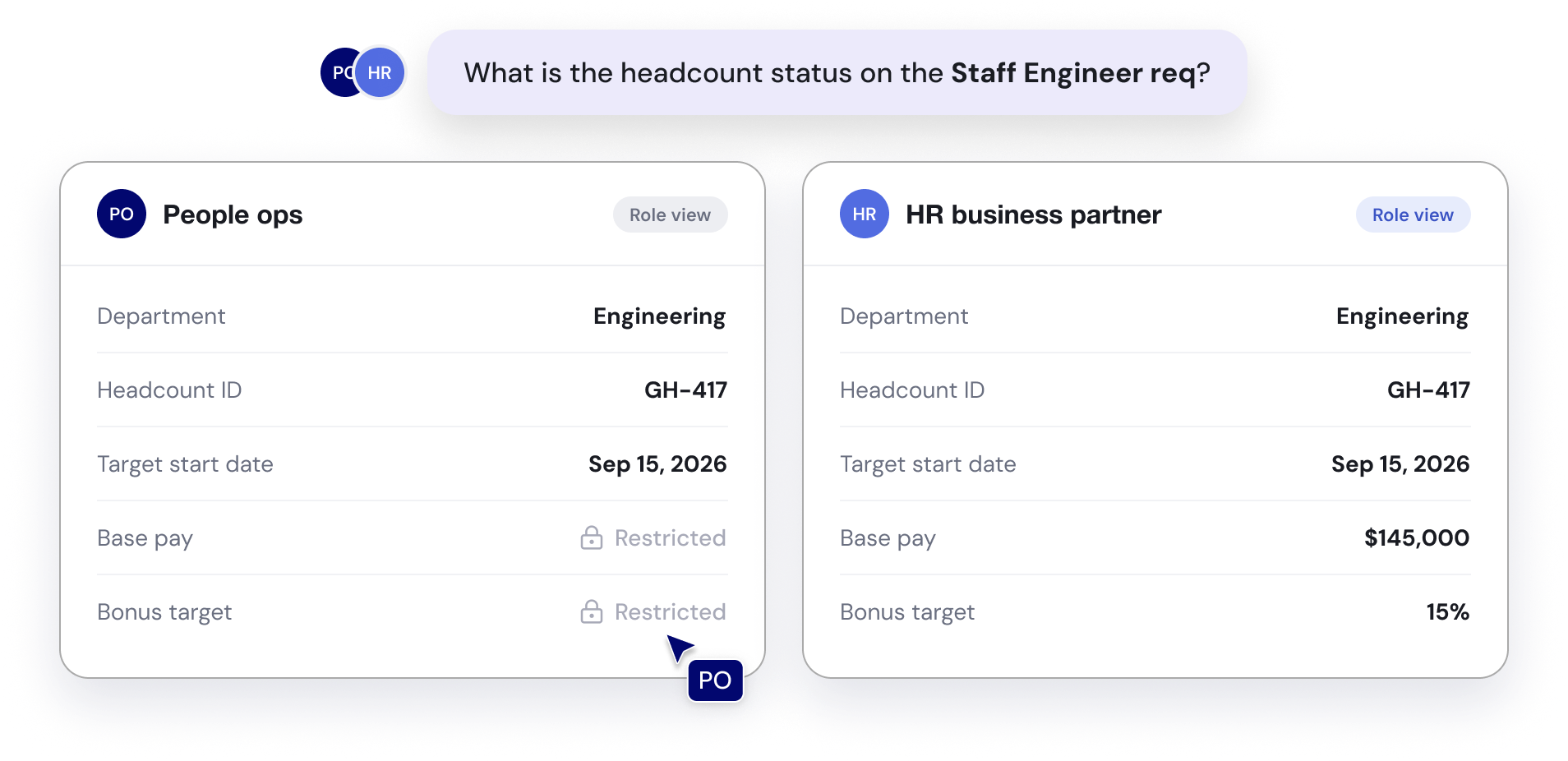
| Respects each user's permissions | Sees whatever you paste in | Scoped to role, comp stays protected |
| Knows the job | You teach it every time | Recruiter capacity, comp bands, org design built in |
| Commits the result | Drafts you re-enter by hand | Writes the change back to the plan |
| Fits your approval process | Outside every chain | Runs inside the approvals you already use |
| Open to your AI stack | Walled off or wide open | MCP server with role-scoped permissions |
Everyone with a headcount responsibility gets a co-worker.
Stop rebuilding the forecast by hand every time a start date moves, and catch it before the number you report is already wrong.
See the pay gap a plan creates while the offer hasn't gone out yet, not after someone accepts it.
Assign reqs by who has capacity, not by who happened to answer first, so nothing slips silently.
Price a hiring decision yourself, in the meeting, instead of waiting on finance to rebuild a spreadsheet.
Trained on how workforce planning actually runs.
These are the jobs that eat the week. Every one of them runs on your live plan, your open roles, and your real org.
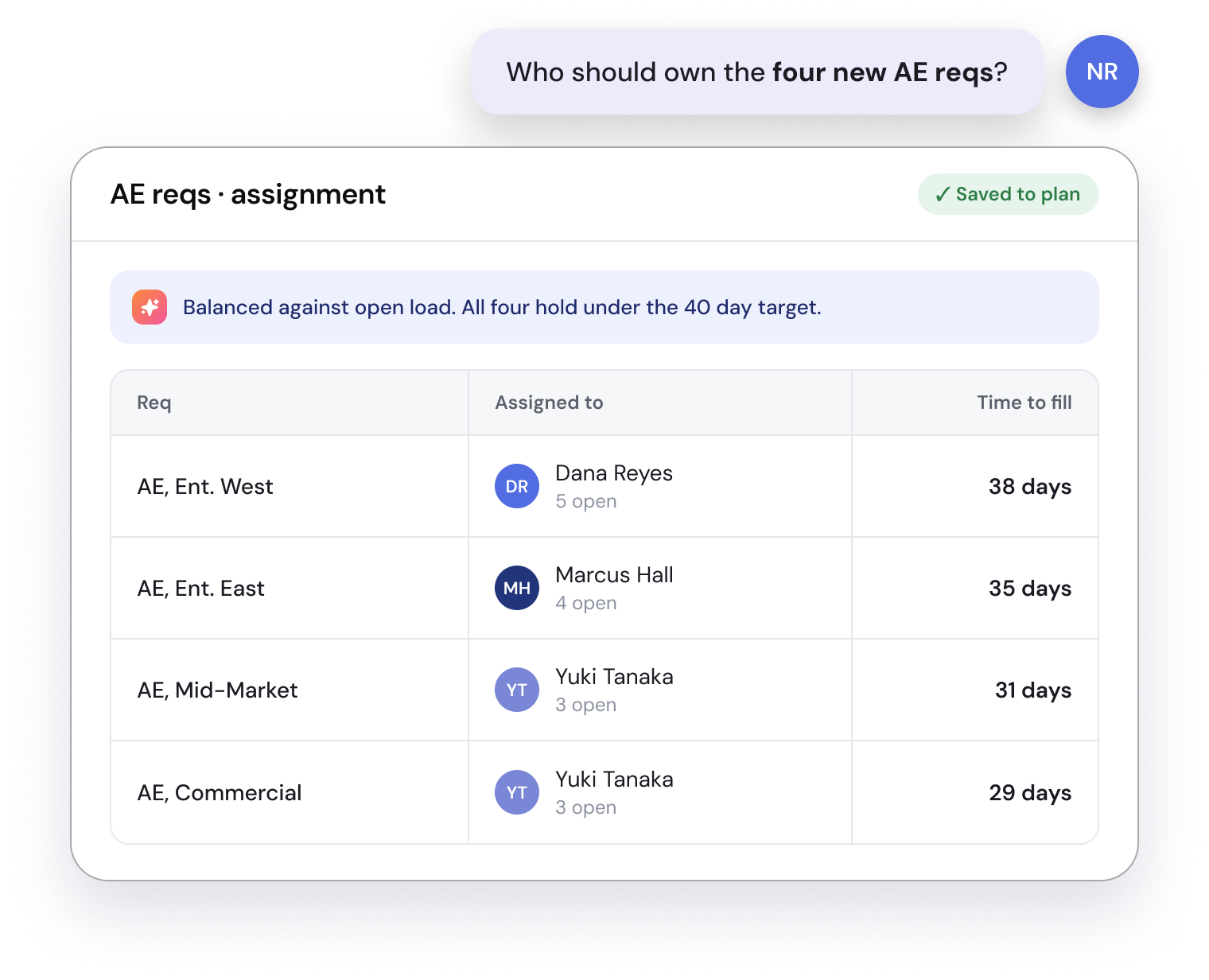
"Who should own the four new AE reqs?"
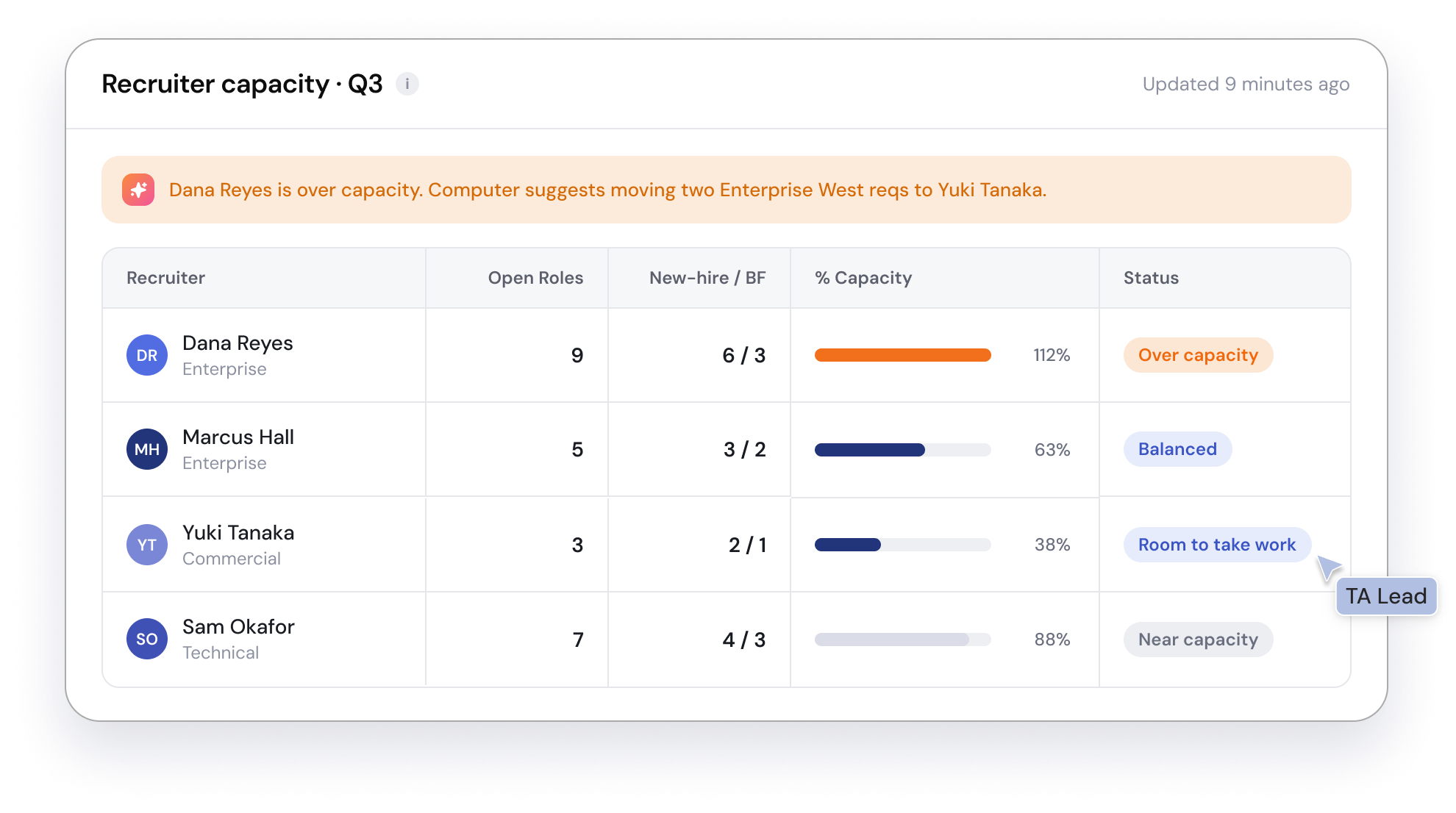
It reads current recruiter load, role difficulty, and pipeline stage, then assigns each req to protect time to fill. When capacity shifts, it flags the reqs that will slip before they do.
"Reset target start dates for everything slipping in Q3."
It moves target start dates as pipelines move and writes the change back to the plan, so the headcount forecast and the spend forecast reflect when people will actually start.
"When will my two backend roles be seated?"
It returns time to fill and time to hire for the roles you own, based on how your reqs have actually closed, so you can sequence the roadmap against dates you can defend.
"What does this hiring plan do to my org?"
It models the shape the plan creates, including where spans get too wide and where layers thicken. It runs the compensation analysis against your bands so pay gaps surface before the offer goes out.
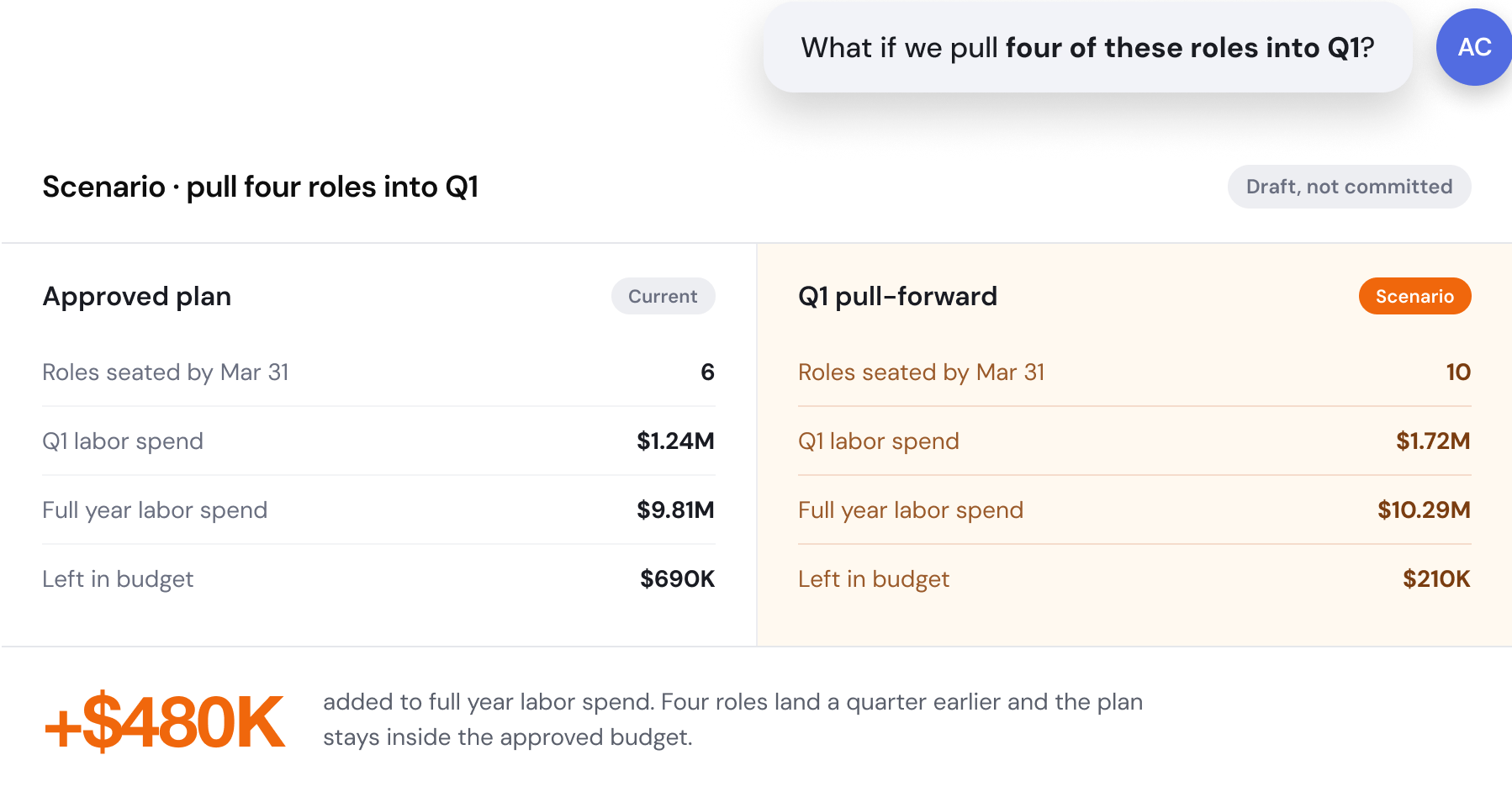
"What if we pull four of these roles into Q1?"
It builds the scenario and prices it against the approved budget. Compare versions side by side, then commit the one you choose to the plan without rebuilding a spreadsheet.
"TeamOhana Computer helps me deliver the right information to the right people at exactly the right time. It makes our teams more self-sufficient, drives better engagement, and gives our leaders deep, actionable insights in seconds – analysis that used to take hours."
See it run on your plan.
Bring one open req and one budget question. We will run both live.It knows your business, not just your data.
Fidelity comes from context. Computer runs inside TeamOhana, on the approved plan, the open requisitions, the org structure, the bands, and the actual spend. It knows who is asking and what that person is cleared to see.
Live data
It reads the system your decisions already run on. No export, no stale copy, no gap between what it sees and what is true.
Access controls built in
Every person gets only what their role allows. Compensation and plan detail stay inside the permissions you already set.
It knows the job
Recruiter capacity, start date forecasting, org design, pay equity, scenario planning. You do not have to teach it the work each time.
Output you can ship
Analysis, reports, and updates come back finished, versioned, and ready to send to the people who need them.
It sits upstream of the systems you already run.
Nothing gets ripped out. TeamOhana governs the decision before it becomes a record everywhere else.
Your systems of record keep their job
Workday, Greenhouse, and your FP&A model hold the record. Records need to be stable, auditable, and slow to change. Decisions need to be fluid and fast. Computer works on the decision side and hands the record downstream.
It reads what you already maintain
The approved plan, open requisitions, org structure, compensation bands, and actual spend. No new data model to populate and no parallel spreadsheet to keep alive.
No new process to roll out
It runs inside the approval chains your team already uses. The people who approve headcount today approve it the same way tomorrow.
Intelligence on demand, for the whole company.
When anyone can get the answer themselves, the plan stops living with the few people who know where it is kept. Decisions get made on current numbers. Hiring moves at the speed the business needs, and the budget holds.
Put it to work on your plan.
A 30 minute walkthrough on your own numbers. Bring one open req and one budget question and we will run both live.
Or watch a recorded demo first →Planning the FY2027 workforce.
The guide for Finance, HR, and Talent leaders running their first planning cycle that includes both human and AI workers.