
.svg)
Curious how TeamOhana can help you? Talk to us.
In this article
Never miss new content
Finance teams know the headcount plan. They built it. They negotiated it with every department head in Q4, loaded it into their FP&A tool, and started the year with a number that was as close to correct as anyone could make it.
By March, the number is wrong. Not because anything went catastrophically off the rails. Because headcount is a living thing. Roles get up-leveled. Start dates shift. A backfill for a departing employee comes in at a higher comp band than the role was originally priced at. A new role appears mid-quarter that was never in the plan.
None of this is avoidable. What is avoidable is discovering all of it too late, at month-end, when the reconciliation between the FP&A model and reality requires hours of manual work by analysts who have better things to do.
Key takeaways
- Budget variance in headcount is not usually caused by one big surprise; it compounds from many small, untracked changes over the course of a year
- Finance teams need four specific variance signals: early hires, late hires, over-plan compensation, and non-budgeted headcount
- A budget envelope is only actionable when it is visible to the people making hiring decisions, not just the people who set it
- The FP&A tool remains the source of truth for the financial forecast; headcount planning software should feed it, not replace it
- Real-time compensation variance tracking changes the CFO's quarterly commentary from a retroactive explanation to a proactive alert
Why does headcount variance compound?
A single role coming in five percent over the comp midpoint is not a problem. Fifty roles doing it is a meaningful budget overrun. The challenge is that each individual deviation looks small in isolation and is typically justified on its own terms: the candidate was strong, the market moved, the hiring manager had a band exception.
Without a system tracking the aggregate impact of those decisions as they happen, finance only sees the sum at the point when it is too late to course-correct.
An FP&A specialist at a large software company described this precisely. Their team had concluded that the biggest problem was not inaccurate planning at the start of the year. It was the inability to track how mid-cycle changes accumulated against the original annual operating plan. The question was never "did we plan correctly?" It was "do we know what changed since we planned, and why?"
What does finance actually need to see?
Ask most finance leaders what they want from headcount reporting and you will hear some version of the same list: the approved plan, the current actuals, and a clear explanation of the variance between the two.
- Hiring timing variance: where start dates deviated from the plan. A role budgeted to start in Q1 but not starting until Q3 represents fiscal-year savings, but the spend was deferred, and next year's plan needs to reflect it.
- Compensation variance: where offer amounts deviated from the budgeted midpoint. Up-side variance is common and worth surfacing early. Down-side variance can signal comp band staleness.
- Non-budgeted headcount: roles that appeared mid-year and were approved through informal channels without being tied to the original plan. They show up in actuals but have no budget anchor to compare against.
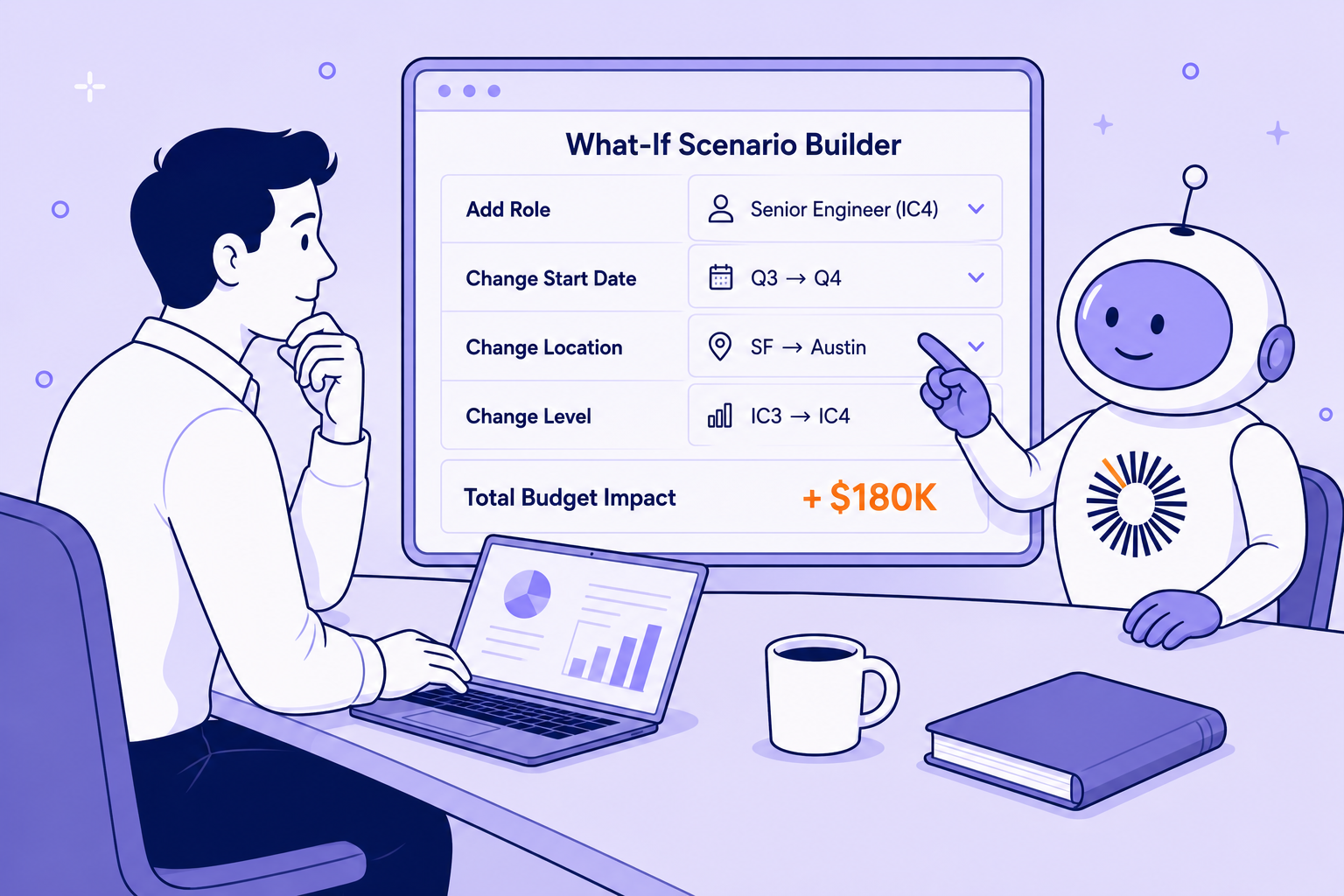
- Role composition variance: changes to what was actually hired versus what was planned. A role budgeted as an IC3 in Austin and hired as an IC4 in San Francisco has multiple variance dimensions: level, location, and compensation all diverged from the plan.
What is a budget envelope, and who should be able to see it?
A budget envelope is a dollar-denominated constraint assigned to a division, department, or team for a given period. Finance sets it. The business runs inside it.
The problem with most budget envelopes is that they live in the FP&A tool, which most business leaders do not access regularly. An engineering leader trying to understand whether they have room to add a role is not opening Adaptive or Pigment. They are asking their finance business partner, who then has to go look, run a calculation, and get back to them.
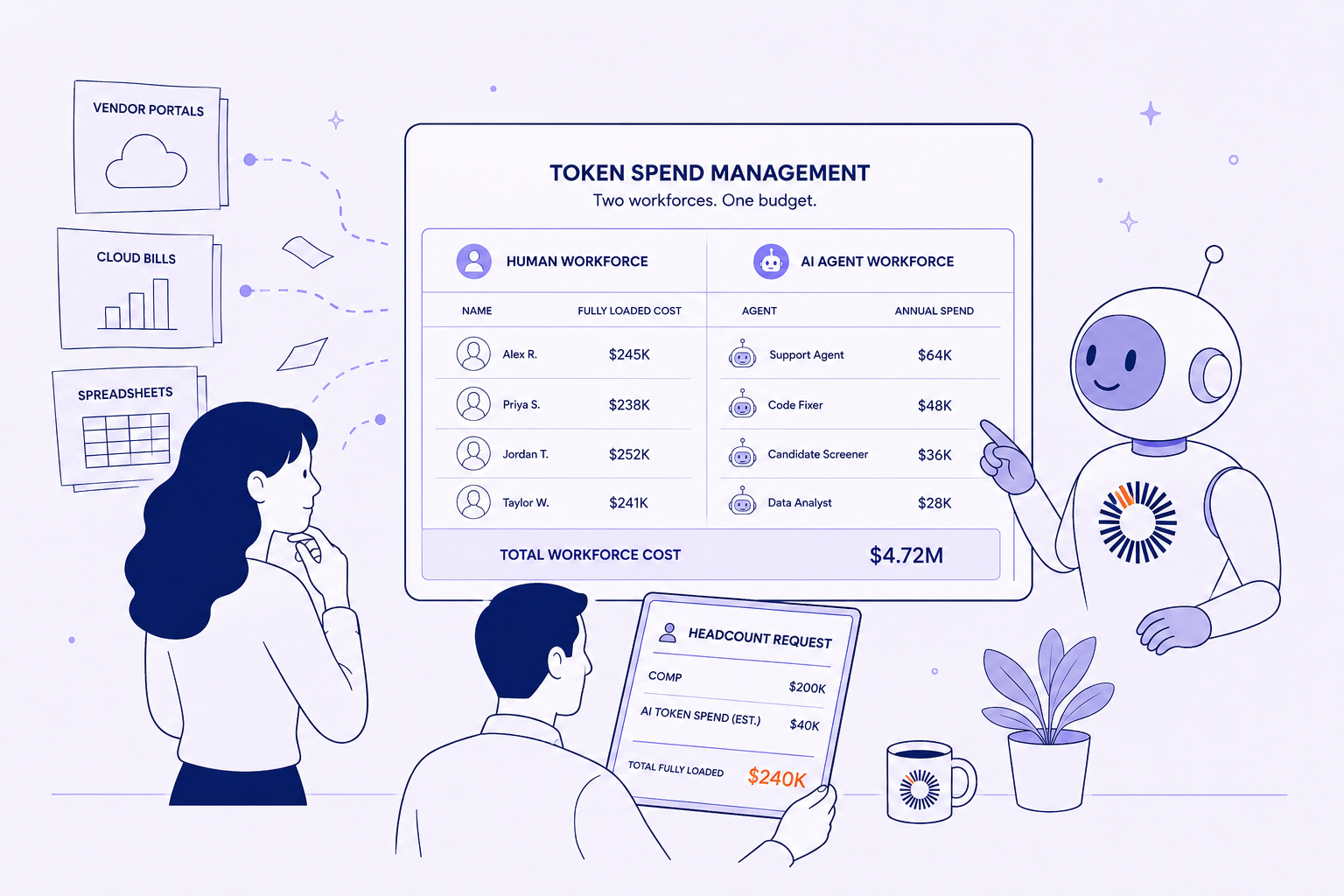
The right model is for budget visibility to live in the same place that headcount requests originate. When a division leader submits a request for a new role, they should see immediately whether that role falls within their envelope and what the total forecasted impact is against their current spend. Not after approval. As they are filling out the form.
How does the FP&A integration work without replacing the FP&A tool?
This is the most important architectural question for finance teams evaluating headcount planning software. The FP&A tool is the source of truth for the financial forecast. It always will be. Headcount planning software should make that tool more accurate, not compete with it.
The correct data flow is: headcount decisions originate and are governed in the planning tool, with every approved position carrying a unique ID. That ID and the associated position details are fed to the FP&A tool on demand. When a finance analyst pulls the headcount forecast into their model, they are pulling live data. At a public fintech company, the finance team confirmed they wanted Pigment to remain the financial forecasting source of truth, with the planning tool supplying live position-level detail. Learn more about how this works in The Connective Layer.
What does real-time variance tracking change for the CFO?
Most CFO headcount commentary is written retroactively. End of quarter, the finance team reconciles the plan against actuals, identifies the major variances, writes an explanation, and presents it to the board. By that point, the deviation already happened. The explanation is historical.
Real-time variance tracking changes the timing. When a fifth role in one division comes in ten percent over the comp midpoint, the system flags it proactively. Finance can have a conversation with the division leader before month-end, not after. The question shifts from "why did this happen?" to "should we adjust the plan going forward, or is there a specific reason we think this was the right call?"
The goal of variance tracking is not to create more reporting. It is to give finance the signal it needs early enough to act on it.
See what connected headcount planning looks like for your finance team. Book a demo to see what connected budget tracking looks like.
Patterns cited in this article are drawn from TeamOhana's recent conversations with Finance and FP&A leaders across companies ranging from 300 to 3,000 employees. All references are anonymized and paraphrased.
Take control of your headcount spend

FAQ
Simplifying TeamOhana: your questions, answered.
Headcount variance rarely comes from one large deviation. It accumulates from many individually justified changes. Without a system tracking the aggregate impact as changes happen, finance only sees the total at month-end when it is too late to course-correct.
Finance teams need visibility into four categories: hiring timing variance, compensation variance, non-budgeted headcount, and role composition variance. Each has a different interpretation and requires a different response.
A budget envelope is a dollar-denominated constraint assigned to a division or department for a given period. The problem with most budget envelopes is that they live in the FP&A tool, which most business leaders do not access regularly. Budget visibility needs to live in the same place that headcount requests originate.
The FP&A tool remains the source of truth for the financial forecast. Headcount planning software feeds it more accurate data. The correct data flow is: headcount decisions originate in the planning tool with every approved position carrying a unique ID, and those details feed the FP&A tool on demand. Finance keeps modeling in their tool. The live data just gets there automatically.
Most CFO headcount commentary is written retroactively after month-end close. Real-time variance tracking changes the timing: when a pattern of over-plan compensation emerges, finance can have a conversation with that division leader before month-end, not after. The question shifts from explaining what happened to deciding what to do about it going forward.