
Curious how TeamOhana can help you? Talk to us.
In this article
Never miss new content
A RACI for headcount planning is a chart that names who is Responsible, Accountable, Consulted, and Informed for every headcount decision, from setting the budget to closing out a hire. It answers the question that stalls most hiring plans: whose call is this?
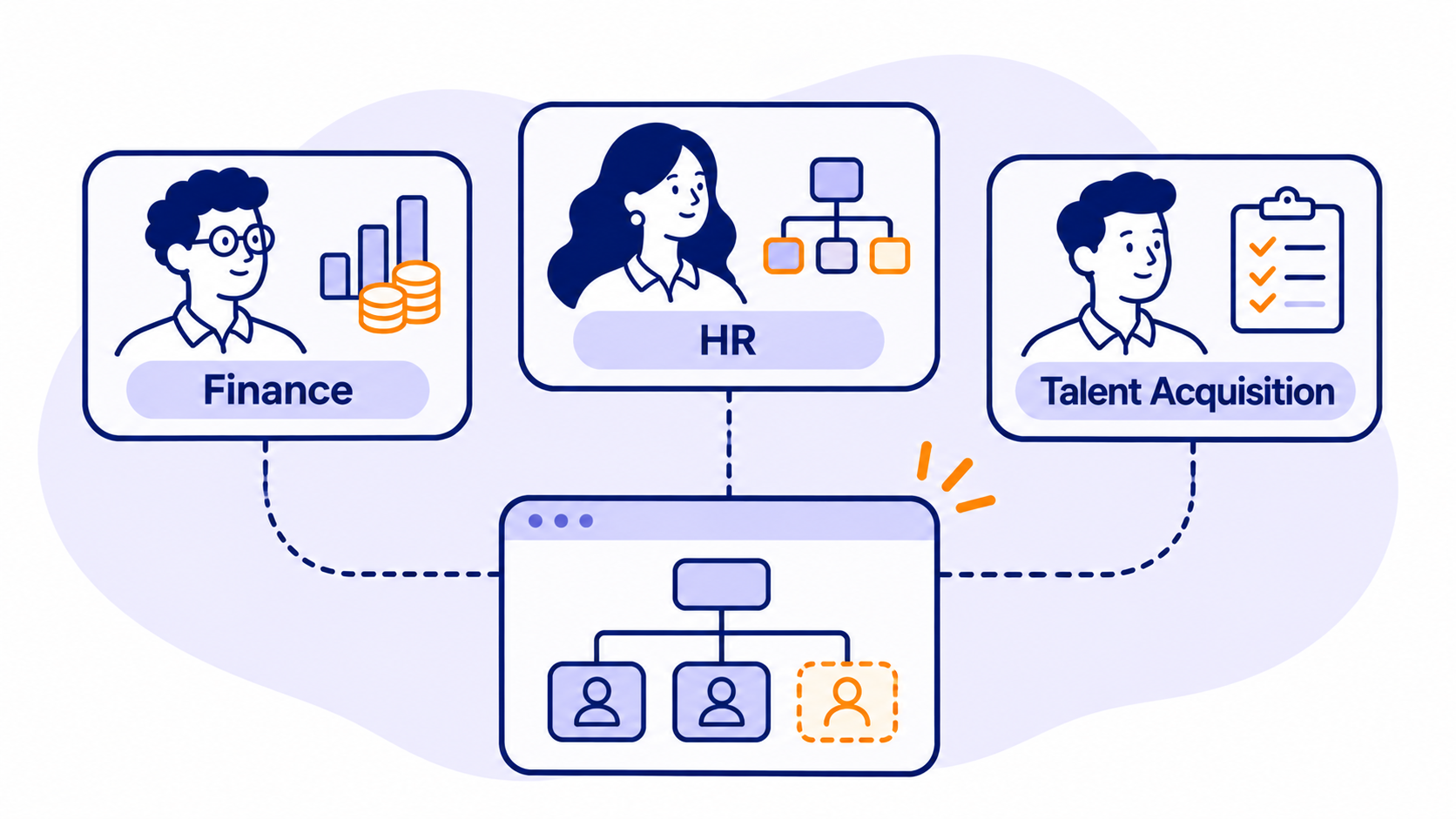
Finance usually owns the budget. HR owns comp bands, org design, and the employee record. Talent owns the recruiting pipeline. Hiring managers define hiring needs and priorities. Each team has a stake in headcount planning, but no single team owns the entire process. That's where decisions start to fall through the cracks.
This post covers what a RACI looks like for headcount planning, gives you a draft you can adapt this week, and shows where ownership breaks in practice. The examples come from calls with Finance, HR, and Talent leaders over the past few months, with company details removed.
What a RACI is, and why headcount planning needs one
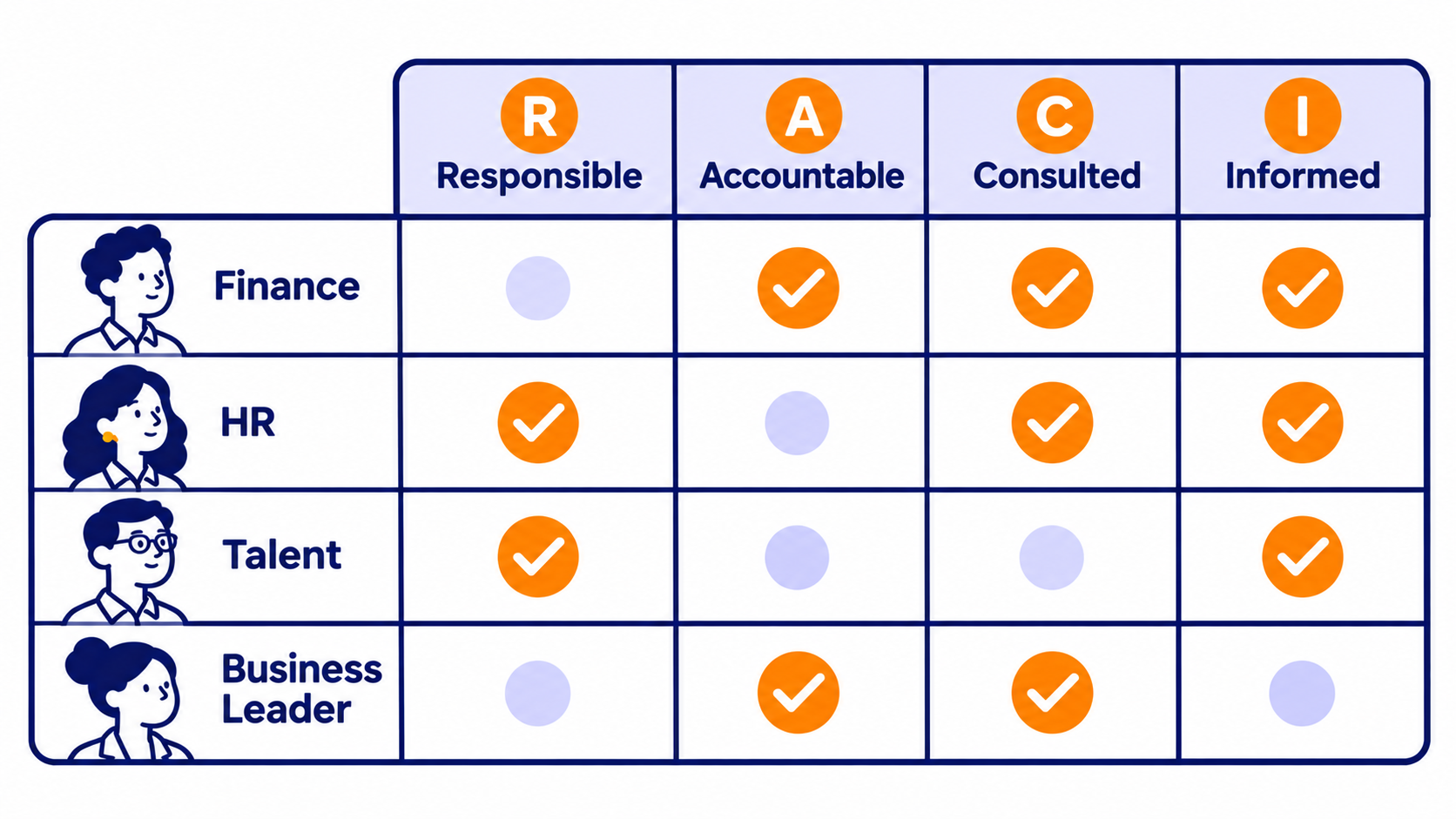
RACI stands for four roles you can hold on any decision:
- Responsible: does the work.
- Accountable: owns the outcome and makes the final call.
- Consulted: gives input before the decision.
- Informed: hears about it afterward.
RACI: a chart that names who is Responsible, Accountable, Consulted, and Informed for each decision, with exactly one Accountable person per row.
The one rule that matters is that every decision gets exactly one Accountable person. Two means a standoff. Zero means the decision belongs to nobody until something goes wrong. (Smartsheet and Wikipedia both cover the basics.)
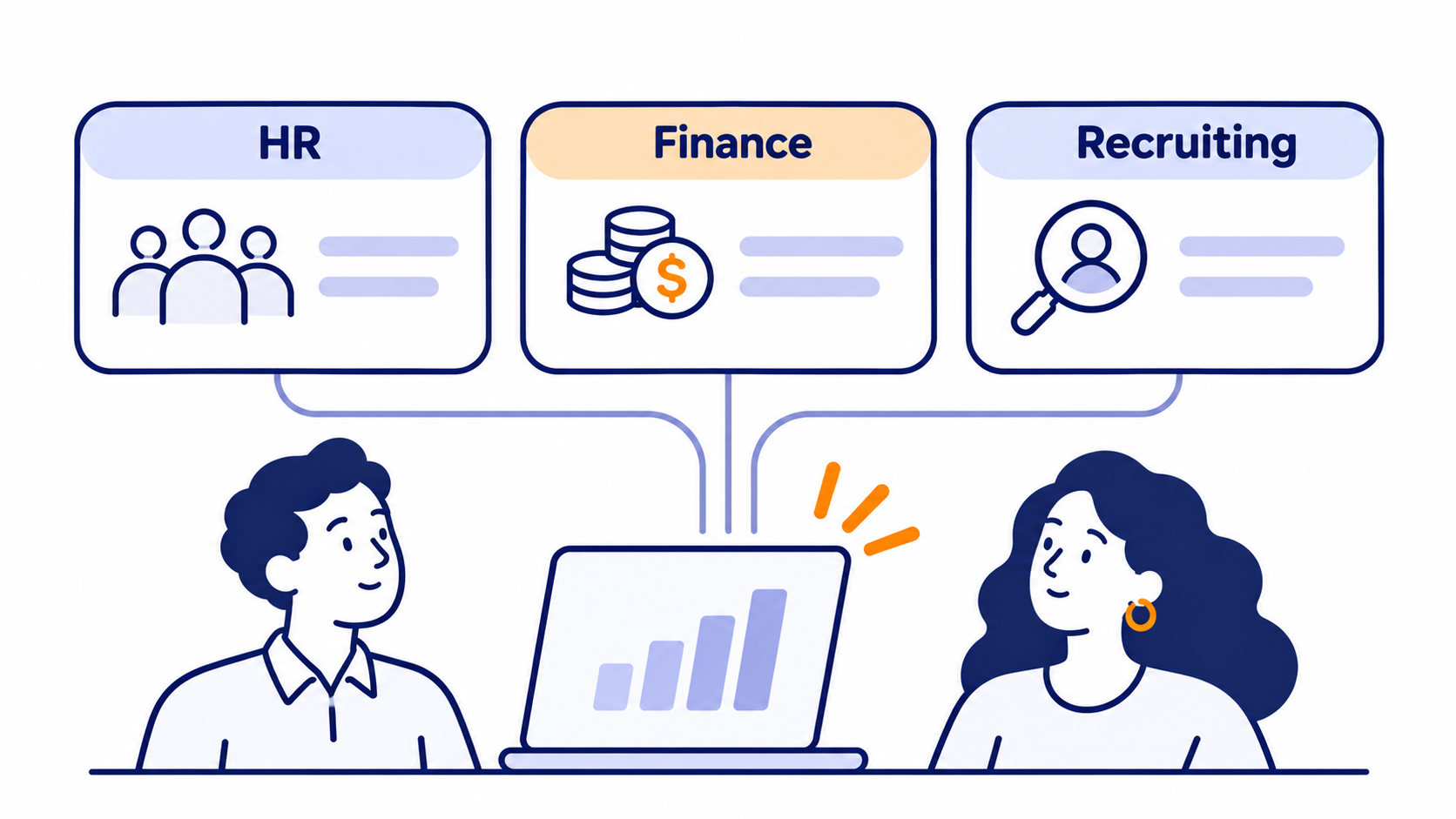
Headcount planning can benefit from this process because it crosses at least four functions, and each one runs on a different clock. Finance plans by fiscal year and cost center. HR thinks in positions, levels, and employee records. Talent thinks in open reqs and pipeline. A hiring manager thinks in "I need someone by March." Without named owners, those views collide late, usually at the offer stage.
The survey data points the same way. An Orgvue survey of 400+ HR and Finance decision makers at companies with 1,000+ employees found that 55% of Finance respondents said strategic workforce planning should be theirs, while 76% of HR respondents said it should be theirs (Orgvue, an older study that the field still cites). Both teams can't be Accountable. In an Oracle and HR Dive survey, 40% of HR leaders said they lacked access to the financial data they need to plan and budget the workforce (Oracle).
55% vs. 76%: the share of Finance and HR respondents, respectively, who said strategic workforce planning should be theirs, in an Orgvue survey of 400+ decision makers at companies with 1,000+ employees.
A quick note on terms. Headcount planning is the near-term question of how many people you can afford and where they sit in the budget. Workforce planning looks further out, at which skills the business will need. The RACI below covers the headcount decisions, and it gives your workforce planning a clean set of inputs.
A draft RACI for headcount planning
Start with this table and change it to fit how your company works. The columns are functions, not people.
A/R means the same team is both Accountable and Responsible.
Three rows tend to spark debate. Off-plan roles put the Accountable seat with the exec team because the decision changes the budget, and Finance's job is to show the trade-off. Ready to Hire sits with Talent here, since it signals that recruiting has capacity. Who owns it varies by company (the business, FP&A, or recruiting leads), and the point is to pick one. Offers above range put Finance in the Accountable seat so the budget owner hears about it before the candidate does.
Where ownership breaks down in practice
Every one of these came up on a real call. Each is a missing Accountable, or an Accountable sitting with the wrong team.
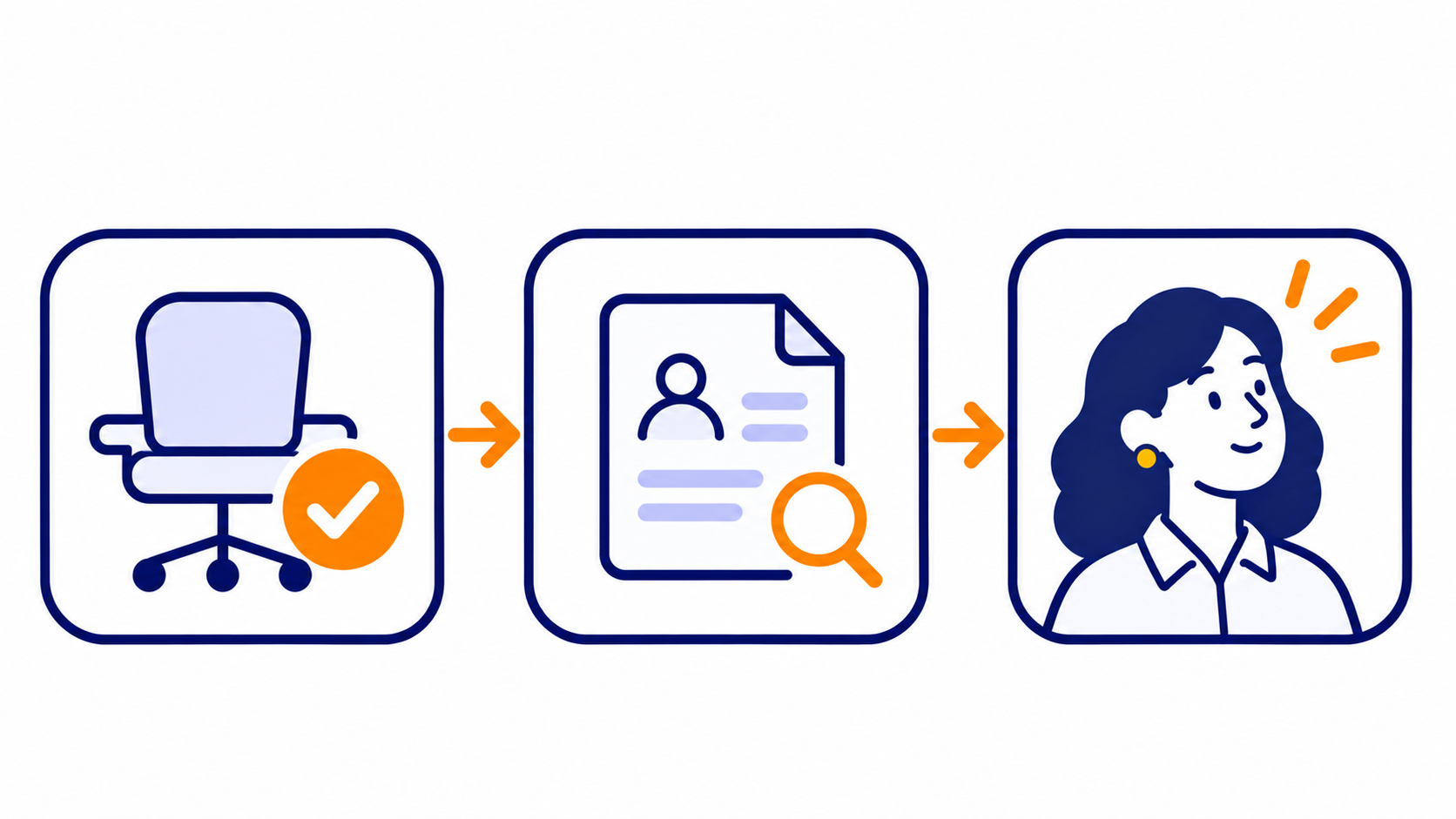
The dead zone between "approved" and "req open." A head of People at a software company told us the plan gets approved by Finance and the exec team, then changes through "many hands." Her HR business partners opened reqs they believed the business needed, and recruiting fell behind the actual plan. Her summary: "if there is no owner, then there is no ownership."
The offer that costs 10% more than budget. At one company a role was budgeted at $100k and the hiring manager offered $110k. Finance heard at the end, and nobody could say whether the department head or the CFO had signed off. A finance leader at another company said offers over the approved amount happen "all the time," and Finance only sees them at offer-letter approval.
The toggle in the wrong hands. At one customer, Finance owned the switch that tells recruiters a role is cleared to open. Recruiters waited on Finance even when a candidate was ready. The fix the team agreed on: Ready to Hire moves to a recruiting lead, and Finance keeps approval of the target start date.
Seats nobody released. A sales leader at one company held the seats of departed employees for about 18 months without telling HR or Finance. Reconciling it took five people in HR and three in Finance, because terminations and backfills weren't matched between the two teams.
Two teams, two models. A People Ops lead described Finance owning the budget and the Excel model while HR owned the hiring plan. HR wasn't looking at the model, and Finance wasn't looking at the plan. Hiring managers asked Finance, Finance sent them to HR, and HR sent them back. Nobody wanted to be the middleman.
Every one of these is a missing Accountable, or an Accountable sitting with the wrong team. The chart only works if each row has exactly one name on it.
How to build your own RACI
- List decisions, not tasks. Start with the ten rows above, then add yours: contractors, internal transfers, terminations, mid-year changes to the plan.
- Assign roles, not names. Write "FP&A lead," not "Dana." People change jobs. The chart shouldn't.
- Give every row one A. If two teams both want it, split the decision. "Approve the budget" and "approve the comp" can have different owners.
- Test it on your last five hires and three backfills. Find where each decision actually happened. If it was a Slack thread and not the person on your chart, either the chart or the process is wrong.
- Write down the exceptions. Off-plan hires, offers over range, and moved start dates are where headcount planning breaks. Give each an owner, a threshold, and a response time.
- Review it each planning cycle. Also review it after a reorg, a new CFO, or a new HRIS.
Keeping the RACI alive inside your tools
A RACI in a doc is a promise. It holds when your systems enforce it.
TeamOhana is the headcount planning layer that works alongside your HRIS and ATS. Your HRIS (Rippling, HiBob, BambooHR, Workday, and UKG, among others) stays the source of truth for employee data. Your ATS (Greenhouse, Ashby, Lever) runs recruiting. TeamOhana handles the plan, the approvals, and the tracking between them. Here is how each RACI letter shows up:
- Accountable becomes an approval policy. Under Settings > Approval Policies, you set who approves what by request type: new hire, backfill, change request, termination, internal transfer, or scenario. Rules can key off department, location, job level, employee type, or a compensation threshold. Chains run step by step, and each step can require all approvers, one, or a set number. See how this plays out after the plan is approved.
- Responsible becomes a role. Finance, HRBPs, recruiters, TA leads, hiring managers, and executives each get access that matches their lane. Finance sees approvals across the organization. HRBPs see approvals for their assigned departments.
- Consulted becomes a step or an @mention. Comp review can sit in the chain before Finance approves, or Finance can review after approval. Approvers can comment and @mention someone to pull them in.
- Informed becomes a notification. Recruiters hear when they're assigned to a role and when it's marked Ready to Hire. Requesters can see who a request is pending on.
- Ready to Hire is its own toggle. It comes after approval, so it can have a different owner than the budget decision. That's the fix for the wrong-hands problem above.
Each request also keeps a History tab showing who approved, when, and what they said. The Variance Tracker compares budget to forecast, so Finance can own that row of the RACI with real numbers behind it.
One design note: approvals happen in TeamOhana, not twice. Keeping a single approval chain, with the ATS handling candidate feedback, means you never run two chains for the same decision.
The short version
Headcount planning goes wrong when a decision has no owner or two. A RACI fixes that by putting one Accountable name on every decision, from the budget to the offer, and by making Finance, HR, and Talent agree on it before the next hire is on the table. Start with the draft above, test it on your last few hires, and keep the chart in the same place your approvals run.
If you'd like to see how this looks in practice, book a TeamOhana demo.
Take control of your headcount spend

Headcount planning RACI FAQs
Simplifying TeamOhana: your questions, answered.
Neither one owns all of it, so split it by decision. Finance is usually Accountable for the budget, budget approvals, and variance reporting. HR is usually Accountable for comp bands, level structure, and the employee record. Talent is usually Accountable for opening roles and running the pipeline.
RASCI adds a Supportive role for people who help the Responsible person finish the work. Most headcount RACIs don't need it. Add it if recruiters or analysts do a lot of prep work for another team's decision.
Yes. It's common, and the chart marks it as A/R. Finance does the work and owns the call on budget-versus-forecast reporting, for example.
A headcount RACI covers near-term decisions: budget, approvals, backfills, offers, and hires. A workforce planning RACI covers longer-range questions such as skills, org design, and build-versus-buy. They share many of the same roles, and the headcount RACI feeds the longer-range one.
Each planning cycle, and any time you change your approval process, your HRIS, or your leadership team.