
Curious how TeamOhana can help you? Talk to us.
In this article
Never miss new content
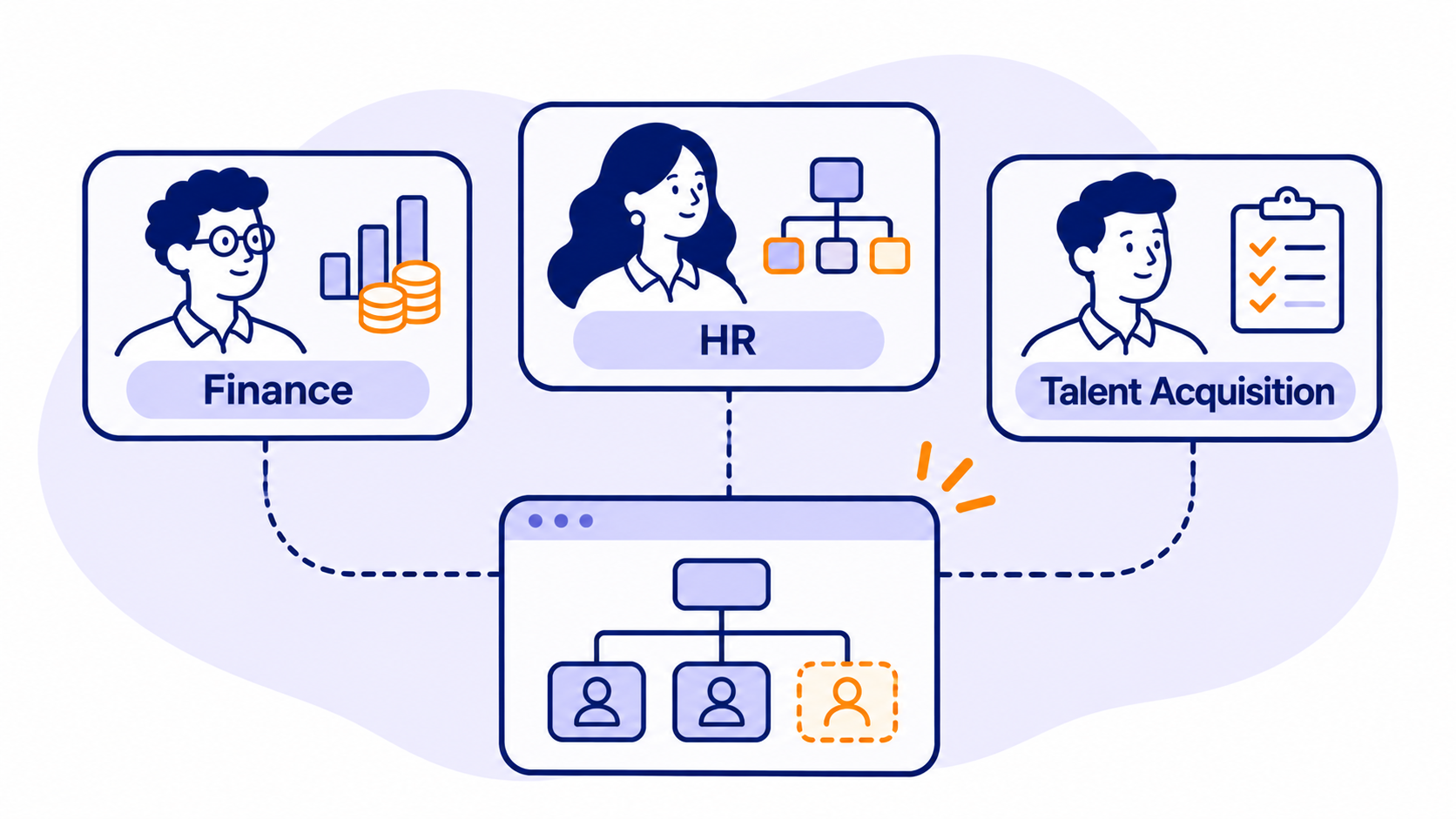
Finance owns the number. HR owns the shape of the plan. Talent Acquisition owns whether it actually gets hired. No single team owns headcount planning alone, and the companies that pretend otherwise end up with three plans and one very tired spreadsheet.
Who owns headcount planning? Everyone, with different jobs
Ask a CFO who owns headcount planning and you'll hear “Finance, obviously.” Ask a CHRO and you'll hear “People.” Ask the head of Talent Acquisition and you'll get a long pause, then “I just work the reqs.”
All three are right. All three are also a big reason your plan keeps breaking.
Headcount planning is the process of deciding how many roles you need, what they'll cost, and when you'll fill them. Workforce planning is the wider version: skills, the mix of employees, contractors and AI, and the capabilities you'll need next year. Both need clear ownership, and most companies lack it.
This split works at growth-stage and enterprise companies:
- Finance owns the envelope. Total budget, cost per seat, and the guardrails on variance.
- HR owns the shape. Org design, role and level architecture, and the integrity of position data.
- Talent Acquisition owns delivery. Recruiting capacity, hiring sequence, and honest time-to-fill.
- Hiring managers own the business case. Why this role, and why now.
The rest of this guide shows how to draw those lines, and what happens when you don't.
Why organizational ownership is so murky
Because each team is looking at a different plan.
Finance sees a cost model, HR sees an org chart, and Talent Acquisition sees a stack of open reqs. Same company, same hires, three different plans.
Gartner's Robin Boomer describes strategic workforce planning as a persistent “hot potato” between Finance and HR. In the Gartner data he cited, only 20% of CFOs rank their CHRO among their top three executive relationships, while 34% of CFOs name HR as a top-three target for budget cuts. And Gartner's 2026 survey of more than 400 CHROs found that cutting costs now outranks growing revenue as a priority, the reverse of 2025.
20%: the share of CFOs who rank their CHRO among their top three executive relationships, according to Gartner data.
Then there's the question of who's even in the room. OrgChart's State of Workforce Planning 2026 surveyed 409 US HR leaders. They put HR in 94% of planning exercises, but Finance in just 29%. At companies with more than 5,000 employees, Finance showed up 44% of the time. Planful's 2025 Global Finance Survey tells the opposite story: 96% of organizations said Finance is moderately to highly involved in workforce planning.
The respondents differ, so these numbers aren't a fair comparison. But when HR and Finance can't agree on whether Finance is in the room, it's a sign that nobody is holding the pen.
What finance, HR and talent leaders tell us on calls
We talk to a lot of teams about human resources planning. The details change, but the ownership problem stays the same. Below are five patterns from recent buyer conversations, anonymized.
The builder isn't the approver. A healthcare company of about 1,000 people, adding roughly 600 over 12 months, had one person building the plan by hand. The Chief People Officer approved it. Finance owned approvals. People Ops tracked the result. Manual approvals ate 5 to 10+ hours a week of Finance time, and talent ops spent another 5 to 8 hours reconciling the numbers. More than 1,200 contractors sat outside the plan entirely.
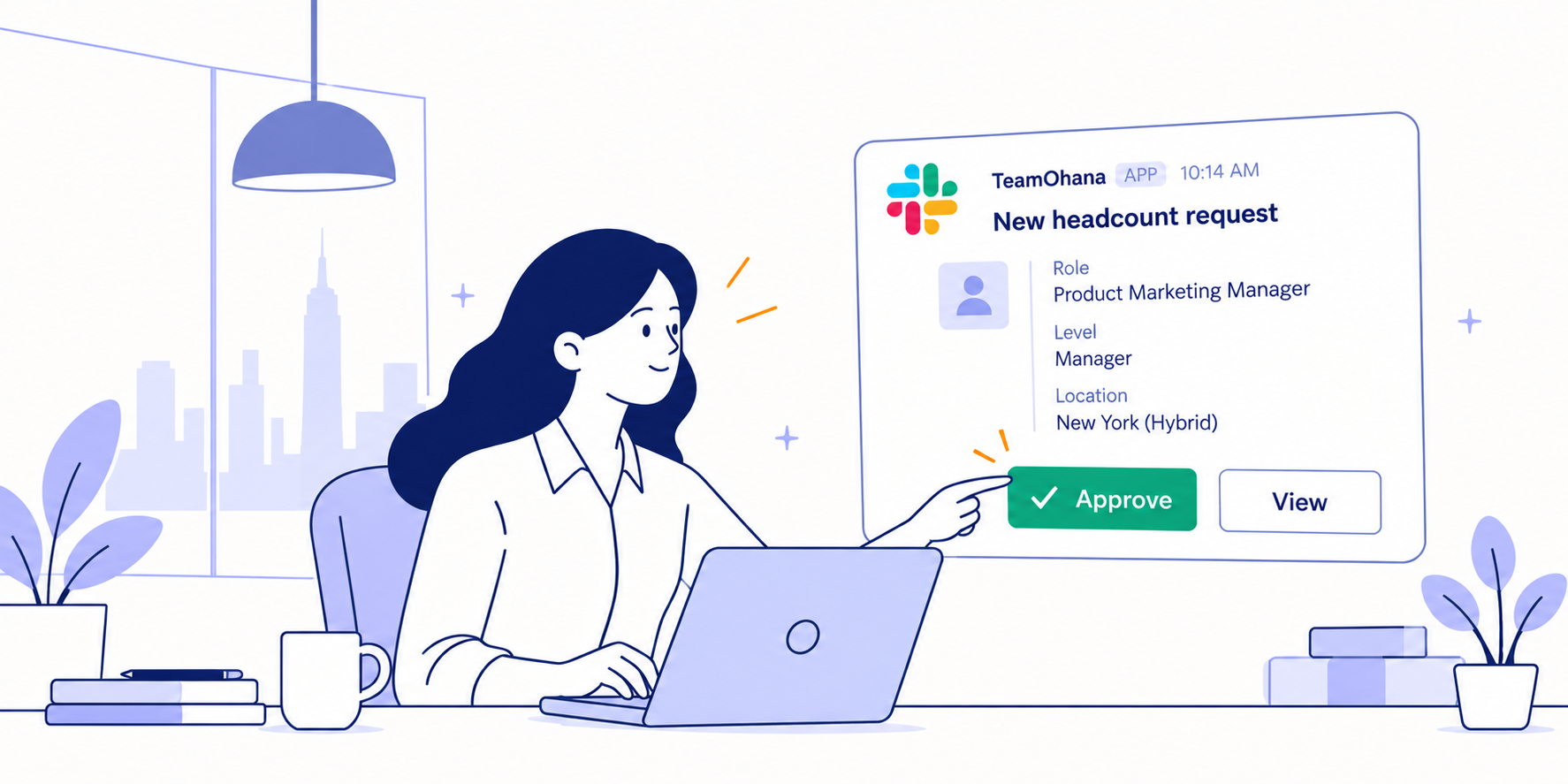
Approvals live in chat, not in the plan. A software company planning 30 to 40 hires a year approved roles over Slack, Teams and email. Hiring managers made offers above benchmark without Finance sign-off. The variance compounded every year, and Finance got stuck reconciling after the fact.
Talent Acquisition can't answer Finance's questions. At a manufacturer of roughly 20,000 people with 100+ open roles, the TA lead built the plan in Excel and Finance approved the spend. Nobody shared a view. TA couldn't say when new hires would start or what they'd cost.
Backfills disappear. A manufacturing company of about 750 people hired roughly 600 in 10 months. Terminations in the HRIS were invisible to Talent, so backfills started late. Corporate requests arrived by Slack with 18 different owners. Reporting one quarter's metrics took about six weeks.
The manual plan has a price tag. A consumer goods company of about 480 people, growing 25% year over year, tracked everything in spreadsheets. Recruiting approvals took around two weeks. Office space hit 95% capacity because the forecast was off. They were weighing $400K to $560K in new HR and recruiting headcount just to keep the manual process running.
The survey data says the same thing. In OrgChart's survey, 51% of HR leaders use spreadsheets as a core planning tool. Their top challenges were consolidating data (49%), keeping it accurate (47%), plan approvals (34%) and version control (29%). And 84% said they're interested in different tools. Planful's research found 30% of organizations lack integration between systems and 21% struggle with inconsistent assumptions between workforce and financial plans.
Ownership breaks down when the plan lives in one person's spreadsheet and the decisions happen somewhere else.
Decision rights: who decides what in headcount planning
Shared ownership only works when every decision has one name next to it. Below is a starting point for Finance, HR and Talent Acquisition. Adjust a row or two to fit your company, but don't leave any blank.
| Decision | Decides | Must approve | Consulted |
|---|---|---|---|
| Annual headcount budget and envelope | Finance | CEO / exec team | HR, department heads |
| Org design and role and level architecture | HR | Exec sponsor | Finance, hiring managers |
| Resource allocation by department | Finance | CFO | HR, department heads |
| Net-new role (create the position) | Hiring manager | Finance (budget), HR (level and fit) | Talent Acquisition |
| Backfill | HR (is the role still needed?) | Finance, only if cost or level changes | Talent Acquisition, hiring manager |
| Comp band and offer within band | HR | Finance, for exceptions only | Talent Acquisition, hiring manager |
| Hiring sequence and recruiting capacity | Talent Acquisition | HR | Finance, hiring managers |
| Mid-year reforecast and scenarios | Finance | CFO / CEO | HR, Talent Acquisition |
| Contractors and AI agents in the plan | Finance (cost), HR (policy) | CFO, CHRO | Department heads, IT |
Two rules apply to every row. The person who builds the plan shouldn't be the only one who can change it. And a decision made outside the system, like an offer in a DM, doesn't count until it shows up in the plan.
The headcount planning workflow: from budget to filled seat
Clear ownership is only half the fix. You also need clean handoffs, so here is the path a role should travel, with the owner at each step.
- Set the envelope. Finance and the exec team agree on total budget, cost per seat and variance guardrails.
- Allocate it. Finance and department heads divide the envelope across teams.
- Create positions. HR turns allocations into positions with roles, levels and bands. Every worker gets one, contractors included.
- Request and approve. Hiring managers request roles against open positions. Finance checks the budget. HR checks level and fit.
- Sequence the hiring. Talent Acquisition prioritizes approved roles, sizes recruiting capacity and gives realistic start dates.
- Hire within band. Offers go out inside the approved range. Exceptions route back to Finance.
- Update the record. The HRIS changes, and the plan changes with it. Every termination triggers a backfill review.
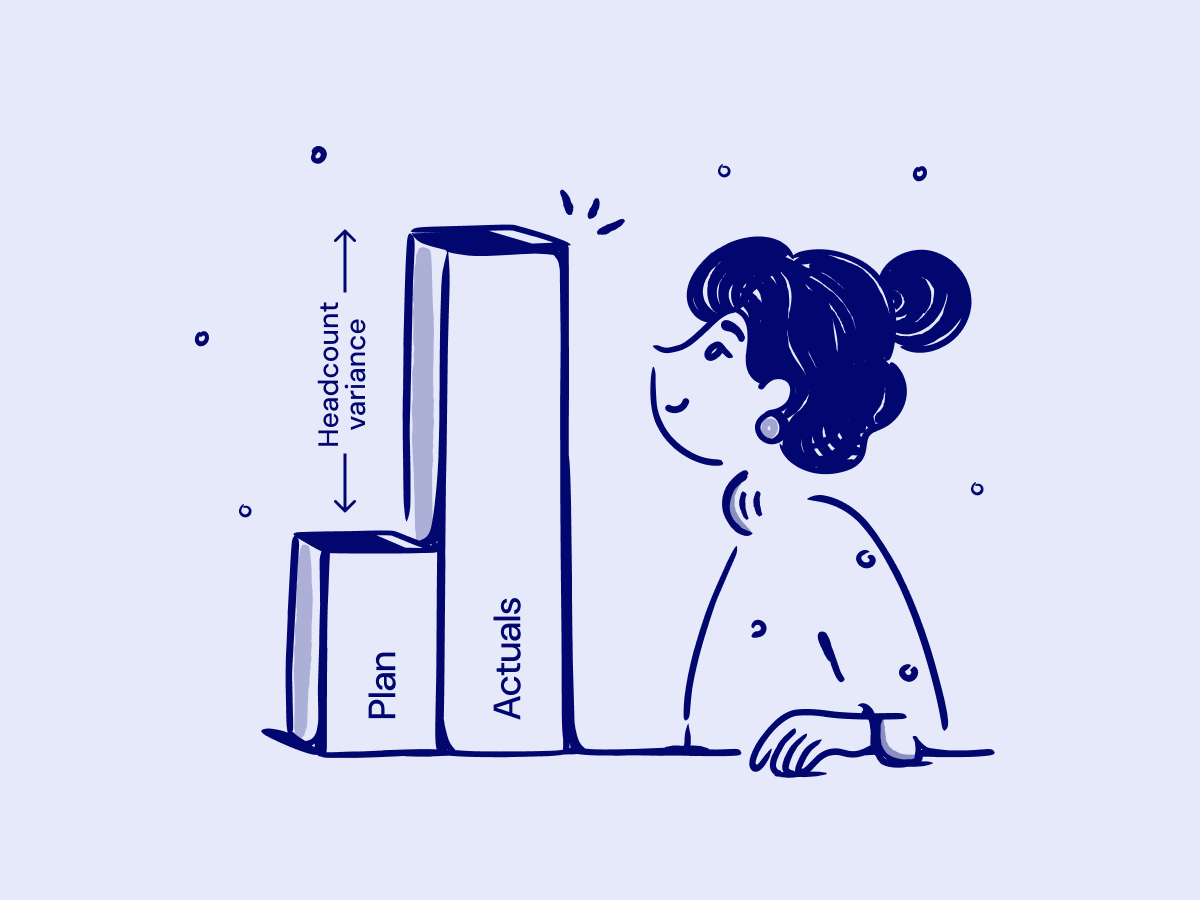
- Review monthly, together. Finance, HR and Talent Acquisition look at variance, open roles and backfills in one meeting, off one view.
No step involves a spreadsheet emailed from team to team. Every step either writes to the plan or reads from it, which keeps three functions working from the same version.
What AI changes about staffing strategy in 2026
Who should own headcount planning stays the same in the AI era, but the stakes are higher.
Gartner's Robin Boomer says AI has pulled HR into cost conversations that used to sit with Finance. Business leaders are asking how much work automation can absorb, and that question lands on workforce cost and headcount. He warns that HR is often brought in too late, after the decision is already made.
IBM's CFO, Jim Kavanaugh, calls the result “workforce economics.” Five years ago, he says, the CFO and CHRO lanes were clear. Now every capacity decision includes a question about whether the work belongs with people, AI or a mix. IBM's CHRO, Nickle LaMoreaux, keeps it simple: decide what technology should do, then decide what humans should do. They do it together, early, before execution starts.
That adds a new row to the decision-rights table: who owns the digital side of the plan?
A plan that counts only humans has a hole in it.
Most teams are early. In OrgChart's survey, only 29% said they build AI agents into their workforce plan. On our own calls, finance and HR leaders are asking for AI that reconciles board decks, builds dashboards on demand and answers what-if questions without a week of spreadsheet work. The requests are practical, and the ownership gap behind them hasn't changed.
How to settle ownership of headcount planning this quarter
Settling this takes five decisions, not a reorg.
- Write down decision rights. Use the table above. Get your CFO, CHRO and head of Talent Acquisition to sign off on one page.
- Name a plan steward. One person is accountable for the accuracy of the plan, not for every decision in it. This is often someone in FP&A or HR operations.
- Put every worker in a position. Employees, contractors and open roles all get a seat in the plan. If it isn't in the plan, it isn't budgeted.
- Move approvals into the workflow. If hiring managers approve in DMs and email, the plan will always be behind. Approve where people already work, and write the result back to the plan.
- Meet monthly, off one view. Finance, HR and Talent Acquisition review variance, open roles, backfills and the reforecast together.
Get these right and you can see every open seat, put contractors in the plan, give department heads a budget envelope and stop paying for duplicate hires.
TeamOhana was built for this. It works alongside your HRIS, ATS and finance tools instead of replacing them, so the plan, the approvals and the variance live in one place.
Ready to build the foundation your workforce decisions deserve? Book a demo.
Patterns cited in this article are drawn from TeamOhana's recent conversations with Finance, HR, and Talent leaders across growth-stage and enterprise companies. All references are anonymized and paraphrased.
Sources
- Cost optimisation is now HR's problem – here's why (Human Resources Director, June 12, 2026): Gartner's Robin Boomer and the 2026 CHRO Leadership Perspectives Survey
- The State of Workforce Planning 2026 (OrgChart, survey of 409 US HR leaders, February 2026)
- Siloed Workforce Planning is Costing You (Planful, January 27, 2026): cites Planful's 2025 Global Finance Survey
- Workforce economics emerges as AI reshapes the C-suite (SiliconANGLE, September 23, 2026): IBM CFO Jim Kavanaugh and CHRO Nickle LaMoreaux
Take control of your headcount spend

Headcount planning FAQs
Simplifying TeamOhana: your questions, answered.
No single team owns it alone. Finance owns the budget envelope and cost guardrails, HR owns org design and position data, Talent Acquisition owns hiring delivery, and hiring managers own the business case for each role. One named plan steward should be accountable for the accuracy of the shared plan.
Headcount planning decides how many roles you need, what they cost and when you'll fill them. Workforce planning is broader. It covers skills, the mix of employees, contractors and AI, and the capabilities you'll need in the future. Headcount planning is the near-term, budget-linked layer of workforce planning.
Neither should own it alone. Finance should hold the budget and cost guardrails. HR should hold org design and role data. A plan owned by only one side tends to be either cost-only or talent-only, and the other side works around it.
Talent Acquisition turns an approved plan into a hiring plan that can be delivered. That means sequencing roles, sizing recruiting capacity and giving Finance realistic start dates. TA should also feed actual time-to-fill back into the plan so the forecast improves.
Review variance, open roles and backfills monthly, and reforecast at least quarterly. In OrgChart's 2026 survey, 78% of HR leaders said they run planning exercises quarterly or on an ongoing basis.
Spreadsheets don't update when people leave, get promoted or move teams, so the plan drifts from the HRIS and ATS. They also hide who changed what and when. In OrgChart's survey, 51% of HR leaders still use them as a core planning tool, and consolidating data was the top challenge.