
Curious how TeamOhana can help you? Talk to us.
In this article
Never miss new content
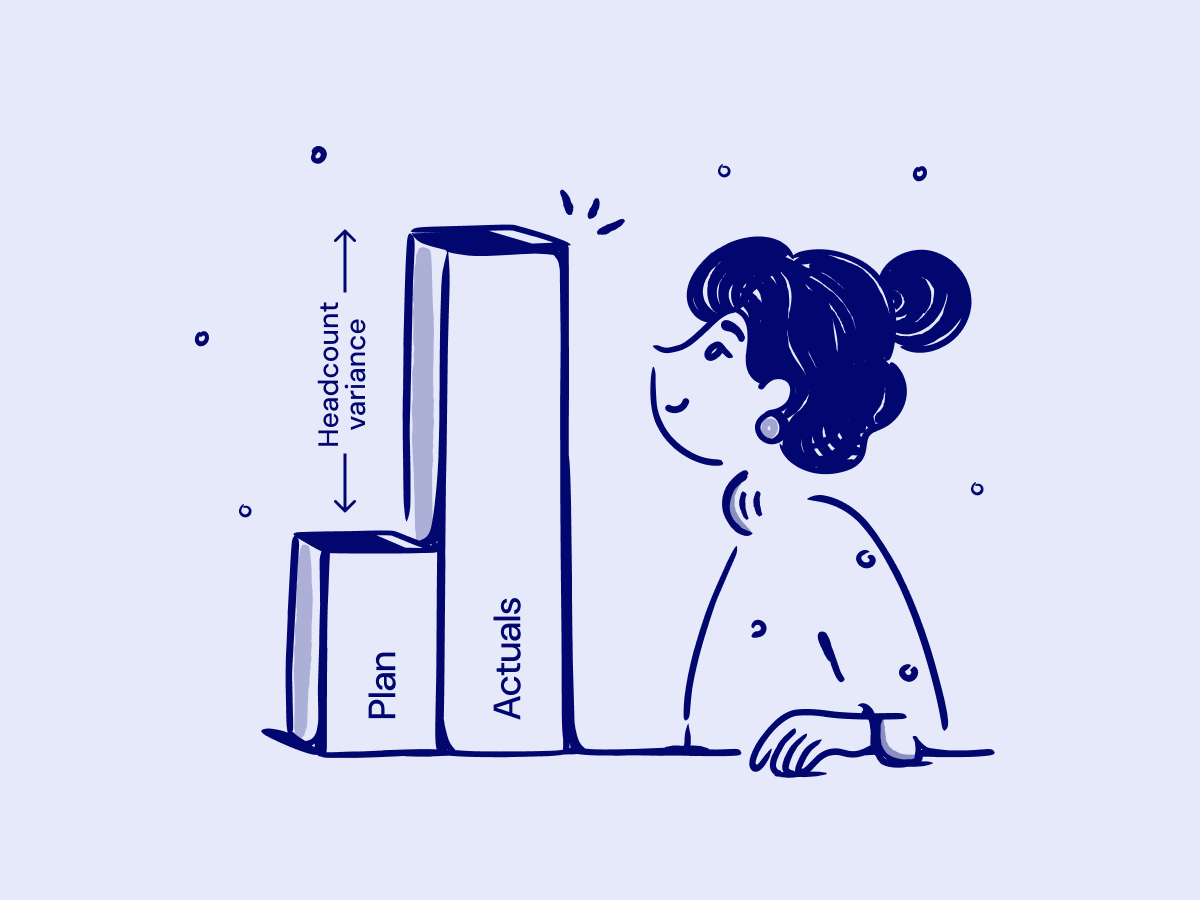
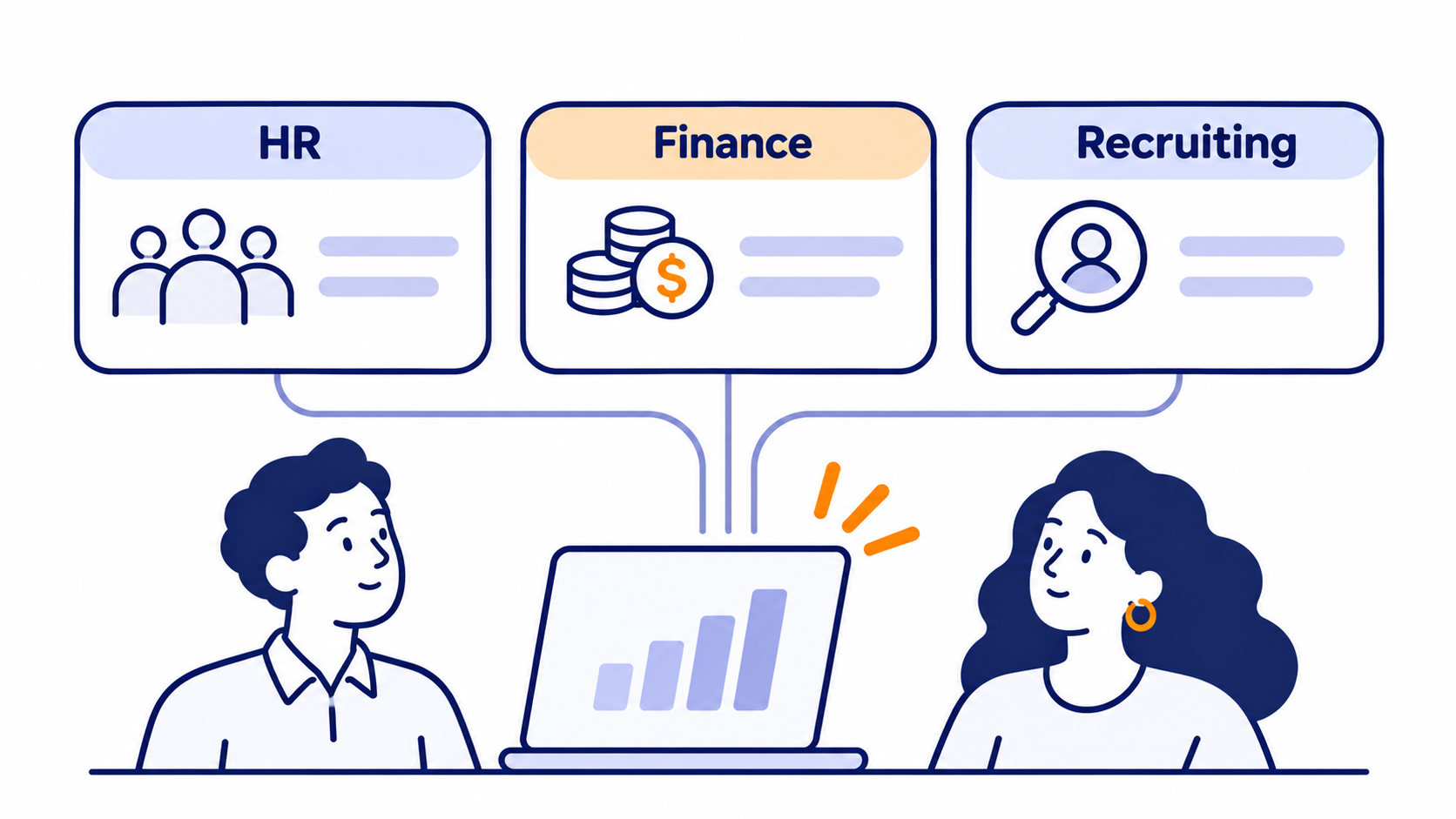
Most companies run on three headcount numbers, and each one answers a different question. HR's system counts who is on payroll today. Finance counts the seats it approved and budgeted. Recruiting counts the roles it is trying to fill right now. The trouble starts when someone asks "how many people do we have?" in a leadership meeting and all three numbers show up.
Over the past six months, finance, HR and talent leaders have walked us through this exact scene on calls. Below is what they told us, why the numbers drift apart, what the gap costs, and a one-hour exercise to find yours. We've added government, academic and analyst sources to show why "headcount" is harder to pin down than it sounds.
The three headcount numbers, and who owns each
| Number | Owner | Where it lives | The question it answers | When it changes |
|---|---|---|---|---|
| Actual headcount | HR and People Ops | HRIS and payroll | Who works here today? | A start date, a departure, a status change |
| Planned headcount | Finance and FP&A | Budget model, spreadsheet or planning tool | How many seats did we approve, and what do they cost? | Annual planning and each reforecast |
| Open headcount | Talent acquisition | Applicant tracking system | Which roles are we actively hiring for? | A req opens, closes or goes on hold |
The problem is the handoff. Finance approves a seat in a plan. Someone re-keys it into the HRIS as a position. Recruiting opens a req against it. Then a hiring manager changes the level, the start date slips two months, or a backfill gets pointed at a different role. Nothing tells the other two systems.
Finance approves the seat, HR re-keys it as a position, and recruiting opens a req. When any one of them changes, nothing tells the other two systems.
Some companies end up with a fourth number: the roles that were agreed in a Slack thread and never made it into any of the three.
What it looks like inside real companies
These come from finance, HR and talent calls between May and September 2026. We've removed company names.
The plan that outran the budget. An HR leader at a fast-growing consumer products company walked us through it. The founders' plan was 145 hires. The board cut it to 100. The company had already hired around 130, with 41 roles still open. The conversation, as that leader described it, ends with "that actually wasn't approved as a part of our budget."
Behind plan, but by how much? A senior talent leader at a software company said finance told his team it was 50 roles behind plan. Only 30 roles were open. His answer: "there's not 50 more roles approved." He compares open positions against open reqs by hand every month.
The budget is right and the plan isn't. At a company with more than 3,000 employees, a talent leader said finance only looks at the top-line number. In her words, the budget is correct, but "everything else isn't." About 50 approved reqs failed to load because of department mismatches, including one department that existed in the applicant tracking system and not in the HRIS.
Four plans, none approved. A talent leader at a trading firm of about 250 people said there were "four different hiring plans for 2026" in circulation, none officially approved, while the company hired heavily. Everyone asked about the plan every September.
Reconciling by hand. A people-ops leader at a software company of about 235 employees told us the HRIS says one thing, the applicant tracking system says another, and everybody has a spreadsheet, so they reconcile by hand. Their estimate is about two person-hours a week.
The companies, tools and team sizes differ. The pattern doesn't. The disagreement usually surfaces in a meeting, at the worst possible moment.
Why the three numbers never match
Four things pull them apart.
Each team defines "headcount" differently. The U.S. government has this problem at national scale. The Bureau of Labor Statistics publishes two monthly employment estimates that differ, because the surveys define employment differently (BLS). One counts jobs, the other counts employed people (Federal Reserve Bank of San Francisco).
The IRS shows the same thing inside a single company. Its worked example has 40 full-time and 15 part-time employees. That is 55 people on payroll, or 47 full-time employees once part-timers are converted to full-time equivalents (IRS). Same company, two counts. Now add contractors, interns, people on leave, and candidates who accepted an offer but haven't started.
They run on different clocks. At one software company we talked with, finance dashboards count a hire on the start date. Recruiting plans around the date the offer was accepted, about 45 days earlier. A talent leader at a company of roughly 850 people described finance's plan starting from a baseline of 715 heads, while another sheet in the same workflow said 713. He told us he has to pull the figure from multiple places to get it.
They don't share an ID. A talent ops leader at a consumer software company told us they carry two identifiers for the same seat: a number from finance's annual plan, and a position ID generated by the HRIS. A finance lead at an AI infrastructure company said plainly that they have no unique key for each headcount, and that roughly 1,400 to 1,500 existing employees weren't linked to any approved headcount. Without a shared key, matching a plan line to a req to an employee is a manual job.
What is a position ID? A position ID is a unique identifier for an approved seat, separate from the person who fills it. It follows the seat from plan to req to offer to employee, so finance, HR and recruiting can match records without manual lookups.
Nobody owns the bridge. Finance owns the plan. HR owns the system of record. Talent owns the reqs. Gartner's Robin Boomer calls strategic workforce planning a persistent "hot potato" between finance and HR, and cites Gartner data showing only 20% of CFOs rank their CHRO among their top three executive relationships (HCA Magazine). So the reconciliation falls to whoever has the most patience and a spreadsheet.
What the gap costs
Offers that outrun the budget. A finance lead at a software company of about 200 people said the budget for a role is $100,000, and offers have gone out at $110,000, with finance finding out afterward. Nobody could trace who approved the difference. A finance leader at another software company put it this way: "It happens all the time." At a company hiring 30 to 40 people a year, a $10,000 miss on every hire would add $300,000 to $400,000 in annual base salary.
Forecasts that ignore attrition. A senior HR leader at a media company told us HR and finance disagree on how much headcount budget exists. The forecast assumed flat headcount while people were leaving and the company was trying to hire.
Hours nobody budgeted. The 235-person software company above estimates two person-hours a week on manual reconciliation. That's roughly 100 hours a year spent making three systems agree.
Mistakes inside the bridge. If the reconciliation lives in a spreadsheet, it has its own error rate. Raymond Panko at the University of Hawaii studied real-world spreadsheets and found uncorrected errors in about 2% to 5% of formulas, and little testing of them in industry (Panko). At that rate, a workbook with 400 formulas carries somewhere between 8 and 20 mistakes.
Real-world spreadsheets carry uncorrected errors in about 2% to 5% of formulas. A 400-formula reconciliation workbook could hold 8 to 20 mistakes.
Decisions made on the wrong number. At a company of about 350 people, the VP of engineering was getting one headcount number from finance and seeing a different one in the planning tool. The talent leader's summary: they just want everybody "looking at the same information."
How to find your three numbers this week
You don't need new software to see the size of the problem. You need an hour, one date, and the three people who own the systems.
- Pick one date. Use the last day of the month. Every number must be as of that day.
- Pull all three. Active employees from the HRIS, approved seats from finance's plan, open reqs from the applicant tracking system.
- Write down what each number includes. Contractors? Interns? People on leave? Offers accepted but not started? Does a hire count on the offer date or the start date?
- Build the bridge. Start from the HRIS count and add what is coming (accepted offers, open approved reqs). Compare the total to finance's plan.
- Sort every gap into a cause. Definition, timing, missing ID, or a role nobody approved.
- Name an owner and a date. Someone owns the bridge, and it gets rebuilt on the same day every month.
Here's what a bridge looks like with made-up numbers.
| Line | Heads |
|---|---|
| Active employees in the HRIS | 412 |
| Offers accepted, not yet started | 9 |
| Open reqs tied to an approved seat | 31 |
| Seats accounted for | 452 |
| Finance plan for the month | 460 |
| Gap to explain | 8 |
Those eight seats might be roles on hold, reqs opened without an approved seat, or plan lines that never made it into the HRIS. The point of the exercise is that eight becomes a list of eight names and reasons instead of an argument about whose number is right.
What to do once you can see the gap
The fix is a record every system points back to: one entry for each seat, from the day finance approves it to the day someone fills it, carrying an ID the plan, the req and the employee all share. Your HRIS stays the system of record for employees, and your applicant tracking system stays the system of record for candidates. TeamOhana works alongside both, including HRIS tools such as Workday, HiBob and BambooHR.
To see how finance tracks approved seats against what was actually hired, read our guide to budget envelopes and variance tracking. To see a gap broken down in dollars by department, look at the variance tracker. For the planning side, start with the headcount planning process and headcount forecasting guides.
Grab our metrics cheat sheet.
See how TeamOhana connects your headcount plan to every system your team uses. Book a demo.
Take control of your headcount spend

Headcount numbers FAQs
Simplifying TeamOhana: your questions, answered.
Headcount counts people. FTE, or full-time equivalent, converts hours worked into full-time units. In the IRS's worked example, a company with 40 full-time and 15 part-time employees has 55 people on payroll and 47 full-time employees once part-timers are converted to equivalents.
They should agree on written definitions, including who counts and when a hire counts, because that removes one cause of gaps. They'll still need all three numbers. Timing differences and missing IDs remain even when the definitions match.
For who is employed today, it's the HRIS. For which seats are approved, it's a position-level record that links the finance plan to reqs and hires. Many companies don't have that second record, which is why plans, reqs and employees drift apart.
Pick one date and pull all three numbers as of that day. Document what each includes, then build a bridge starting from the HRIS count. Sort each gap into definition, timing, missing ID or unapproved role, and give one person ownership of repeating it monthly.
A position ID is a unique identifier for an approved seat, separate from the person who fills it. It follows the seat from plan to req to offer to employee, so finance, HR and recruiting can match records without manual lookups.