
Curious how TeamOhana can help you? Talk to us.
In this article
Never miss new content
Every company is becoming an employer of both people and AI agents. Business leaders now decide, position by position, which work goes to a person and which goes to an agent. They should have a system built for that decision.
We started TeamOhana in 2022 because workforce decisions happen in Slack threads and spreadsheets long before they reach the system of record. Since then, we've built headcount planning and position management for companies including SeatGeek, Decagon, Abridge, Vanta and ElevenLabs.
Now we're building the workforce data platform. It brings people, positions, budgets and agent spend into one data model. For the first time, leaders see what every position costs as the spend happens, for people and agents alike. They control that spend and put the money they keep into growth.
Today we're taking the next step with agent-aware workforce planning. Every position in TeamOhana can now hold a person, an agent, or both, with one approved budget for both.
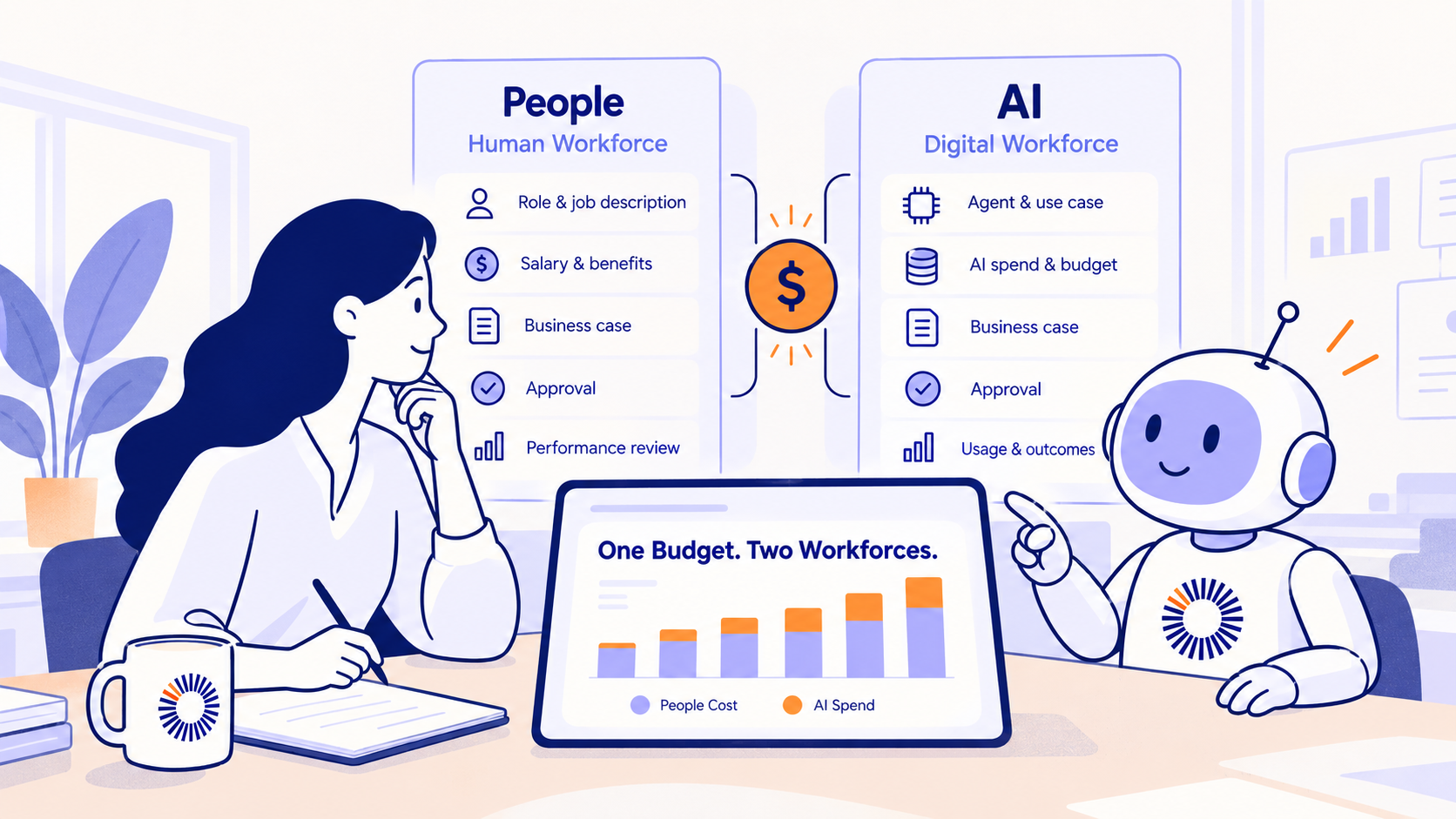
What is agent-aware workforce planning? Agent-aware workforce planning treats AI agents as part of the workforce. Each position can be held by a person, an agent, or both, and salary and agent spend are approved and tracked against one budget for that position.
Two workforces, one budget
People and agents draw from the same budget, but they are planned in different ways. A new hire needs an approved budget before day one. An agent needs only an API key, and its cost shows up on the bill after it has already done the work. Nobody governs both.
AI spend is outrunning the plan
Gartner forecasts worldwide spending on AI agents and assistants will more than double, from $29.2 billion in 2026 to $65.5 billion in 2027.
Most of that spend is being added on top of payroll. A year ago, 32% of companies in McKinsey's State of AI survey expected AI to reduce their headcount. In McKinsey's 2026 survey, published in August, 14% said it did, and two-thirds saw little or no change.
Budgets are not keeping pace. In a September survey of 1,636 enterprise technology leaders, The Futurum Group found 46.9% report AI spend above plan, and 43.3% of those absorb the overrun and reconcile it later.
46.9% of enterprises report AI spend above plan, and 43.3% of those absorb the overrun and reconcile it later (The Futurum Group, 2026).
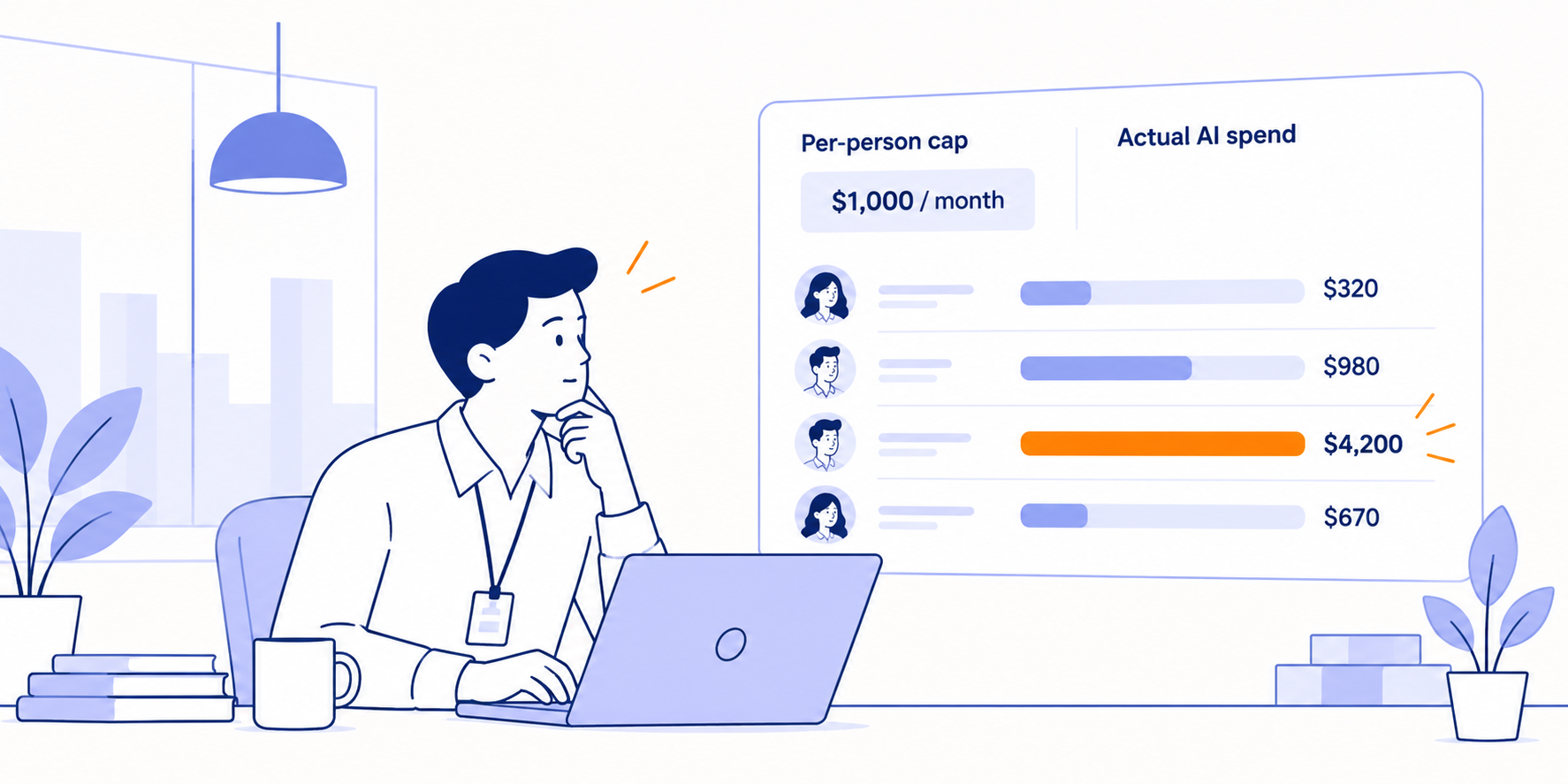
Spending caps on individual tools don't fix this. A cap limits what one tool costs. It doesn't tell a CFO what work the money buys or who is accountable for it.
Why agents belong in positions
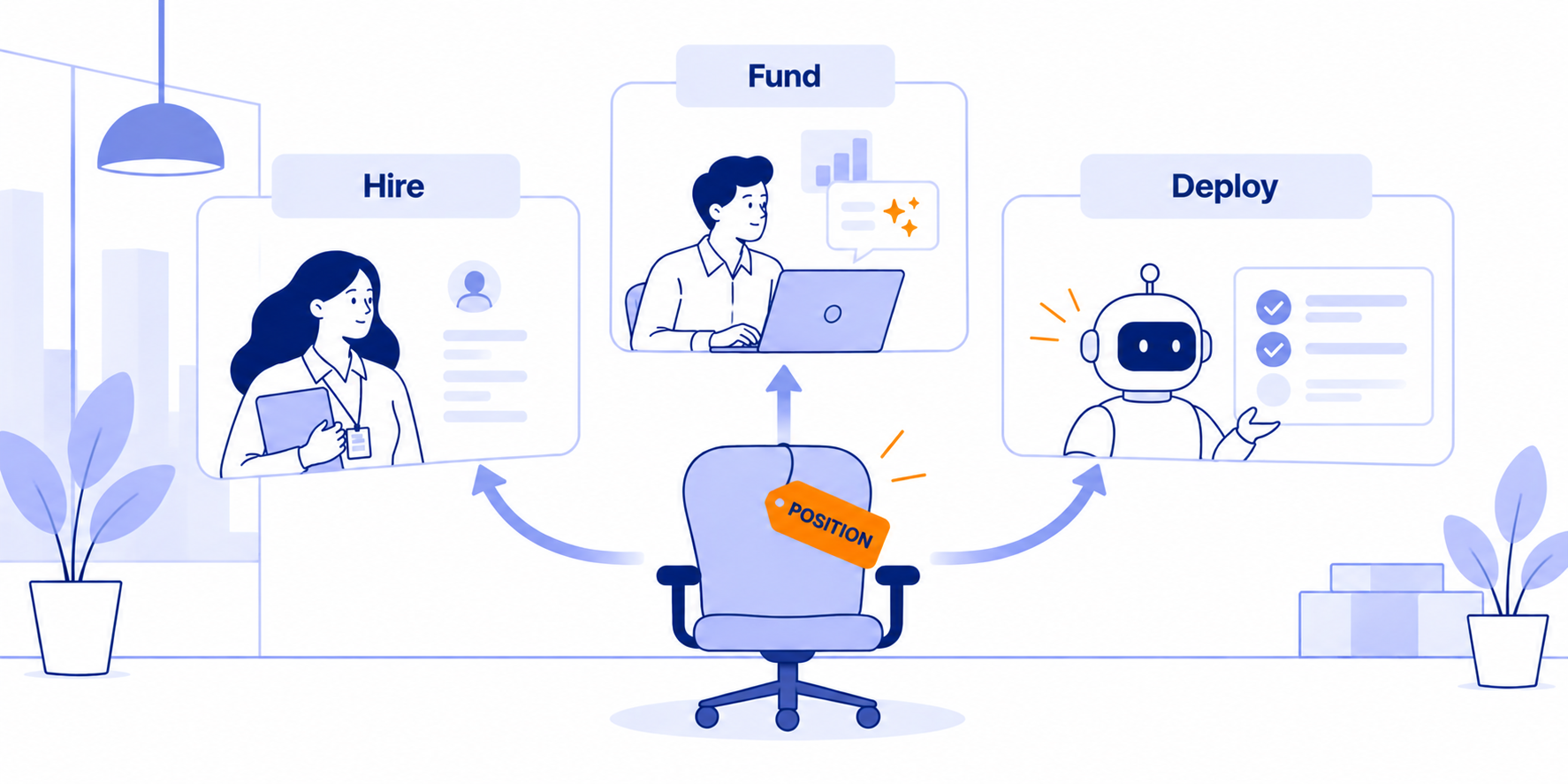
The first question in workforce planning used to be who to hire. Now it is whether a person, an agent, or both should do the work. That decision belongs in the position, where every hiring decision already lives.
A position has an owner and an approved budget. When an agent holds a position, it inherits both. The CFO and CHRO who approve a hire approve the agent too, in the same planning cycle and against the same budget. An agent in a position is labor, and TeamOhana plans it like labor.
What we launched
Agent-aware workforce planning adds four things to TeamOhana:
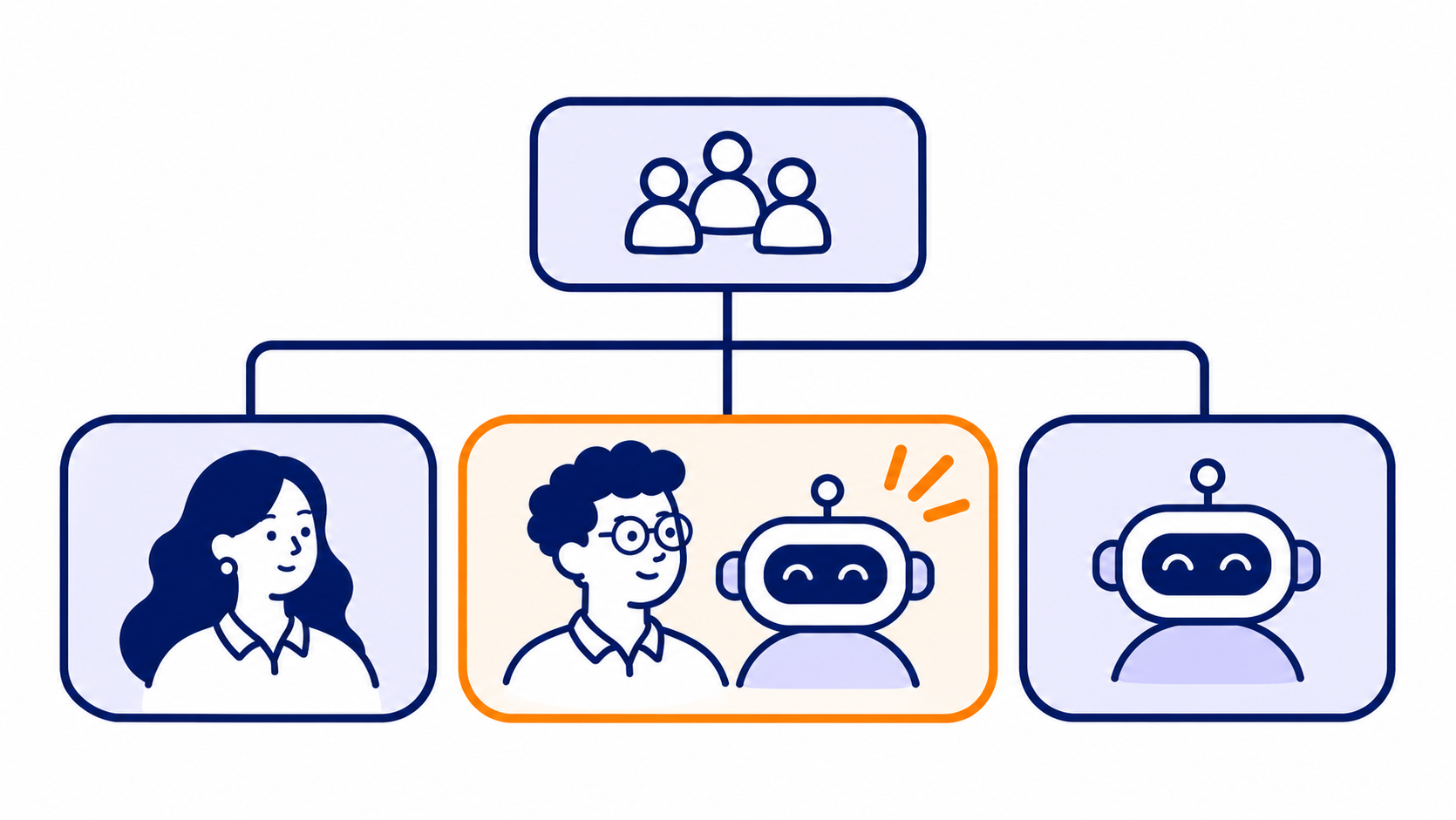
- Position records with human and agent occupancy. Every position shows whether a person, an agent, or both hold it. Agent capacity appears as FTE-equivalent cost next to salaried headcount.
- One approved budget per position. Salary and agent spend sit in the same budget line. The CFO and CHRO approve both in the same planning cycle.
- A requisition flow that asks the question first. When a hiring manager opens a requisition, they choose human, agent, or both before it moves to approval.
- Variance alerts on agent spend. TeamOhana maps each agent to a position through its API keys and tracks actual spend from every key and gateway. When agent spend passes the position's budget, the position owner and finance get an alert.
Control the spend, grow more revenue
Agent-aware planning is built to help companies grow more revenue. It comes down to the right mix of people and agents, and where to put capital.
It starts with workforce design. TeamOhana shows the mix of people and agents each position needs to get the work done. Finance and people teams see what every position costs, whether a person or an agent fills it, and they control that spend against an approved budget.
Workforce design decides where capital goes. Leaders see which positions agents are working in and what that work costs, so they can invest more where AI is driving outcomes. They also see where agents can take on future work, so a team can keep growing with fewer new hires.
That control frees money. A company that holds every position to plan has capital its competitors are still losing to overruns. It can put that capital into bolder bets. The companies that plan their people and agents together will grow more revenue than the ones that find out what their agents cost from the invoice.
Why the workforce needs a data platform
Traditional HR software records an employee once they are hired. The decisions that come before it, such as whether to open the role and what budget to give it, happen in spreadsheets and Slack threads. HR software also has no record of an agent's budget or the spend running through its API keys.
TeamOhana brings those decisions into one place, built around the position. Every hire and every agent is approved against a position, so finance and people teams plan and run the workforce from the same numbers. Each planning cycle adds to that record.
Starting with SeatGeek
SeatGeek plans its headcount in TeamOhana and already tracks its AI spend with TeamOhana Token Spend Management. Agent-aware workforce planning is its next step: one plan for its people and its agents.
"We've planned our headcount with TeamOhana, and now we track our AI spend there too. The next frontier for responsible growth is planning our agents the same way we plan our people. We're excited to extend our partnership with TeamOhana from headcount planning to agent-aware planning." Teddy Collins, EVP, SeatGeek
Agent-aware workforce planning is available today. See how it works.
Take control of your headcount spend

Agent-aware workforce planning FAQs
Simplifying TeamOhana: your questions, answered.
Agent-aware workforce planning treats AI agents as part of the workforce. Each position can be held by a person, an agent, or both, and salary and agent spend are approved and tracked against one budget for that position. TeamOhana launched it so finance and people teams can plan people and agents in the same cycle.
A new hire needs an approved budget before day one, but an agent usually needs only an API key, and its cost appears on the bill after the work is done. Planning agents in positions gives each one an owner and an approved budget. That way the CFO and CHRO approve agents the same way they approve hires.
A cap limits what one tool costs, but it doesn't tell a CFO what work the money buys or who is accountable for it. Tying agent spend to a position connects the cost to the work and to an owner. That makes overruns visible against a budget instead of on the invoice.
TeamOhana maps each agent to a position through its API keys and tracks actual spend from every key and gateway. Agent capacity appears as FTE-equivalent cost next to salaried headcount. When agent spend passes the position's budget, the position owner and finance get an alert.
Yes. In TeamOhana, every position can hold a person, an agent, or both, with one approved budget covering salary and agent spend. When a hiring manager opens a requisition, they choose human, agent, or both before it moves to approval.
No. TeamOhana works alongside your HRIS. HR software records an employee once they are hired, but it has no record of the decisions that come before the hire or of an agent's budget and API spend. TeamOhana brings those decisions into one place, built around the position.