
Curious how TeamOhana can help you? Talk to us.
In this article
Never miss new content
Every company starts the year the same way. Goals first, then a budget envelope to hit them. Most of that envelope goes to payroll, because capacity has always meant people.
Over the last 24 months, a second line has shown up on the P&L. It's growing faster than any salary line in the company, and it buys capacity too. Among TeamOhana customers, AI spend ran at about 0.5-1% of payroll at the start of this year. In some engineering organizations it's now 3-5%, and as high as 10%.
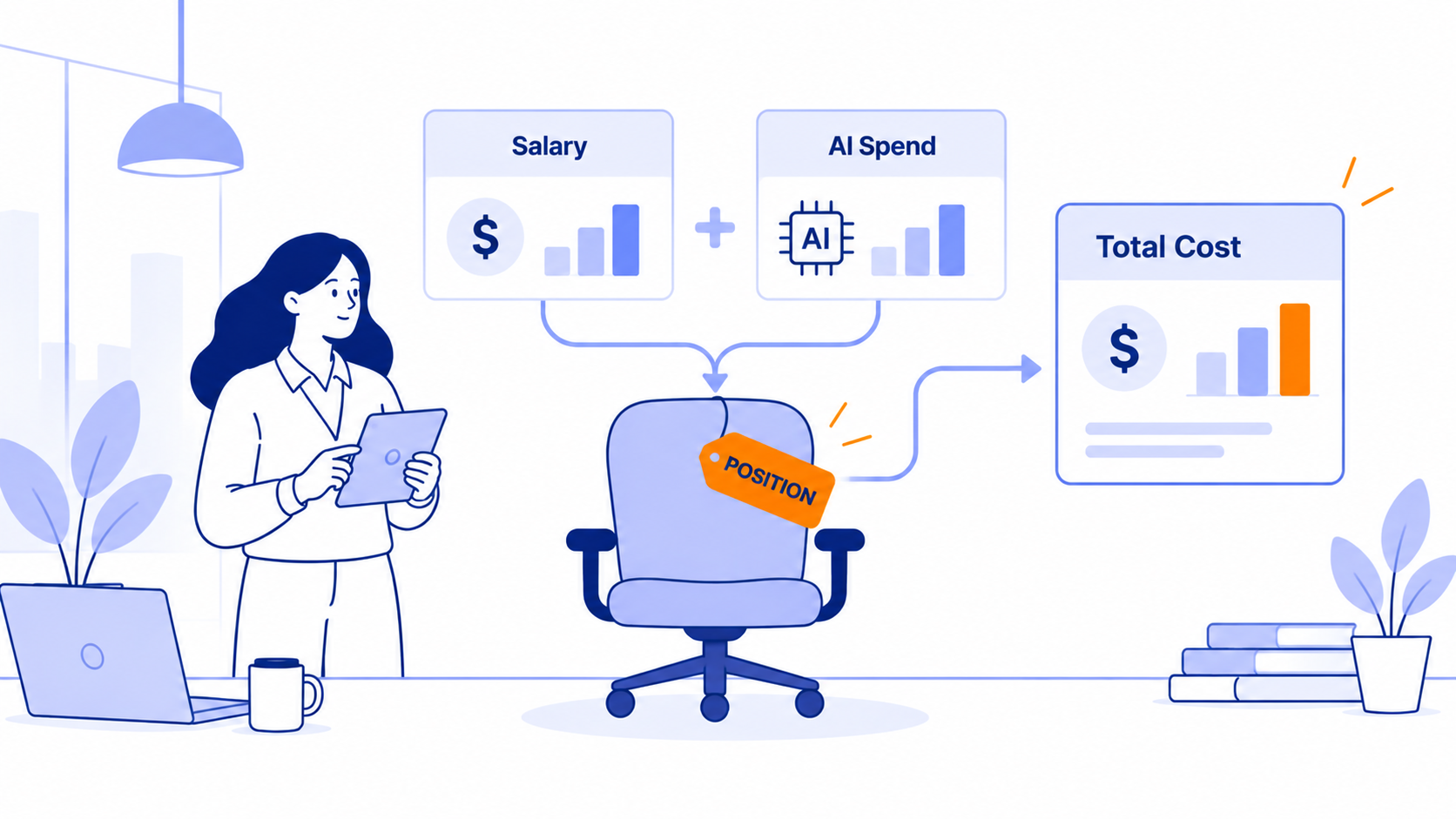
The way I've started putting it to CFOs: total cost of work is no longer your payroll. It's payroll plus token spend.
Two workforces. One budget. And 2027 is the first annual plan that has to hold both.
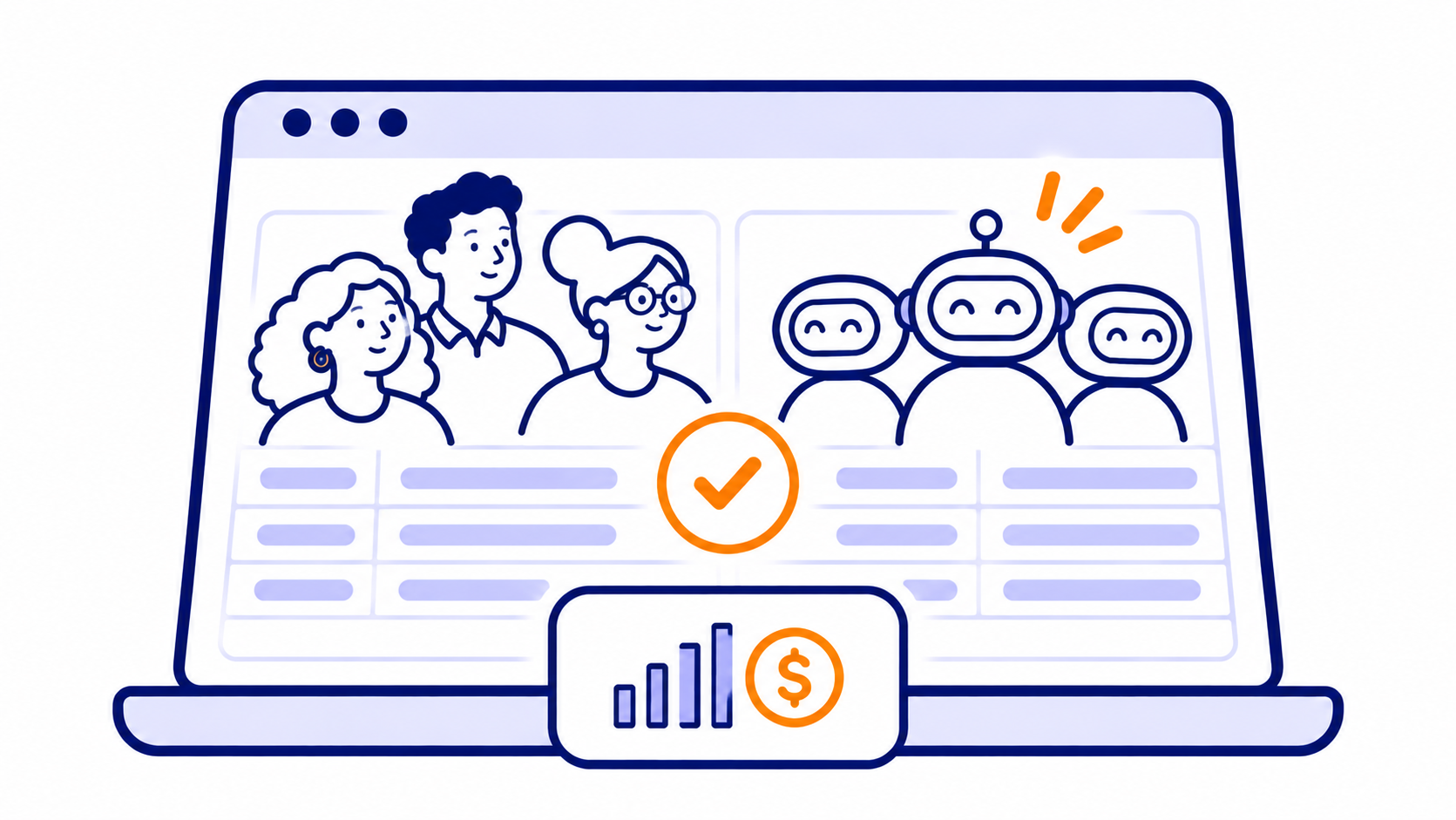
Every company now runs two workforces
For decades, every position on the org chart held one person. That model is breaking. Agents now fill some positions outright and share others with the people in them. You have payroll for humans, and now you have token spend for agents.
Here's what that looks like for one person. An engineer on a $200K salary can carry $40K in tokens. That engineer costs 20% more than the plan says, and no headcount plan accounts for it.
Our planning systems haven't caught up. Finance plans salaries a year ahead, and the CFO and CHRO approve every new hire together. AI spend follows none of that discipline. It shows up on the bill after the agents have already done the work.
Nobody owns the whole number
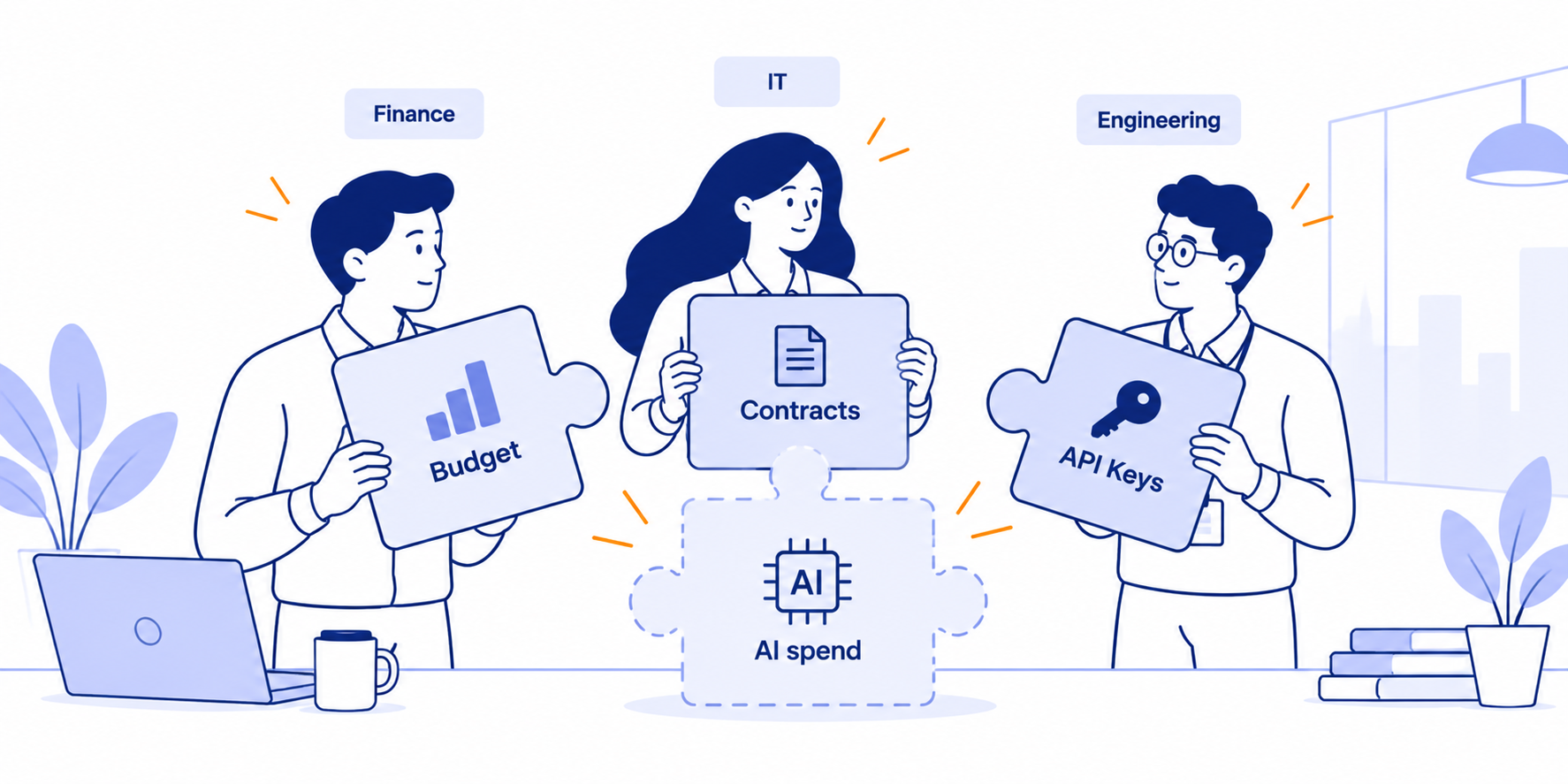
In the companies I talk to, agent spend sits wherever the invoice gets paid. A team adds agents in March and the bill arrives in April. The agent gets its access from IT and its budget from whoever pays the invoice.
The data is split the same way. IT sees token usage but has no access to payroll. Finance has payroll but can't see token data. So nobody can report AI spend as a share of payroll, even though that's how more CFOs are starting to think about it.
Ask finance leaders where AI spend belongs and most give the same answer. It isn't IT spend, even though IT manages the keys. In their heads, it's new payroll spend. There's just no general ledger for it yet.
So the question I keep asking is this one:
CFO owns the budget. IT owns the API key. Who owns the workforce transformation?
The industry is governing access. Finance needs to govern spend.
This month, Workday agreed to buy C1.ai, an identity platform for people and agents. Anthropic's S-1, filed on Oct 26, describes AI that carries the access rights its organization grants.
Both are about what an agent may touch. Finance teams heading into 2027 planning are asking something else: what may the agent spend, and against which plan?
Right now, that spend is outrunning plans:
- In a September survey of 1,636 enterprise technology decision makers by The Futurum Group, 46.9% said AI spend is running over plan.
- The 2026 State of AI Cost Governance Report from Mavvrik and Benchmarkit found that only 11% of 396 organizations forecast their AI spend within 10% of actual.
Until recently, a team spending heavily on AI got applause. Companies are now moving from experimenting with AI to running it, and running it means budgeting for it. Today the same budget pays for two workforces, and we govern only one of them.
The 2027 planning call that didn't exist last year
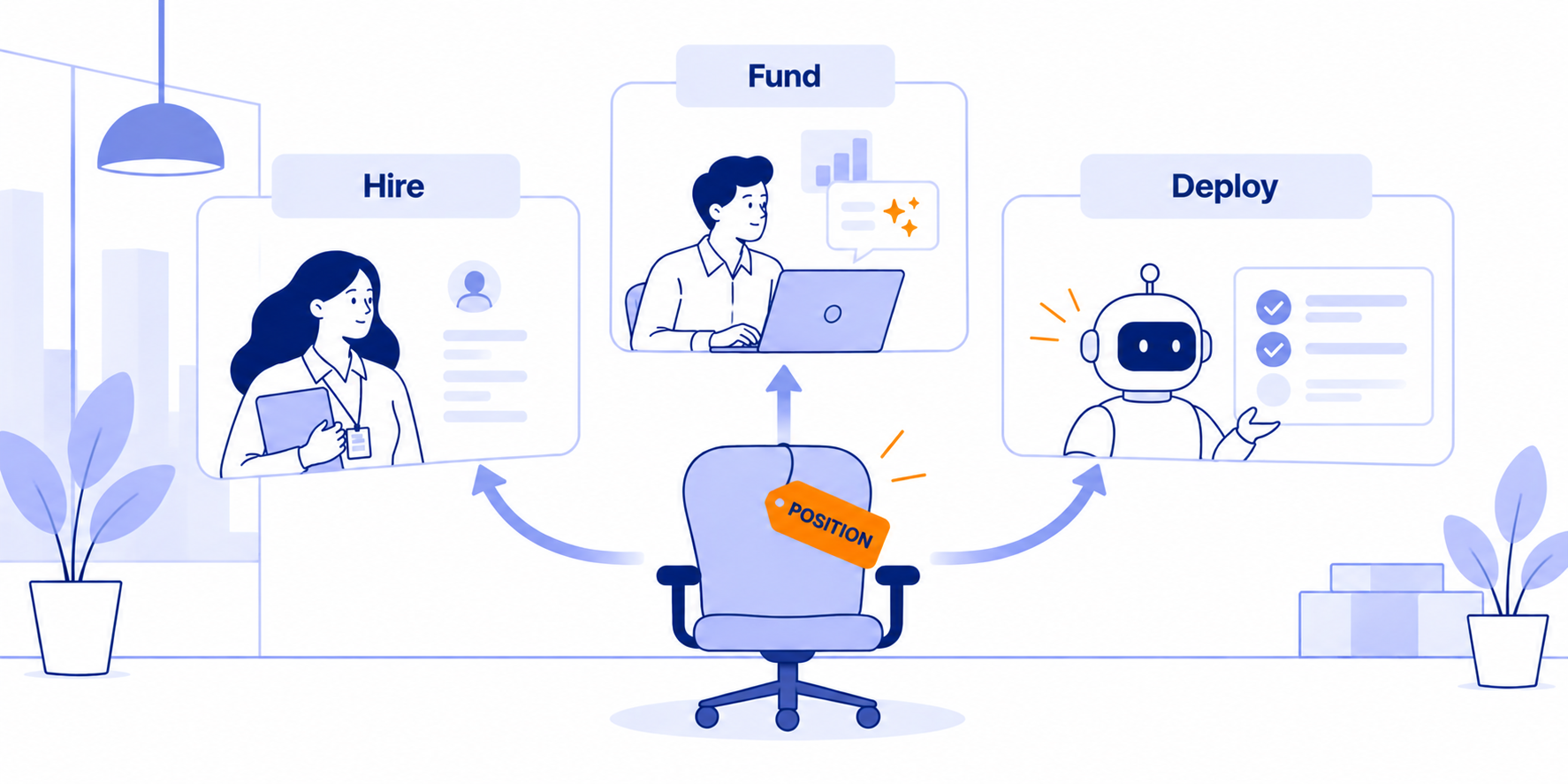
For the first time, the planning cycle has to answer a new question. You have a budgeted position that's supposed to do some work. Will a person fill it, or an agent?
That makes next year about trade-offs. Same budget, three ways to buy capacity:
- Hire people, with AI spend attached.
- Fund more AI for the people you already have.
- Deploy agents to do the work on their own.
Finance cares most about the envelope it sets at the start of the year. Whether people, people working with agents, or agents on their own fill that envelope is a call each leader will make. That's a job-design call as much as a budget call, so the people team belongs in the room with Finance.
Workforce planning used to ask how many people to hire. Now it has to ask what mix of human and agent capacity each position needs.
That makes this a new job for the CFO and CHRO. It isn't only workforce planning anymore. It's organizational design: finding the mix of human and agent capacity that delivers the company's goals. We call that agent-aware workforce planning.
What is agent-aware workforce planning? Agent-aware workforce planning treats people and AI agents as one workforce. Each position can be filled by a person, an agent, or both, and salary and AI spend are planned and approved against the same budget.
One plan for both workforces
If your workforce is people and agents, your workforce budget has to cover both, and so does your plan. When a team asks for capacity, the hire and the agent compete in the same request, before the same approvers, inside the same planning cycle.
An agent gets what any worker gets: defined work, a budget, an owner and a review date. Finance then tracks what the agent costs, the same way it tracks payroll.
In practice, that gives you two things a spend dashboard can't:
- Fully loaded cost. Salary plus AI spend, one line per employee.
- A forecast at the headcount request. Every planned hire carries its expected token spend before the offer goes out.
Plenty of dashboards will show you this year's AI total, and some are free. Visibility was never the hard part. Forecasting payroll and AI spend together is. And counting tokens was never the goal. Token prices keep falling. What's actually changing is the total cost of work.
None of this requires new technology. It requires CFOs and CHROs to treat agent spend as labor, not software. Labor comes out of one budget, so labor decisions belong in one plan.
Treat agent spend as labor, not software. Labor comes out of one budget, so labor decisions belong in one plan.
Three questions to settle before your 2027 plan is final
Most finance teams I talk to are still deciding where agent spend belongs. Before you lock the plan, ask:
- Where does agent spend sit in your plan right now: in IT's budget, or next to headcount?
- When a team asks for capacity, how do you decide whether it goes to a person or an agent?
- Who signs off?
Build the plan without the AI line and you'll spend next year explaining the variance.
Two workforces need one plan. See how agent-aware workforce planning works.
Take control of your headcount spend

2027 workforce planning FAQs
Simplifying TeamOhana: your questions, answered.
For the first time, an annual plan has to cover two kinds of capacity: people and AI agents. AI spend now buys work that used to be budgeted only as headcount, so the plan has to account for payroll and token spend together. Each budgeted position raises a new question: will a person fill it, an agent, or both?
Total cost of work is payroll plus the AI and token spend that buys capacity alongside it. When agents fill positions or support the people in them, salary alone no longer reflects what the work costs. Planning against the total cost of work keeps both lines in the same budget.
Many finance leaders see agent spend as new payroll spend, even though IT manages the API keys. When agents do work that people would otherwise do, the spend behaves like labor rather than software. Planning it next to headcount lets the CFO and CHRO approve hires and agents in the same cycle, against the same budget.
AI spend usually appears on the invoice after agents have done the work, without the up-front approval a new hire requires. IT sees token usage but not payroll, and finance sees payroll but not token data, so nobody owns the whole number. In a 2026 Futurum Group survey, 46.9% of enterprises said AI spend was running over plan.
Agent-aware workforce planning treats people and AI agents as one workforce. Each position can be filled by a person, an agent, or both, and salary and AI spend are planned and approved against the same budget. It turns workforce planning into organizational design: choosing the mix of human and agent capacity each position needs.
Attach an expected token spend to each headcount request, so every planned hire carries a fully loaded cost of salary plus AI spend before the offer goes out. Finance can then track actual agent spend the same way it tracks payroll. That makes AI overruns visible as plan variance instead of surprises on the bill.