2027 is the first plan with two workforces on it
Every plan before this one budgeted one workforce. 2027 budgets two, humans and AI agents, off the same line. This is the guide to read first, for Finance, Talent, and HR.
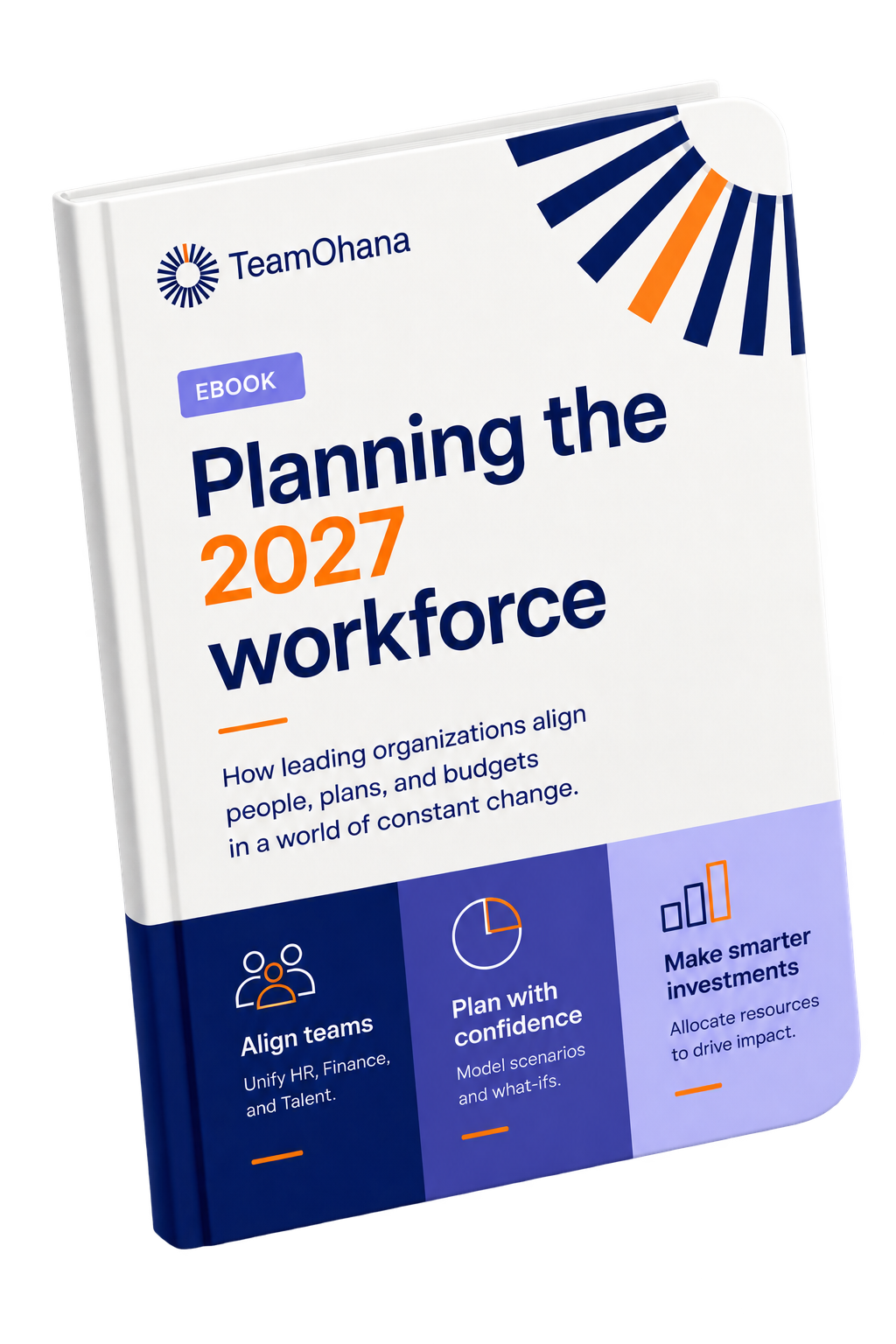
Every plan before this one budgeted a single workforce. In 2027 you are budgeting two. Humans get planned twelve months out. Agents show up on the bill after the work is already done. Nobody governs both.
Finance, Talent, and HR are being asked to plan a second workforce with no precedent and no shared vocabulary. Walk in with last year's playbook and you will misprice your largest expense line. You will not find out until it is too late to fix.
Inside, you'll find:
- Why 2027 is structurally different from every planning cycle before it, and what happens if you plan it like last year instead.
- Five ways a 2027 plan breaks, including the token blind spot most companies do not know they have.
- A real comparison: generic AI agent plus MCP versus an AI coworker that already knows your org chart, your approval chain, and who's allowed to see what.
- The actual prompts Finance, Talent, HR, and executives are already running through TeamOhana Computer, pulled from real usage, not hypotheticals.
- A 12 week planning sequence with an AI checkpoint built into every phase, plus the three rules that make it actually hold once the plan is approved.
- A 14 question readiness score, scored separately for headcount and AI, built to run out loud with all three teams in the same room.
- Real numbers from companies already doing this. Docker stopped six figures of unapproved spend a month. IonQ found $594,000 in savings from timing alone. SeatGeek ended operational chaos.
- Outside research, not just TeamOhana's take: Atlassian, KPMG, Deloitte, and McKinsey are all cited throughout.
If you are responsible for planning headcount, AI spend, or both in 2027, read this before you build a single line of the plan.
.avif)
Stop reconciling headcount. Start controlling it.