
Curious how TeamOhana can help you? Talk to us.
In this article
Never miss new content
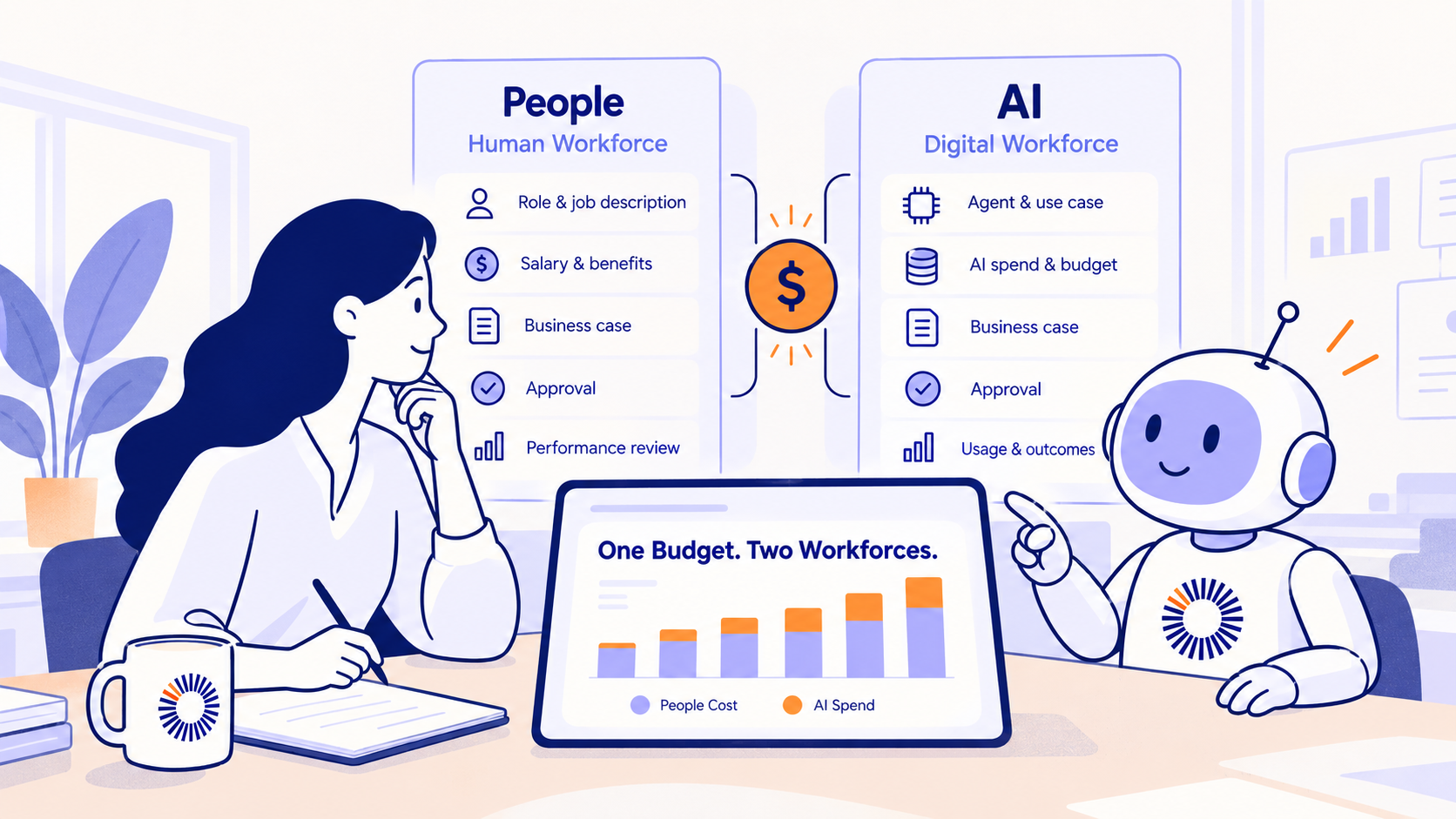
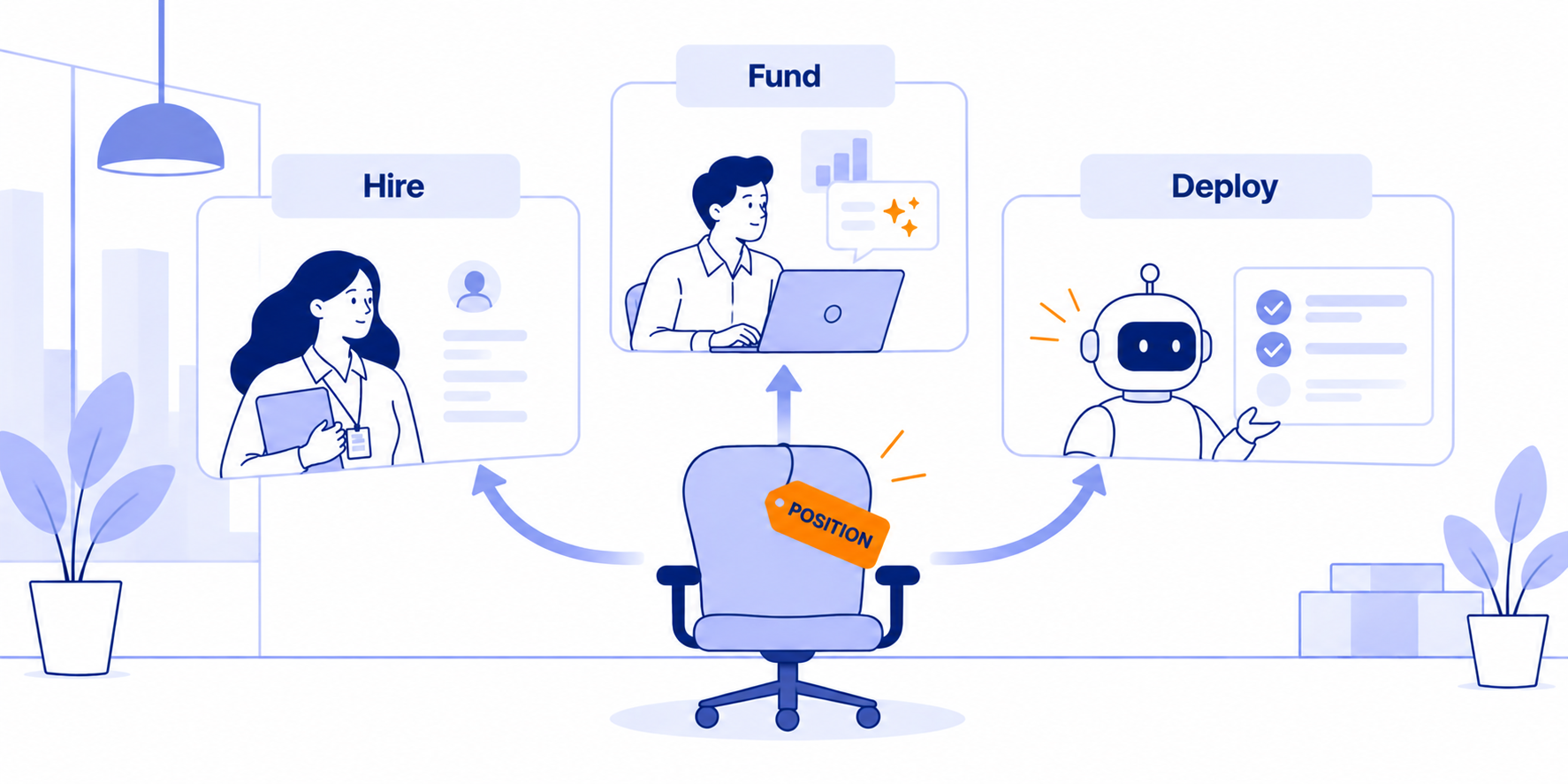
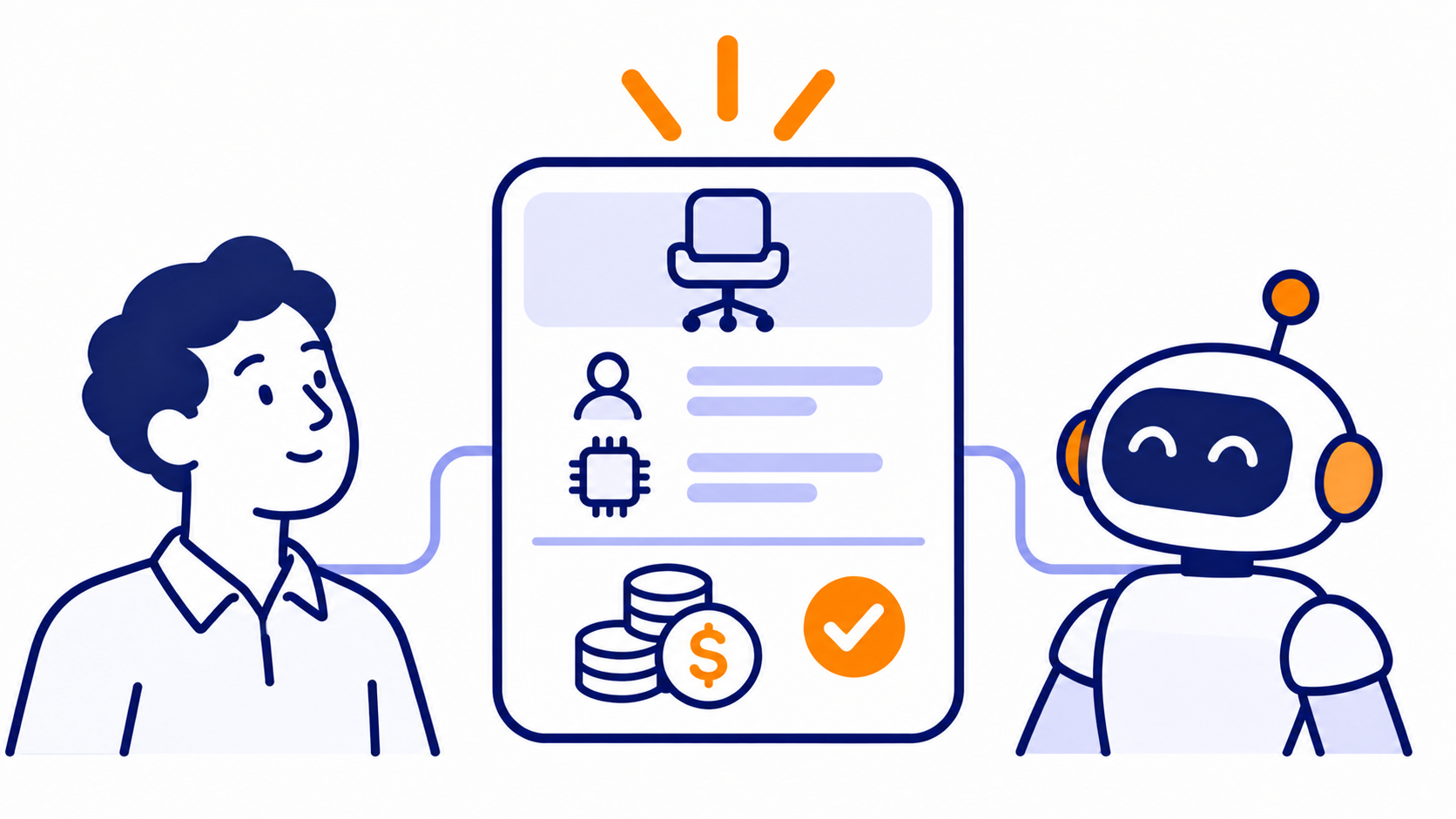
Agent-aware workforce planning is a way of planning headcount that counts AI agents as part of the workforce. A position can be held by a person, an agent, or both, and the salary and the agent spend for that position are approved and tracked against one budget with one owner.
That is the short version. The rest of this post covers why the idea exists, how it works, and how it differs from the workforce planning most companies run today. TeamOhana launched agent-aware workforce planning on November 10, so we will say plainly where we are describing our own product and where we are describing the category.
Why planning people and agents separately stops working
Every company is becoming an employer of two kinds of workers. People get planned a year ahead, through requisitions, approvals and a budget line. Agents often don't get planned at all. Someone gets an API key, the agent starts working, and the cost lands on a bill after the work is done.
The money involved is not small. Gartner's September forecast has worldwide spending on AI agents and assistants more than doubling, from $29.2 billion in 2026 to $65.5 billion in 2027.
It is also landing on top of payroll instead of replacing it. A year ago, 32% of companies in McKinsey's State of AI survey expected AI to reduce their headcount. In the August 2026 survey, 14% said it had, and two-thirds saw little or no change.
46.9% of enterprises report AI spend above plan, and 43.3% of those absorb the overrun and reconcile it later. (The Futurum Group, September 2026 survey of 1,636 enterprise technology leaders)
Finance feels this first, but finance is not the only team in the room. Gartner's October survey found that only 38% of CHROs and CIOs share an understanding of how AI will change the future of work. It also noted that workforce decisions are moving into technology projects faster than HR planning processes can keep up, and recommended that AI business cases carry talent, workforce and organizational costs next to the technology costs.
Put those together and you get a gap with no owner. Budgets for people sit with finance and HR. Budgets for agents sit wherever the tool was bought. Spending caps on individual tools limit what one tool costs, but they don't say what work the money buys.
What finance and people leaders are telling us
We hear versions of this on calls regularly. Here are a few recent examples, with the details anonymized.
- A head of people at a mid-size software company said AI costs forced a mid-year change: they approved some roles and froze about 40 others. Backfills there now carry a field asking whether AI solves the need or changes the role.
- A finance leader at an early-stage health-tech company said tracking token spend is only half the job. The other half is knowing what the spend is for, and she would gladly spend more if it made the team more efficient.
- A people-ops lead at a mid-size SaaS company said AI spend is ramping quickly, but all of it is charged to Engineering, so nobody can see which teams use it most.
- A people-ops program lead at a large fintech said they track AI spend for technical teams and have no plan yet for everyone else.
Not everyone sees it as urgent, and that is useful to hear. A CFO at a software company of about 500 people called per-employee AI cost interesting, then pointed out that travel and IT probably cost more per head today. That may well be true. The question is what happens as the number grows and whether anyone owns it by then. A finance head at a healthcare company told us they would start with core headcount planning and come back to AI spend later, since any AI there goes through IT checks first. That is a sensible order.
How agent-aware workforce planning works
The position is the unit of planning. A position already has an owner and an approved budget, so when an agent holds one, it inherits both. In TeamOhana, agent-aware workforce planning covers four things:
- Human and agent occupancy. Every position shows whether a person, an agent, or both hold it, with agent capacity shown as FTE-equivalent cost next to salaried headcount.
- One budget per position. Salary and agent spend sit in the same budget line, approved by the CFO and CHRO in the same planning cycle.
- A human-or-agent choice on every requisition. Before a requisition goes to approval, the hiring manager picks a person, an agent, or both.
- Agent spend alerts. TeamOhana ties each agent to a position through its API keys and tracks actual spend. When an agent goes over the position's budget, the position owner and finance are alerted before the invoice is paid.
SeatGeek plans its headcount in TeamOhana and is among the first customers to adopt agent-aware workforce planning. Read how SeatGeek works with TeamOhana.
"The next frontier for responsible growth is planning our agents the same way we plan our people." Teddy Collins, EVP of Finance, SeatGeek
Agent-aware vs. traditional workforce planning
Who owns it: the CFO or the CHRO?
Both, and that is the point. The CFO owns the budget. The CHRO owns how work gets designed. When a person or an agent can fill the same position, neither can make the call alone, so they approve it together in the same planning cycle. Finance teams tend to feel the cost side first, and people teams tend to see the work-design side first. Engineering and IT still matter, since they run the agents and hold the keys.
Position: a unit of planned work with an owner and an approved budget. In agent-aware workforce planning, a position can be held by a person, an agent, or both.
Does agent-aware workforce planning replace your HRIS?
No. HR software records an employee once they are hired. The decisions before that, like whether to open a role and what budget it gets, usually happen in spreadsheets and Slack threads. HR software also has no record of an agent's budget or the spend running through its API keys. Agent-aware planning covers both, and TeamOhana works alongside your HRIS. It builds on position management and AI spend management.
How to start, with or without new software
The idea works as a discipline before it works as a tool. Five steps get you most of the way:
- List every agent running today and who asked for it.
- Name one owner per agent, ideally the leader of the team it works for.
- Put a budget next to each agent, in the same line as that team's people cost.
- Add one question to every requisition: could an agent do some of this work?
- Review actual agent spend against budget each month, not when the invoice arrives.
Agent-aware workforce planning is new, and the definition will keep sharpening as more teams try it. The core idea is simple enough to use right away: every agent gets a position, an owner and a budget.
See what we launched. Read how agent-aware workforce planning works in TeamOhana.
Take control of your headcount spend

Agent-aware workforce planning FAQs
Simplifying TeamOhana: your questions, answered.
Agent-aware workforce planning is a way of planning headcount that treats AI agents as part of the workforce. Each position can be held by a person, an agent, or both, and salary and agent spend are approved and tracked against one budget with one owner. The goal is to decide between a person and an agent before the money is spent.
Traditional workforce planning covers people only: who to hire, when, and at what cost. Agent-aware workforce planning adds agents to the same plan, so the CFO and CHRO approve both in the same planning cycle. Agent cost shows up in the position's budget instead of on an invoice after the work is done.
A new hire needs an approved budget before the first day, while an agent often needs only an API key. That leaves agent spend without an owner or an approved amount. Planning an agent inside a position gives it both, so overruns show up against a budget instead of on the bill.
Both. The CFO owns the budget and the CHRO owns how work is designed, so in TeamOhana they approve salary and agent spend in the same planning cycle. Engineering and IT still matter because they run the agents and hold the API keys, but the choice between a person and an agent belongs with finance and people leaders.
In TeamOhana, each agent is tied to a position through its API keys, and actual spend is tracked against that position's budget. Agent capacity appears as an FTE-equivalent cost next to salaried headcount. When an agent goes over budget, the position owner and finance get an alert before the invoice is paid.
Yes. A position can be held by a person, an agent, or both, with one approved budget covering salary and agent spend. When a hiring manager opens a requisition, they choose a person, an agent, or both before it goes to approval.
No. An HRIS records an employee once they are hired. Agent-aware planning covers the decisions before that, such as whether to open a role and what budget it gets, and it tracks agent spend that HR software does not. TeamOhana works alongside your HRIS.
Yes. TeamOhana launched agent-aware workforce planning on November 10, 2026, and it is available today. SeatGeek plans its headcount in TeamOhana and is among the first customers to adopt it.