.png)
.svg)
In this article
Never miss new content
Every quarter, Finance teams build headcount forecasts they can defend. The math ties out. Leadership signs off.
Then things shift. Employees give notice. Offers take longer to close than expected. By mid-year, the forecast from Q1 needs explaining, and the gap is bigger than anyone anticipated.
Two things drive that gap, and both are predictable.
The first is hiring slippage. Based on your team's historical fill rates, some percentage of what's planned for this period will land late. A plan that assumes every approved hire closes on time is a plan built on optimism.
The second is mid-period attrition. Your termination history carries a signal about how many employees are likely to leave each month, even before anyone has given notice. Each departure creates backfill demand that builds up quietly between now and period end.
Today, we're shipping Predicted Forecast.
The cost of reactive planning
When Finance walks into a board meeting or a business review, headcount variance is one of the first questions on the table. Without a way to see execution risk ahead of time, answering that question is always a post-mortem.
A departure that happened in Q1 gets backfilled in Q3. A hiring shortfall that was visible in the data — had anyone looked — gets discovered after it's already affected product velocity and team capacity. Budget reserve conversations happen after the variance, not before it.
People Ops gets pulled in to explain attrition they had no structured way to forecast. Recruiting gets asked to justify a backfill pipeline they didn't know they needed. Every team is reacting to a gap that the data could have surfaced weeks earlier.
The plan wasn't wrong because the inputs were wrong. It was wrong because deterministic forecasting assumes execution goes as intended. Hiring rarely does, and attrition never waits for a convenient quarter.
A forecast built on execution reality
Predictive analytics has been a promise dangled in front of Finance teams for years, but genuinely useful forward-looking visibility for operational planning has been hard to come by.
Workforce planning is one place where it occasionally shows up — some Finance teams do layer attrition assumptions into their models. But those assumptions typically stop at forecasting departures, showing lower headcount and reduced cost without accounting for the backfill demand those departures create. The hiring reqs that open in response to unexpected attrition are costs the forecast never planned for.
Predicted Forecast changes that.
It introduces probabilistic forecasting into TeamOhana, giving Finance, People Ops, and Recruiting a realistic view of where headcount will actually land — built from your own historical data on attrition, hiring velocity, and backfill patterns.
Three new outputs sit alongside your existing planned values. Each one surfaces a different dimension of execution risk, tuned for a different audience. TeamOhana derives defaults from your own historical data automatically, so the numbers start showing up right away.
Predicted Forecast
.png)
Predicted Forecast is where headcount will likely land at period end. It accounts for expected attrition beyond what's already logged, backfills that can realistically close before the period ends, and planned hires that may slip.
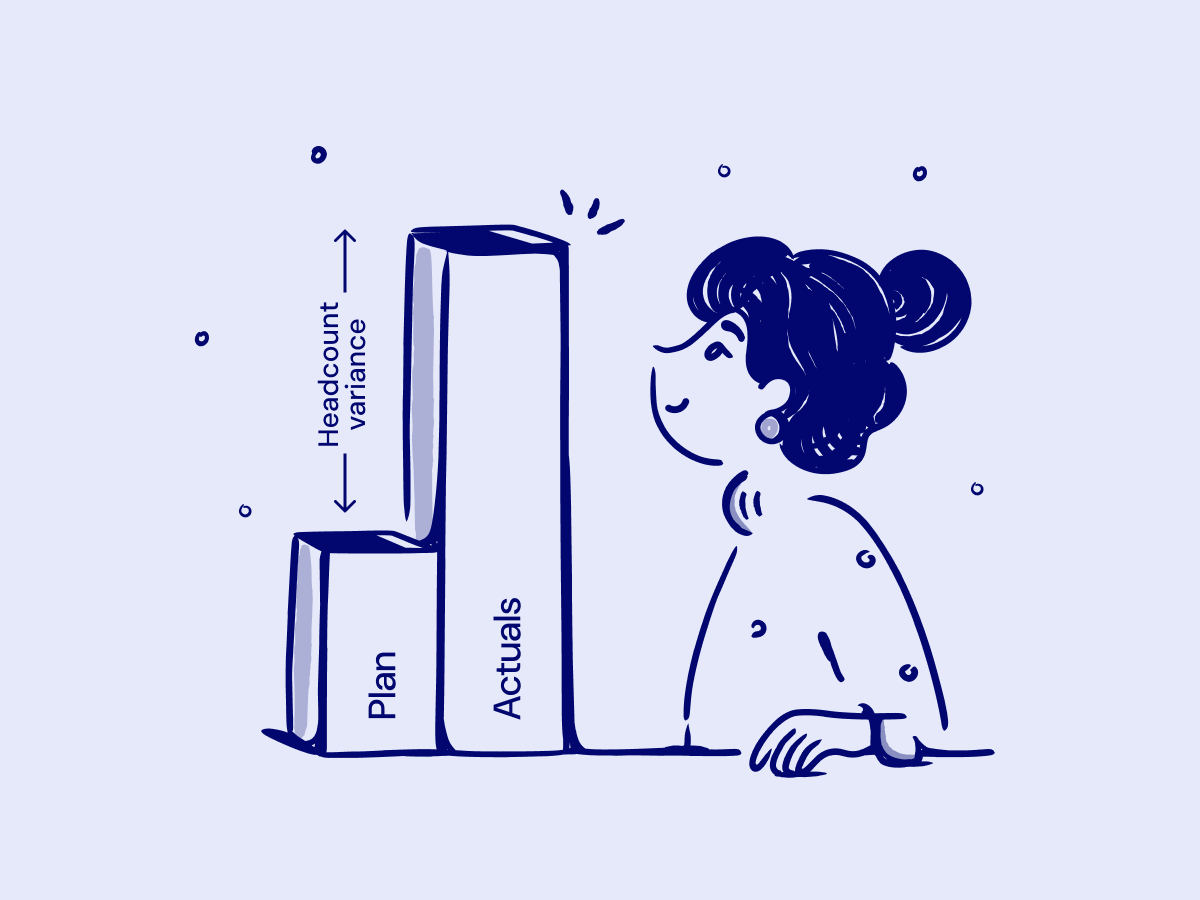
The gap between Predicted Forecast and Planned Forecast is your execution risk number. Finance teams can use it to anchor scenario planning and budget reserve conversations before the quarter gets away from them.
Predicted Terminations
.png)
Predicted Terminations is the total expected departures between now and period end. It combines terminations already logged in TeamOhana with departures the model predicts for remaining months, based on your attrition history.
People Ops leaders get a forward-looking view of churn before departures show up in the system.
Predicted TBH
.png)
Predicted TBH is the revised hiring target once attrition-driven backfill demand is added to your planned hires.
Recruiting leaders have always had to answer for a hiring plan without a complete picture of what they actually need to close. Predicted TBH adds backfill demand from expected attrition on top of the hires already on the plan, giving Recruiting a true picture of how many reqs need to open this period.
That visibility matters beyond just knowing the number. A recruiting team that knows at the start of the year that attrition will generate 50 additional backfill reqs can staff their team to handle that volume. Without it, capacity gaps in recruiting compound the same hiring shortfalls the forecast already failed to anticipate.
Why this matters now
Finance teams are being asked to forecast with more precision, explain variance faster, and get ahead of headcount risk before it reaches leadership. The old workflow — build the plan, wait for actuals, explain the gap — doesn't support that expectation.
Hiring execution has always been variable. Attrition has always been partially predictable. The teams that perform at the highest level are the ones with a system that accounts for both, in real time, before the quarter slips away.
That's what Predicted Forecast makes possible.
Who this is for
- Finance teams who want to pressure-test the hiring plan before the quarter starts and quantify execution risk while they can still act on it
- People Ops and HR leaders who want to anticipate attrition and get ahead of backfill needs before departures happen
- Recruiting leaders who need a complete picture of what they actually need to hire this period, including backfills for expected future attrition
TeamOhana Predicted Forecast is available now
Predicted Forecast is live for all TeamOhana customers. Your administrator can enable it under org-level settings, and role-level permissions control which team members see predicted outputs.
If you're already using TeamOhana, log in and find Predicted Forecast in your Headcount Module, Effective HC Report, Hiring Tracker, and Recruiting Dashboard.
If you're evaluating TeamOhana, this is a good time to see it in action. Request a demo.
Take control of your headcount spend

Predicted Forecast FAQs
Simplifying TeamOhana: your questions, answered.
Yes. TeamOhana now includes Predicted Forecast, a probabilistic forecasting layer that shows Finance, People Ops, and Recruiting where headcount will actually land at period end — accounting for hiring slippage and attrition that isn't yet reflected in the plan.
Planned Forecast reflects your headcount plan as approved. Predicted Forecast reflects where you'll likely land after accounting for two execution realities: not all planned hires will close on time, and attrition will create backfill demand that isn't in the current plan. The gap between the two is your execution risk number.
TeamOhana derives predicted attrition from your own termination history over the last 12 completed months. It applies your historical attrition rate to expected headcount in each remaining month of the period to estimate how many departures are likely before period end.
Predicted TBH is the revised hiring target once attrition-driven backfill demand is added to your planned hires. It gives Recruiting a complete picture of how many reqs need to open this period, including backfills for expected future attrition that haven't been created yet.
Yes. Predicted Forecast gives Finance a structured way to evaluate whether approved hiring plans are realistic before the quarter starts. Rather than adjusting dates manually based on gut feel, Finance can point to predicted outputs to flag unrealistic plans and drive earlier alignment with business leaders.
TeamOhana sits at the intersection of headcount planning, recruiting, and Finance. Predicted Forecast gives Finance and People Ops teams forward-looking visibility into workforce spend and hiring execution that most FP&A tools don't provide natively. For organizations using broader FP&A platforms, TeamOhana exports clean data and integrates with existing tools.