.svg)
Curious how TeamOhana can help you? Talk to us.
In this article
Never miss new content
Update, September 2026: Token Spend Management is now AI Spend Management. Same thesis: AI spend is workforce spend, and it belongs in the headcount plan next to comp. The product now covers every AI cost, not just tokens. Read what changed and why →
Here is the bet TeamOhana is building on: Every company is becoming an employer of both humans and AI agents. We’re building the platform that manages that workforce.
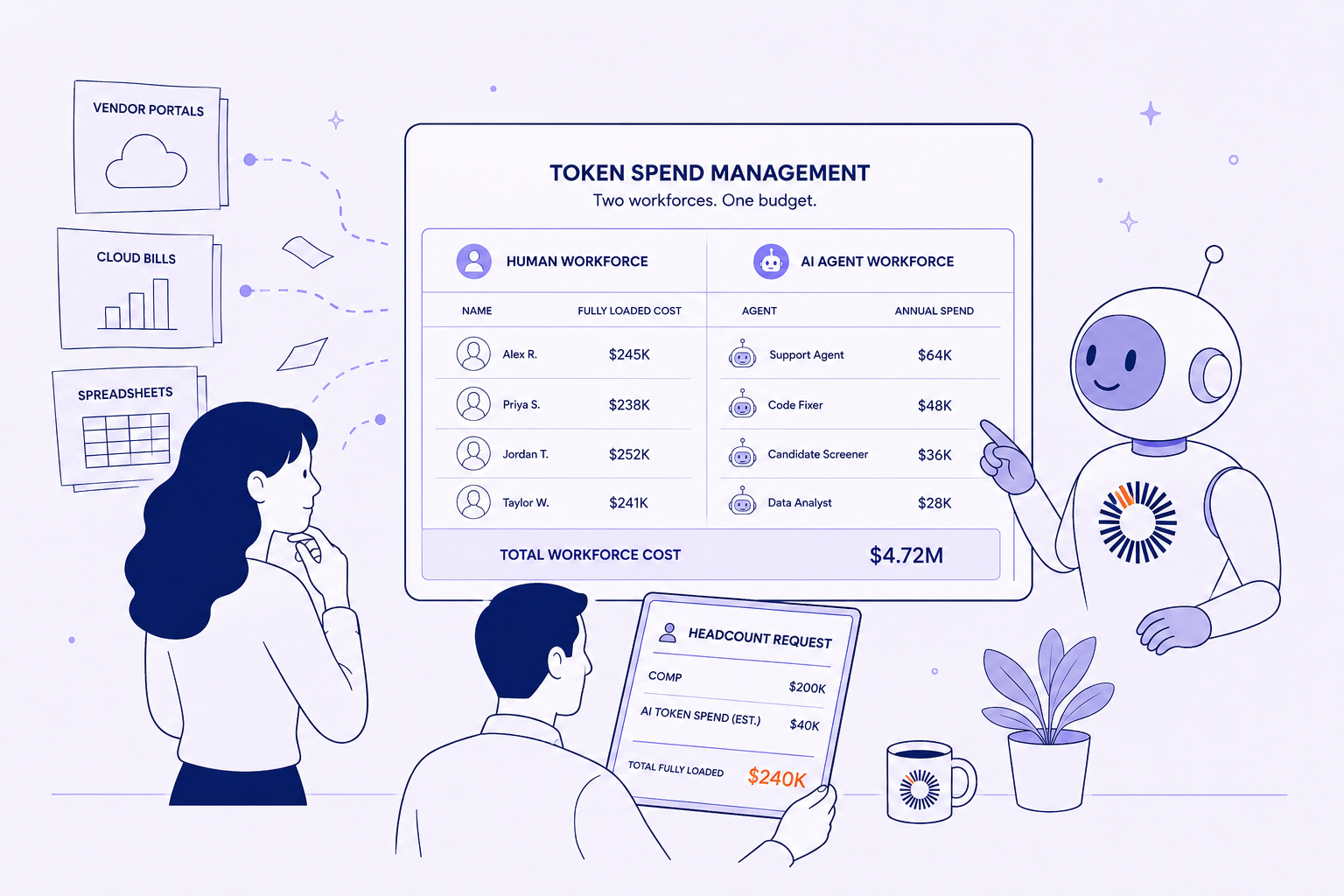
Token Spend Management came from watching that shift hit our customers' budgets before it hit their plans. On calls this year, the same problem kept coming up: AI spend is growing every month, and nobody can say what it adds up to. The data sits in vendor portals, cloud bills, and a stale spreadsheet. One company we work with ran company-wide AI spend out of a Google Sheet. Their biggest spenders weren't even in it. That usage sat in enterprise plans their exports couldn't reach.
Scattered spend data is the easy part to fix. Several tools do it now, and some are even free. Use one of them if that's all you need. The question underneath is the one no dashboard answers.
AI spend is labor cost
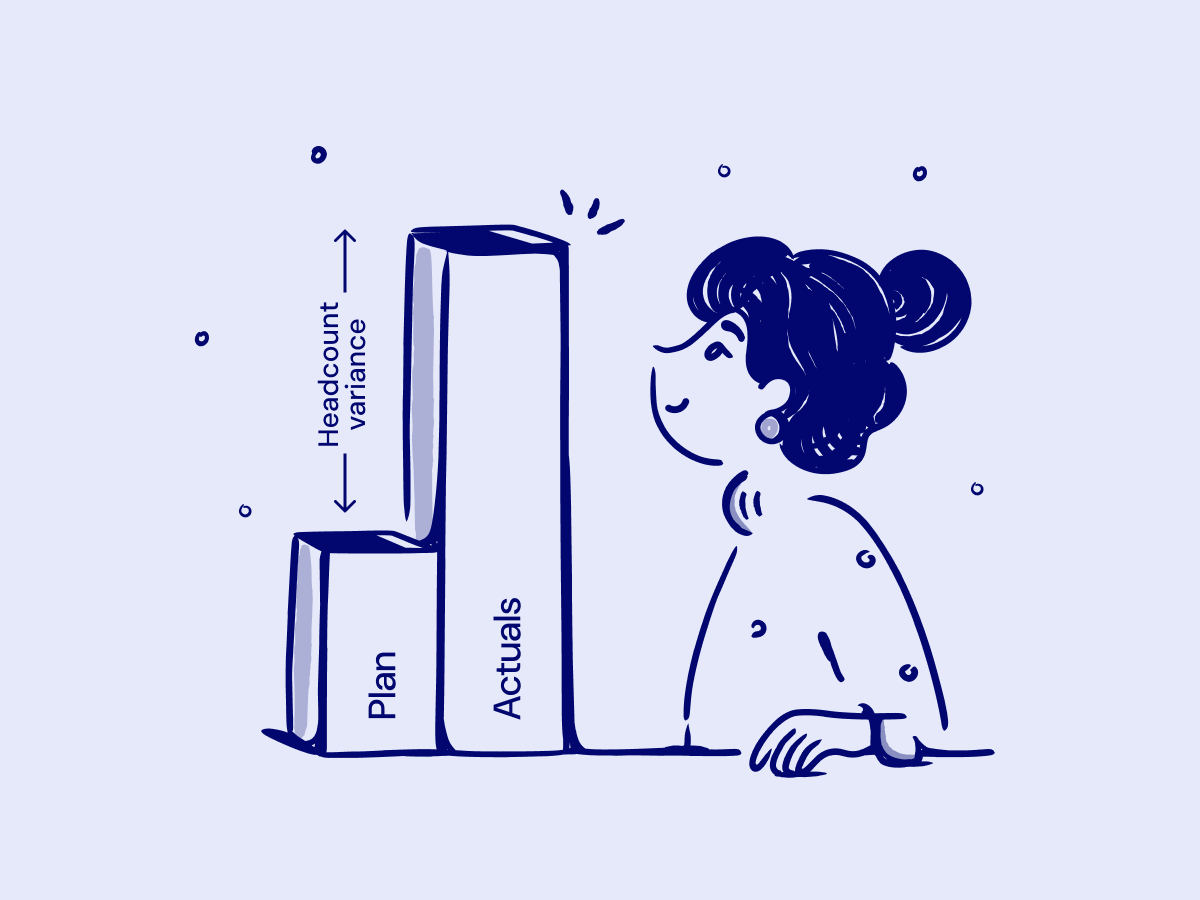
Here is the math that changed how I think about this. An engineer on $200K comp can carry $40K a year in tokens. That engineer now costs $240K. The headcount plan says $200K. Multiply that gap across an engineering org and your workforce budget is wrong by a number nobody can see.
It goes beyond people. Companies are deploying standalone agents that do real work: closing support tickets, fixing bugs, screening candidates. That spend buys capacity that used to require a hire, and it comes out of the same budget that funds headcount. Today it gets tracked like software, if it gets tracked at all.
Agents are labor. Labor decisions belong in one system, and that system has to see both kinds of labor.
Why a dashboard can't do this
TeamOhana already runs the headcount plan for our customers. Positions, comp, approvals. We sit where the decision gets made, before the money moves. The systems of record find out afterward.
That position is what makes this product possible. Token data tells you what was spent. The employee record tells you what it means. Put them in one system and two things open up.
Fully loaded cost. Comp plus AI spend, one line per employee, rolled up to the org.
Forecast at the headcount request. Every planned hire carries comp plus expected token spend, budgeted before the offer goes out. Our design partner at SeatGeek put it better than I can:
“Having all AI spend in one place is the big thing. A new engineer adds incremental payroll and incremental AI spend, and we now budget for both together.”
For us this is the whole strategy. Every company is becoming an employer of both humans and AI agents, and we're building the platform that manages that workforce. Two workforces. One budget. Token Spend Management is the second workforce's ledger.
Why now
Annual planning starts in weeks. This cycle, every leader who receives a budget faces a decision that didn't exist last year: hire new engineers with token spend attached, fund more tokens for the engineers you have, or deploy standalone agents. Same budget, three ways to buy capacity.
Build the plan without the AI line and you'll spend next year explaining the variance.
Where to go from here
If you're heading into planning and want your own numbers in the ledger, we're onboarding design partners now. It takes 20 minutes with your own data.
See AI spend as a percentage of payroll spend →
And if you want the full argument for where this goes, the category thesis is at Workforce Intelligence. This product is the first proof of it.
Take control of your headcount spend

AI Spend Management FAQs
Simplifying TeamOhana: your questions, answered.
Token Spend Management is now AI Spend Management, TeamOhana's ledger for AI spend. It still attributes token and AI usage costs to people, teams, and agents inside the same headcount plan where Finance tracks comp and hiring, and it now covers every AI cost, not just tokens.
When an employee's token usage adds tens of thousands of dollars a year, that spend behaves like compensation, not software. Standalone AI agents that replace tasks a hire would otherwise do pull from the same budget as headcount, so both need to be tracked and forecast together.
It combines an employee's compensation with their AI and token spend into one line item per person, then rolls that number up by team and org so Finance can see true cost, not just salary.
Yes. Every planned hire in the headcount plan can carry expected token spend alongside comp, so the budget impact of a new engineer or team member is visible before the offer goes out, not after.
Spend dashboards show what was spent. AI Spend Management sits inside the system that already runs headcount decisions, so token data is connected to the employee record and the budget, turning a spend report into a labor cost forecast.