
Curious how TeamOhana can help you? Talk to us.
In this article
Never miss new content
Recruiter capacity planning is the process of estimating how many hires your recruiting team can deliver in a given period and matching that number to the roles in your approved hiring plan. It tells finance, talent, and hiring leaders whether a plan is realistic before the quarter starts, so gaps show up on a spreadsheet instead of in a missed start date.
This article explains what recruiter capacity planning is, what goes into it, and what has changed in 2026. If you want the step-by-step version with a worked example, read our recruiter capacity planning guide.
Why recruiter capacity planning matters in 2026
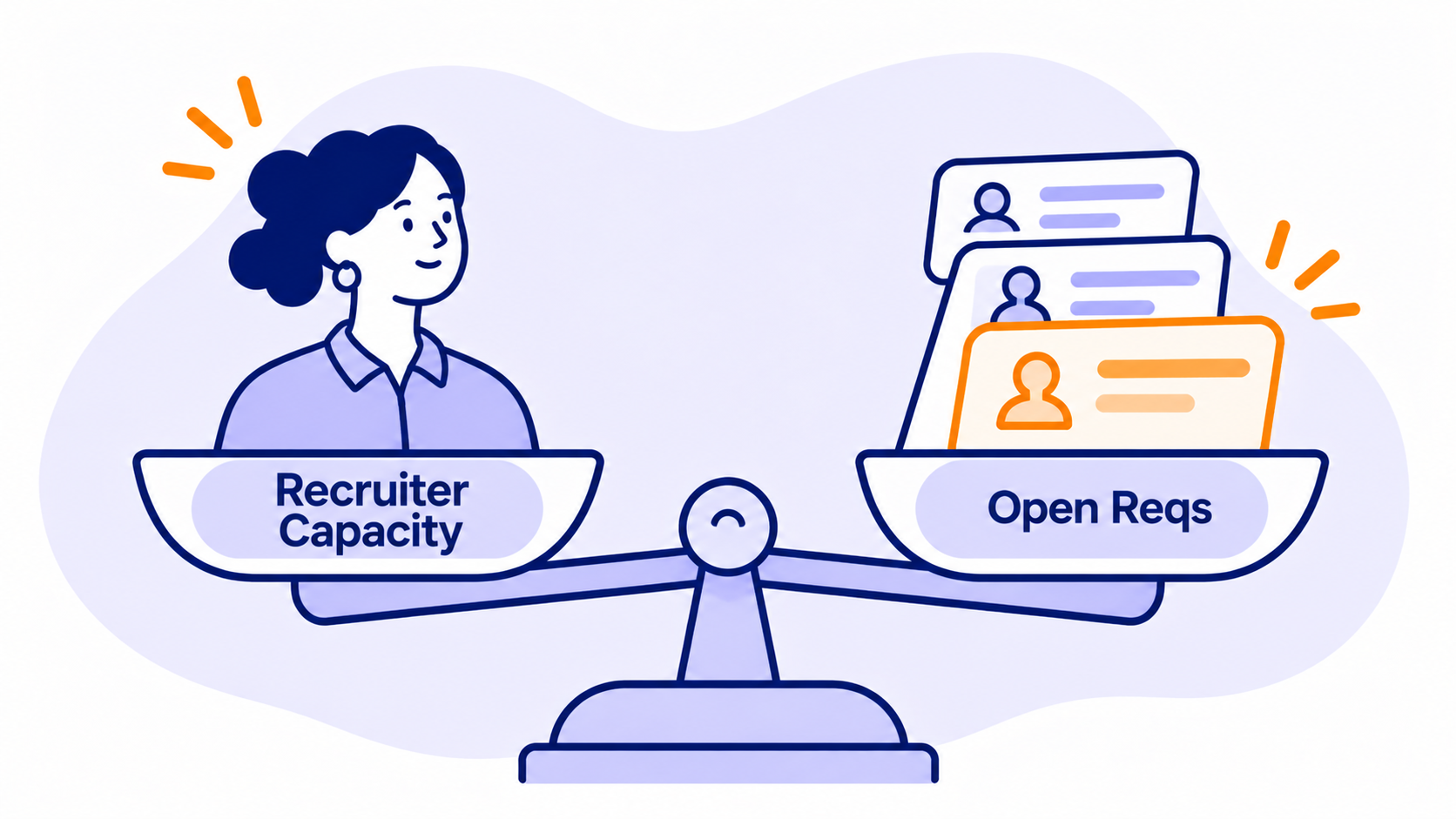
Recruiting teams are being asked to do more with less. Gem's 2025 Recruiting Benchmarks, based on more than 140 million applications, found the average recruiter now manages 14 open reqs, 56% more than three years earlier. Average recruiting teams shrank from 31 to 24 people between 2022 and 2024, and average time to hire rose from 33 to 41 days.
14 open reqs per recruiter on average, 56% more than three years earlier, while recruiting teams shrank from 31 to 24 people (Gem, 2025 Recruiting Benchmarks).
When the hiring plan comes from Finance and recruiting capacity is never checked against it, the gap lands on recruiters. That's how plans slip, start dates move, and hiring managers lose trust in the process.
What goes into a recruiter capacity plan
A useful plan starts with a handful of inputs, all pulled from your own data:
- The approved hiring plan. Every funded role, with function, level, location, and target start date.
- Req load per recruiter. How many active reqs each recruiter can carry well. SHRM notes there's no standard number, because the right load depends on the roles and the process.
- Time to hire by role type. Engineering and machine learning roles take far longer to fill than sales or G&A roles.
- Fill rate. The share of reqs that end in a hire instead of being paused or cancelled.
- Attrition and backfills. Every employee who leaves creates a backfill that competes for the same recruiters.
The core math is simple:
Compare that total with the hires the plan needs, and you can see the gap by quarter.
How it fits with workforce planning and talent acquisition planning
Workforce planning decides how many people the company needs and when. Talent acquisition planning covers the whole recruiting function: team size, structure, sourcing, tools, and budget. Recruiter capacity planning sits between them. It checks that the recruiters you have can deliver the hires the workforce plan calls for in the next one or two quarters.
This is also where hiring plan alignment happens. When capacity, approvals, and start dates are reviewed together, Finance gets a forecast it can trust, and talent teams stop absorbing misses that were baked into the plan.
What recruiting capacity management looks like day to day
Planning is the forecast. Recruiting capacity management is keeping it true as things change. In practice, that means:
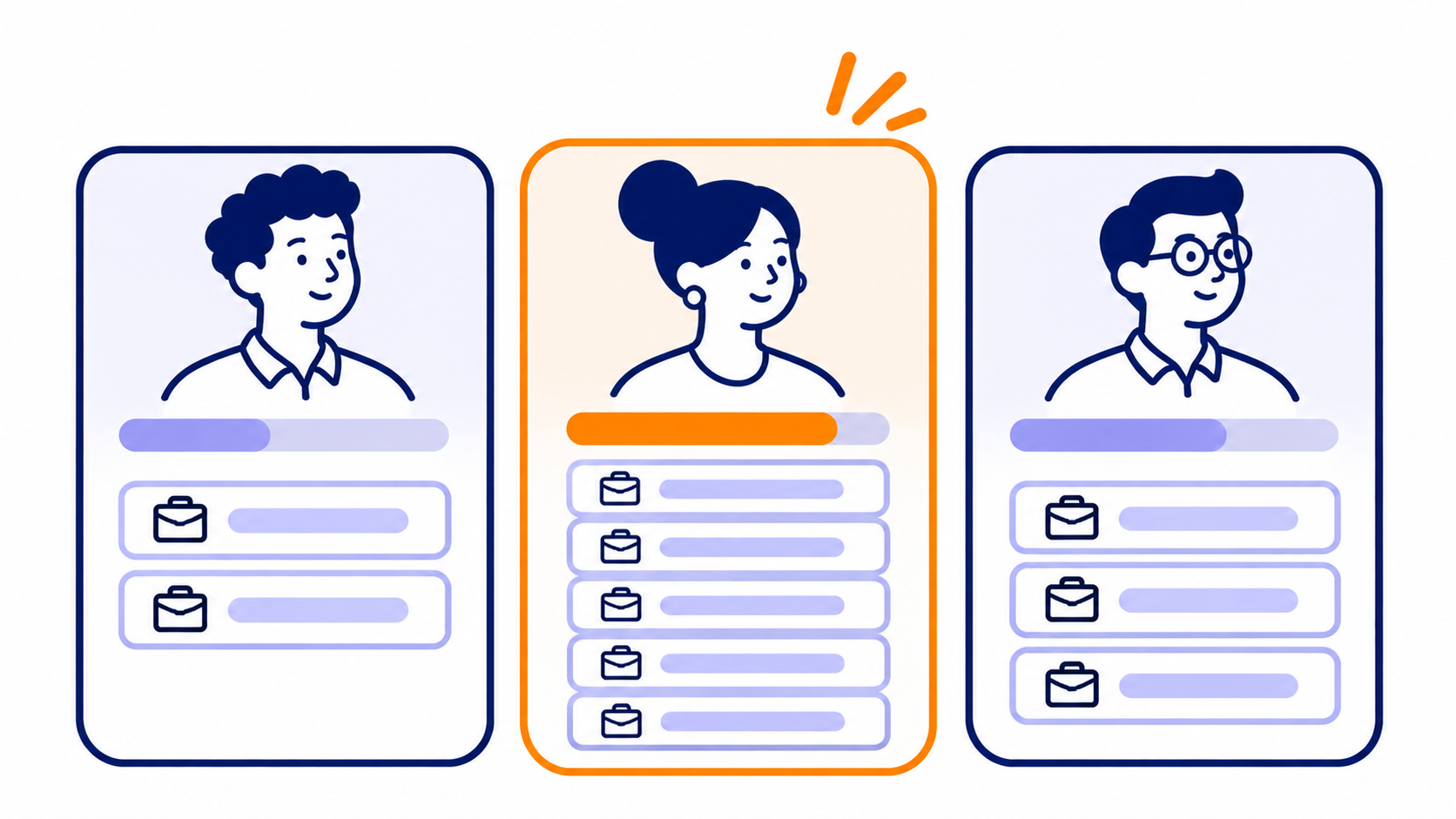
- Allocating recruiters to roles on purpose. Recruitment resource allocation should follow role difficulty and business priority, not whoever asks first.
- Opening roles when they're ready. A role is ready when it has a job description, an interview plan, and a recruiter with room to take it.
- Re-forecasting when the plan changes. New, cut, or re-leveled roles all change the math.
- Reviewing it with Finance. Talent ops and finance leaders should look at the same numbers on a regular rhythm.
What is recruiting capacity management? Recruiting capacity management is the ongoing work of keeping a recruiter capacity plan accurate as roles, priorities, and the hiring plan change. It covers allocating recruiters, opening roles when they're ready, and re-forecasting.
How AI is changing recruiter capacity planning
The formula assumes recruiters work the way they did last year, and many teams no longer do. At a recent fireside chat with TeamOhana, Will Barnett, who runs talent at Rad AI, shared that his three recruiters carried about 140 hires in a year because they use AI deeply in their work. Without it, he figures he'd need five or six.
AI changes both sides of the math. It affects how many reqs a recruiter can carry and how fast roles fill, and it changes the roles in the plan as teams decide which work is human-led and which is agent-led. Rebuild your req loads from this year's data, not a benchmark from before your team changed how it works.
AI changes both sides of recruiter capacity planning: how many reqs a recruiter can carry, and which roles are in the plan to begin with.
Signs you need recruiter capacity planning
- Hiring managers open all their roles at once and recruiters spend weeks triaging
- Finance and talent report different numbers for how far behind the plan is
- Start dates in the budget don't match real time to hire
- Backfills keep pushing out planned hires
- You add recruiters or contractors without knowing how many you actually need
Where to start
Pull your approved hiring plan, your last four quarters of time-to-hire data by role type, and your attrition by team. Then run the capacity math and compare it with next quarter's hires. Our guide to recruiter capacity planning walks through the steps with a worked example.
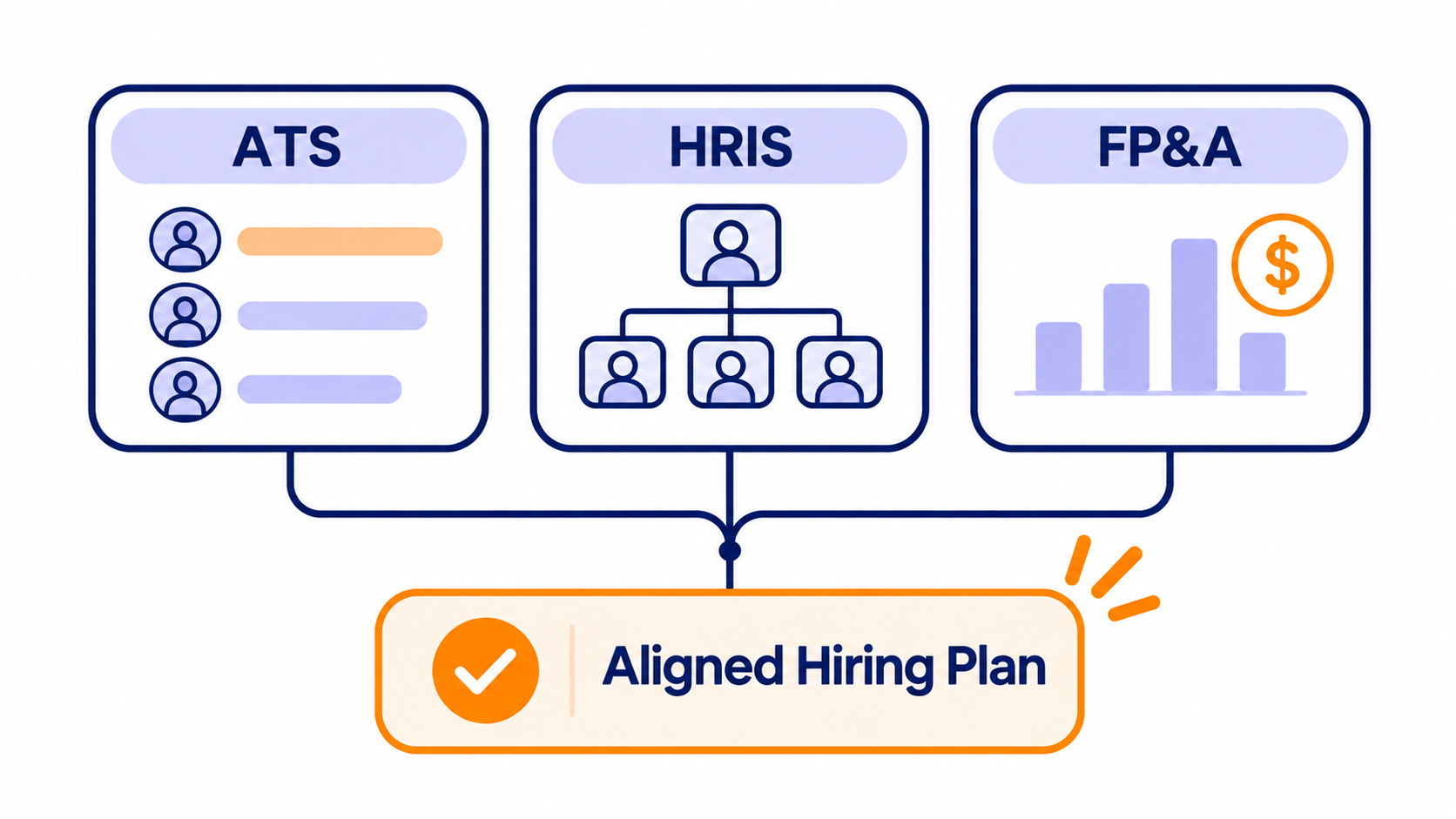
TeamOhana works alongside your HRIS and ATS, so the approved hiring plan, open reqs, and target start dates live in one place, and talent teams can track recruiter capacity, including how many open reqs each recruiter carries and which approved roles are ready to hire next.
See how TeamOhana connects your headcount plan to every system your team uses. Book a demo.
Take control of your headcount spend

Recruiter capacity planning FAQs
Simplifying TeamOhana: your questions, answered.
Recruiter capacity planning is the process of estimating how many hires your recruiting team can deliver in a period and matching that to the roles in your hiring plan. It helps finance, talent, and hiring leaders align recruiting resources to approved plans with fewer execution gaps.
Usually talent operations or the head of talent acquisition builds it, with Finance reviewing the plan and hiring managers confirming role readiness and priorities. It works best when all three look at the same numbers.
Workforce planning decides how many people the company needs and when. Recruiter capacity planning checks whether your recruiting team can actually deliver those hires in the near term.
Planning is the forecast you build before the quarter. Management is the ongoing work of allocating recruiters, opening roles when they're ready, and updating the forecast when the plan changes.
There's no universal number. Gem's 2025 benchmarks put the average at 14 open reqs per recruiter, but the right load depends on role difficulty, applicant volume, and recruiter support. Set loads by role type using your own historical data.
AI can raise how many reqs a recruiter carries and speed up how fast roles fill, so loads built on older data may understate capacity. It also changes the roles in the hiring plan, so ask hiring managers which work will be human-led and which agent-led.