
Curious how TeamOhana can help you? Talk to us.
In this article
Never miss new content
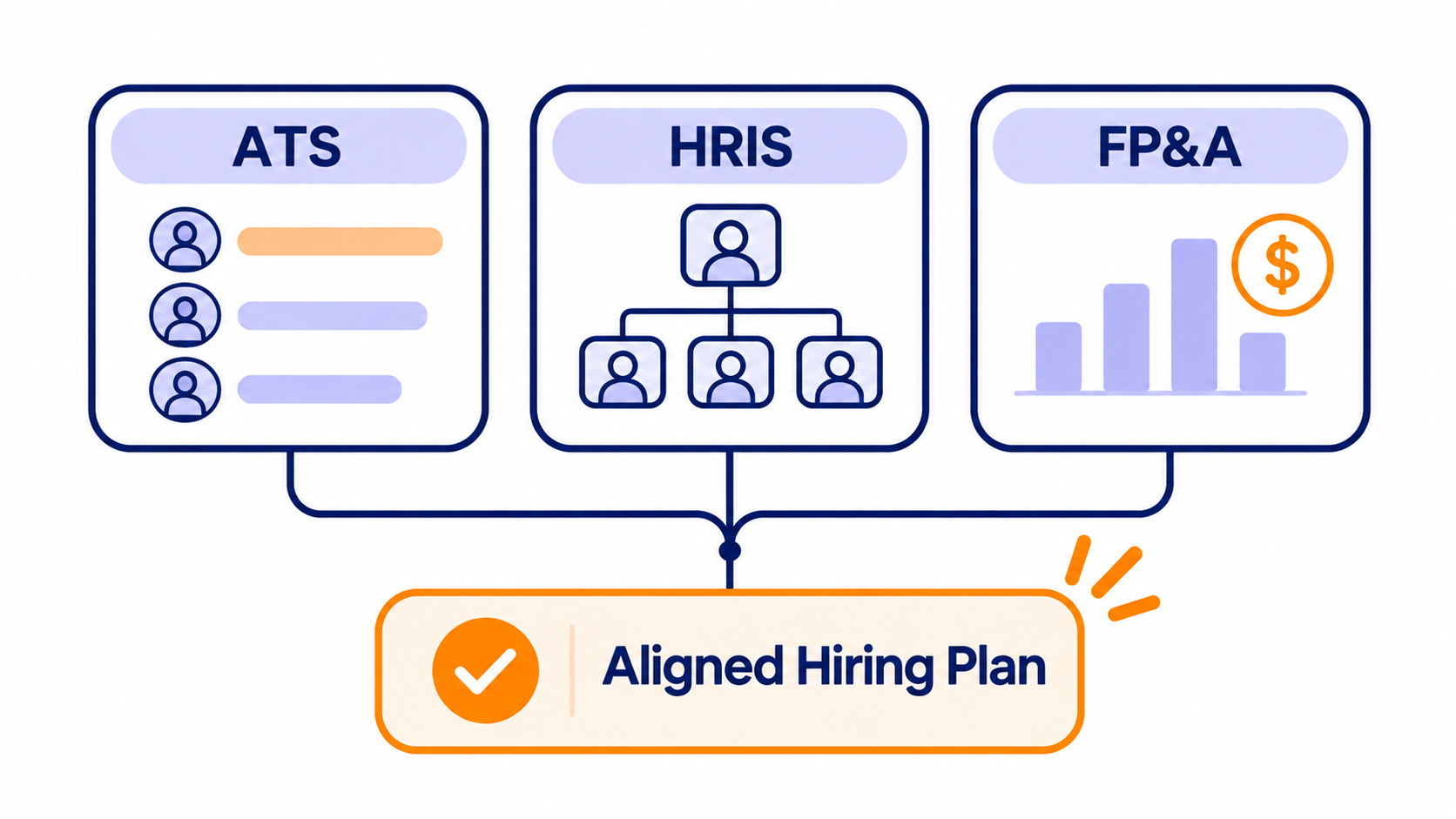
The short answer: most recruiting tools are built for one team. Your ATS runs the pipeline. Your HRIS records who got hired. Your FP&A tool models the budget. Recruiting team alignment happens in the gaps between them, and that's where hiring plans quietly fall apart.
The best recruiting alignment tools connect those gaps. They give Talent, Finance, and HR one shared view of approved headcount, recruiter capacity, open reqs, and plan changes, so nobody is reconciling three spreadsheets before a Monday sync.
This guide compares five categories of recruiting tools on how well they support Finance and HR collaboration and cross-functional hiring coordination. It's written for Talent Ops and Finance leaders at growth-stage and enterprise companies who are tired of finding out about a plan change after the offer goes out.
What is recruiting team alignment?
Recruiting team alignment means Talent, Finance, and HR agree on the same four things at the same time: what's approved, who's working on it, how much capacity the team has, and what changed since last week.
It sounds simple. It rarely is. In practice it covers:
- Hiring capacity: how many approved roles the recruiting team can realistically fill this quarter.
- Recruiter workload: how reqs are spread across recruiters, and who's underwater.
- Approvals: where a new role, backfill, or up-level sits in the approval chain, and who's holding it.
- Plan changes: what happens downstream when Finance moves budget, a role changes level, or a team pauses hiring.
When these drift, you get the classic "three numbers" problem. One TeamOhana customer summed it up: the business thought it had 20 heads, HR's records showed 18, and recruiting was working on 21.
The stakes are real. A July 2026 Gartner survey of 297 CHROs found only 19% of organizations have workforce planning that effectively realigns talent strategy with business goals. The ones that do are 1.4x more likely to beat revenue goals and 1.5x more likely to beat cost goals (Gartner, Oct 2026).
Only 19% of organizations have workforce planning that effectively realigns talent strategy with business goals, according to a July 2026 Gartner survey of 297 CHROs.
What to look for in a recruiting alignment tool
Judge every recruiting tool on one question: does it help Talent, Finance, and HR make the same hiring decision from the same data? We scored each category on six criteria.
- One shared source of truth. Approved headcount, open reqs, and hires tie out without a monthly reconciliation.
- Plan-to-req linkage. Every req maps to an approved, budgeted position, so nothing gets opened "off plan."
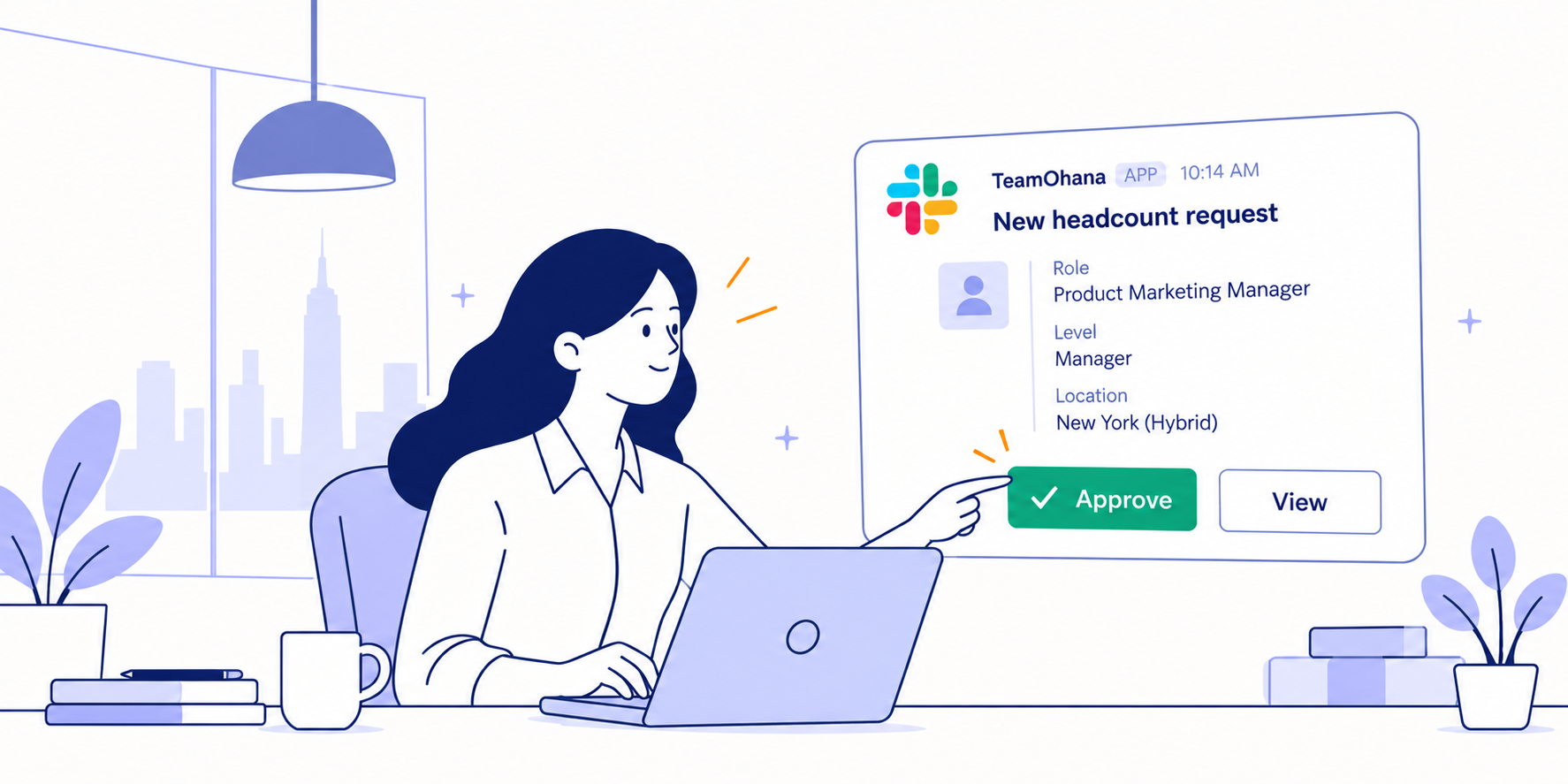
- Approval visibility. Anyone can see where a request sits and who's holding it, without a Slack hunt.
- Recruiter capacity and workload. Talent leaders can see req load per recruiter and the lag between approved and open.
- Change management. Level changes, backfills, and budget moves flow downstream with an audit trail.
- Fits your stack. It works alongside your ATS, HRIS, and FP&A tools instead of asking you to rip them out.
What is recruiter capacity? Recruiter capacity is the number of approved roles a recruiting team can realistically fill in a given period, based on req load per recruiter and historical time-to-fill.
The best recruiting alignment tools, compared
1. TeamOhana: best for cross-functional hiring coordination
TeamOhana is purpose-built for the space between Talent, Finance, and HR. It sits on top of your HRIS and ATS and connects the hiring plan to the reqs that execute it.
- What it does well: ties every req to an approved position through Position Management, routes headcount and level-change approvals with a full audit trail, and tracks recruiter capacity against open and planned roles.
- Plan changes: scenarios are native in TeamOhana Computer, so Finance can model a budget shift and Talent can see the hiring impact before anything moves.
- Best for: growth-stage and enterprise teams where Finance owns the budget, Talent owns execution, and both are tired of reconciling spreadsheets.
- Keep in mind: it complements your ATS and HRIS rather than replacing them. You'll still run interviews and onboarding there.
2. Applicant tracking systems (ATS): best for recruitment workflow management
Your ATS (think Greenhouse, Ashby, or Lever) is the engine room for candidates. It manages pipelines, interview loops, scorecards, and offers.
- What it does well: recruitment workflow management and hiring team communication inside each req.
- Where alignment breaks: the ATS only knows about roles that have been activated. One enterprise customer told us the rest of their plan lived in "roughly 12 spreadsheets," with reqs matched to headcount by hand.
- Best for: running the hiring process once a role is approved.
3. HRIS: best for system-of-record accuracy
Your HRIS (Workday, HiBob, BambooHR, and others) records who works here, in what position, at what cost.
- What it does well: employee data, org structure, and position records after the fact.
- Where alignment breaks: planned and in-flight roles often live outside it. A Talent Ops lead at a public company described a sheet that gets re-keyed into the HRIS, then drifts the moment a role moves from one level to another.
- Best for: compliance, payroll, and reporting on the workforce you already have.
4. FP&A and planning platforms: best for budget modeling
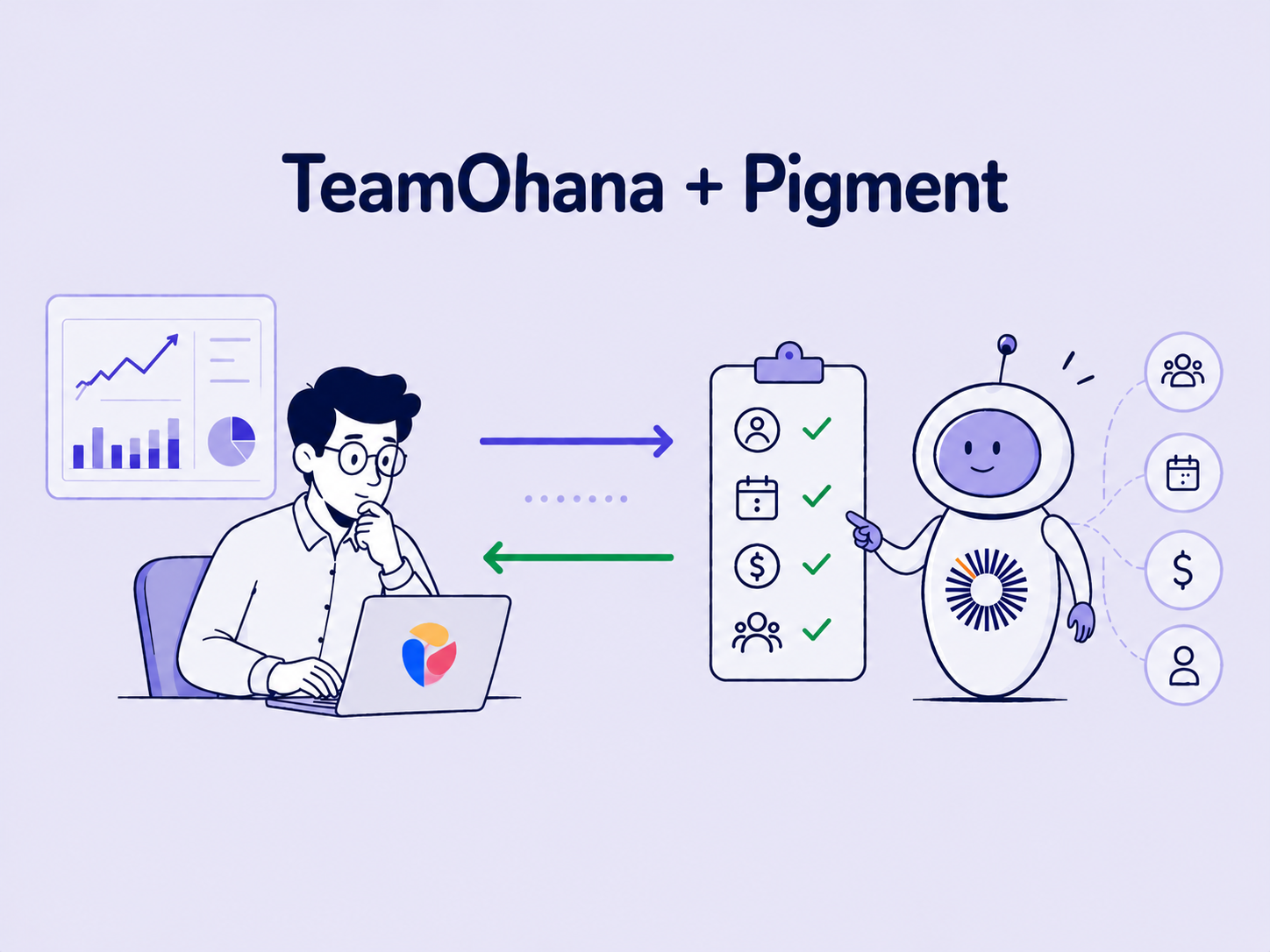
Planning platforms like Pigment help Finance build the headcount budget and model cost scenarios. Many pair nicely with a dedicated hiring layer.
- What it does well: top-down budget envelopes, cost modeling, and board-level scenarios.
- Where alignment breaks: Finance often plans at the total, not the role. One Talent leader told us the budget number was right, but the role-level detail rarely matched reality, which made it hard to tie reqs back to plan.
- Best for: owning the dollars. Pair it with a tool that tracks the roles.
5. Spreadsheets, forms, and chat: best for getting started
Google Sheets, intake forms, Jira tickets, and Slack channels are where most teams begin.
- What it does well: fast, flexible, free, and everyone already knows how to use it.
- Where alignment breaks: visibility exists only if you were cc'd. One prospect ran a chain from an intake form to a response sheet to a planning sheet to their FP&A tool, all held together by lookups and weekly manual checks.
- Best for: teams under ~100 people, or a stopgap while you pick a real system.
Side-by-side comparison
Only a dedicated hiring layer covers all six criteria. The others each do one job brilliantly and leave the gaps to spreadsheets.
| Criteria | TeamOhana | ATS | HRIS | FP&A platform | Spreadsheets + chat |
|---|---|---|---|---|---|
| Shared source of truth across Talent, Finance, HR | Yes | Candidates only | Current employees only | Budget only | Many "truths" |
| Req tied to approved, budgeted position | Yes | Partial | Partial | No | Manual |
| Approval visibility | Built-in workflows + audit trail | Offer approvals | Position approvals | Plan sign-off | Email and Slack threads |
| Recruiter capacity and workload | Yes | Pipeline metrics | No | No | Manual |
| Plan changes flow downstream | Yes, with scenarios | No | Partial | Models cost impact | Manual re-keying |
| Primary owner | Talent Ops + Finance + HR | Recruiting | HR / People Ops | Finance | Whoever built it |
What Talent and Finance leaders tell us
The same five breakdowns come up again and again in our conversations with Talent Ops and Finance teams. Here's what they sound like, anonymized.
- "Approved" doesn't stay approved. A public web company got a ~500-role plan from Finance in October, then heard later that some of those roles weren't approved anymore. Reqs sat in the HRIS for two to three weeks while Finance said "not in budget."
- Recruiters become detectives. At a fintech, recruiters spend time hunting down position IDs and waiting on a chain of approvals before they can start sourcing. Nobody can easily tell where an approval is stuck.
- Up-levels restart everything. Moving a role from L5 to L6 after seeing the candidate pool can trigger a fresh round of HR and Finance sign-off, and often resets time-to-fill with no one tracking it.
- Managers dump reqs. One enterprise customer described hiring managers filing 20 or even 50 requests at once, then asking "where are my 20 people?" Recruiters wanted a "ready to hire" status as a capacity control.
- The numbers never tick and tie. A finance lead at a SaaS company wanted plan version control because headcount was moving every day, plus visibility into recruiter capacity and the lag between approved and open.
The pattern? Finance plans in dollars, Talent works in reqs, HR records positions. Recruiting team alignment is the translation layer between all three.
Finance plans in dollars, Talent works in reqs, HR records positions. Recruiting team alignment is the translation layer between all three.
How to choose the right recruiting tools for your team
Don't replace what works. Keep your ATS, HRIS, and FP&A platform doing what they're great at, and add a layer that connects them.
- Map your approval chain. Write down every hop from "manager wants a role" to "recruiter starts sourcing." Count the tools and the handoffs.
- Find your three numbers. Ask Finance, HR, and Talent how many open roles you have today. If you get three answers, you have an alignment problem, not a recruiting problem.
- Measure recruiter capacity. Look at req load per recruiter and the gap between approved and open roles. That's where hiring slows down first.
- Test change handling. Run a real scenario: a level change mid-search, or a budget cut in one department. See how many people have to touch it.
- Pick a tool every team will actually use. Finance and Talent should both log in, not just receive exports.
Speed matters more than ever. Gartner found just 48% of candidates accepted their most recent job offer in Q4 2025, down from 85% two years earlier (Gartner, Jun 2026). Every week a req waits on an approval is a week your best candidate is talking to someone else.
See how TeamOhana connects your headcount plan to every system your team uses. Book a demo to see recruiting team alignment in action.
Patterns cited in this article are drawn from TeamOhana's recent conversations with Talent, Finance, and HR leaders. All references are anonymized and paraphrased.
Take control of your headcount spend

FAQ
Simplifying TeamOhana: your questions, answered.
Recruiting team alignment is when Talent, Finance, and HR share one view of approved headcount, open reqs, recruiter capacity, and plan changes. It keeps every hiring decision tied to an approved budget. Without it, each team ends up working from a different number.
The strongest setups pair an ATS, an HRIS, and an FP&A platform with a dedicated headcount and hiring layer like TeamOhana. The ATS runs candidates, the HRIS records employees, and the FP&A tool models the budget. The hiring layer connects the approved budget to the reqs that execute it.
Not fully. An ATS manages candidates, interviews, and offers for roles that have already been activated. It usually doesn't hold the full hiring plan, budget approvals, or role-level changes coming from Finance.
No. Tools like TeamOhana work alongside HRIS systems such as Workday, HiBob, BambooHR, UKG, ADP, and Paycom. The HRIS stays the system of record for employees, while the alignment layer manages planned and in-flight roles before they become hires.
Give both teams the same live data, a visible approval workflow, and an audit trail for every change. That replaces status-check Slack threads and monthly reconciliations. When a role changes level or a budget moves, everyone sees it at the same time.
Track open reqs per recruiter, the lag between approved and open roles, and time-to-fill by role level. Compare those numbers to the hiring plan for the period. Gaps show up early, before they become missed hiring targets.