
Curious how TeamOhana can help you? Talk to us.
In this article
Never miss new content
"I would say we hired dangerously last year and then we had to lay people off."
An HR leader at a diagnostics company said that on a call with our team in August. She didn't blame the market. She blamed the hiring.
Anyone who has worked in HR knows this cycle. Money comes in, headcount goes out, and a year or two later the same leaders who opened the reqs are reviewing a RIF list. I've been in those rooms. Those days stay with you permanently.
This post makes the case for what I call responsible growth: hiring against a plan you can defend whether the next year goes up or down.
Key takeaways
- Many RIFs trace back to hiring decisions made in a good year and priced against a best-case forecast.
- The board and HR see the same layoff differently. The board weighs shareholder value. HR manages the people and the cost that follows.
- That cost is large. Glassdoor estimates the companies it studied lost $20.8 billion in the first year after their layoffs to disengagement and turnover.
- Responsible growth protects the plan in both directions, during a hiring push and during a freeze.
- Four habits make it real: treat every backfill as a decision, model the cut before you need it, price late adds against next year's run rate, and run on one trusted number.
Why do fast-growing companies end up running RIFs?
Hiring decisions get made against the best-case year, and their cost lands in the next one. Meta is the most public example. The company added more than 40,000 employees during the pandemic, according to Deseret News. In November 2022 it cut more than 11,000 people, about 13% of staff. Mark Zuckerberg's letter to employees said, "I got this wrong, and I take responsibility for that" (Euronews).
Meta was not alone. Layoffs.fyi counted 262,735 tech layoffs in 2023, 59% more than in 2022 (TechCrunch).
Not every RIF starts with over-hiring. In May 2020, Airbnb let go about 1,900 of its 7,500 employees, roughly 25%, after forecasting 2020 revenue at less than half of 2019 (SiliconANGLE). That was a demand shock no plan predicted.
The causes differ. The lesson for HR is the same: the pendulum always moves. When I'm handed a big headcount number, my first thought is what happens when we have to pull it back. Either way, I need a place to account for every one of those people.
Why do HR and the board see a RIF so differently?
We're accountable for different outcomes. The board is focused on shareholder value. HR is focused on thoughtful growth, because we understand the ramifications of what we're being asked to do.
The pressure from the board side is real. A CFO at a VC-backed food-tech company with about 500 employees told our team his board wants headcount benchmarked against top software and AI companies. Their response to any proposed change in the plan: "we will believe it when we see it." He now requires unanimous sign-off from three executives for every US hire.
HR sees what a RIF does to the people who stay. Glassdoor studied 304 layoffs at 197 companies between March 2021 and April 2025. After a layoff, active disengagement rose 26%, and the number of current employees job hunting on Glassdoor rose 40%. Those job seekers were disproportionately key talent. Glassdoor put the first-year cost across those companies at $20.8 billion (Glassdoor). Its later research found that sentiment among remaining employees took more than two years to recover (CNBC).
$20.8 billion: what Glassdoor estimates the companies in its study lost in the first year after their layoffs, as active disengagement rose 26% and job hunting among remaining employees rose 40%.
That is the part a board slide doesn't show. The people who leave remember, and so do the people who stay. Every candidate who reads their reviews sees it too. RIFs are traumatic for everybody involved.
What does responsible growth mean?
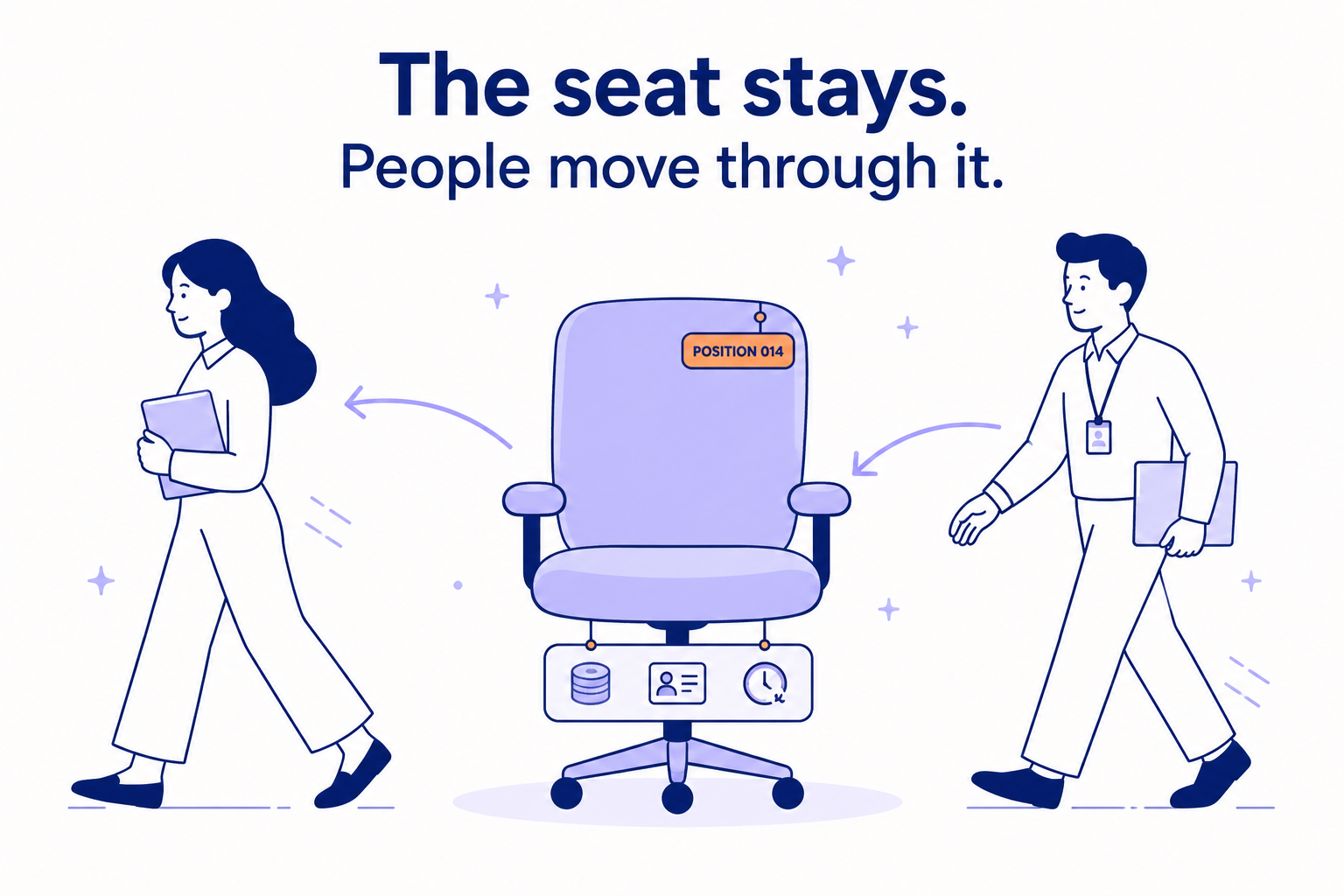
Responsible growth means building discipline into each hiring decision, so the plan holds up whether next year brings more budget or less. You're growing, but you're being responsible and providing cover for the risk. When I say "responsible growth" to other HR leaders, they know exactly why it matters.
What is responsible growth? Responsible growth is hiring against a plan you can defend whether the next year goes up or down. Every hire, backfill and late add is a deliberate decision, priced against next year's run rate, with a downside scenario ready before it's needed.
HR and Finance leaders are asking for this in their own words. In the first half of August alone, leaders at nine companies raised some version of it on calls with our team, from hiring freezes and headcount cuts to tighter backfill reviews.
An HR business partner at a hypergrowth AI company described the habit she is trying to break: "When people leave, they're like, yeah, we can hire like three more people. And I'm like, do we have the runway?" Her conclusion: "Sometimes it's better to run a leaner ship in some areas."
A CFO at an automation software company planning to double headcount framed the goal from the Finance side: "We need to strike the right balance to have the necessary level of control, but not slow things down."
Four habits of responsible growth
Treat every backfill as a decision
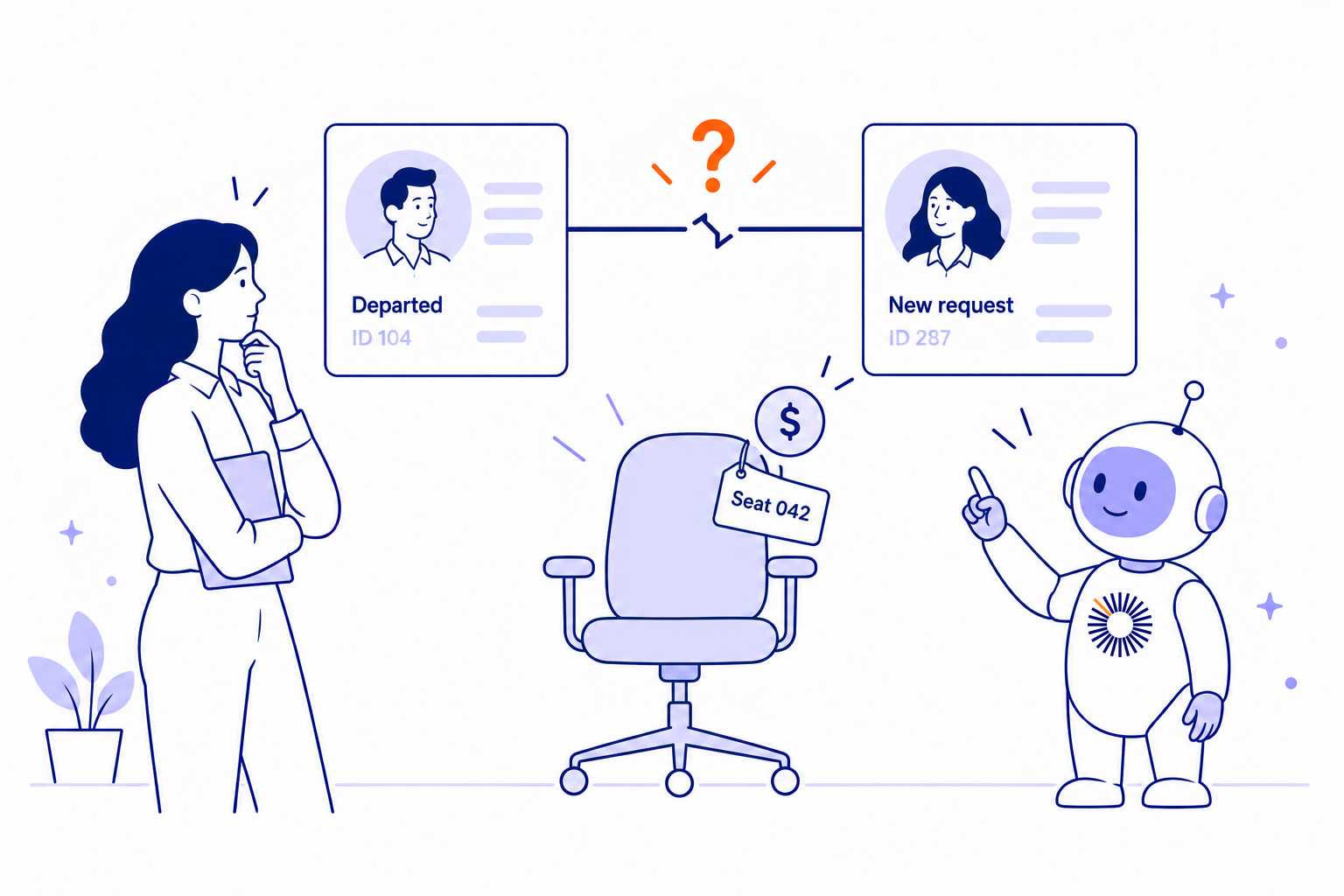
A departure is the most common moment a company adds cost without a fresh decision. Cedar's corporate FP&A lead described the old default: "We were just opening up backfills anytime somebody turned over, without really thinking about the need and true justification." Now leaders review their org in TeamOhana and decide whether to refill, repurpose, or absorb each role. That change surfaced more than $1.5M in headcount spend.
The same discipline applies to new requests. An HR operations lead at a European AI company described how they narrowed who can ask: "It used to be anyone could request for a new headcount. Now it's the department heads."
Model the cut before you need it
A RIF built in a week produces worse decisions than one modeled in advance. A People leader at a 235-person SaaS company, running one-in-one-out for a year, described what happens without a model: "We recently had a debacle where we let some people go, saved a couple of the headcount. Nobody had put the pieces together of which headcount are we keeping? What does that cost?"
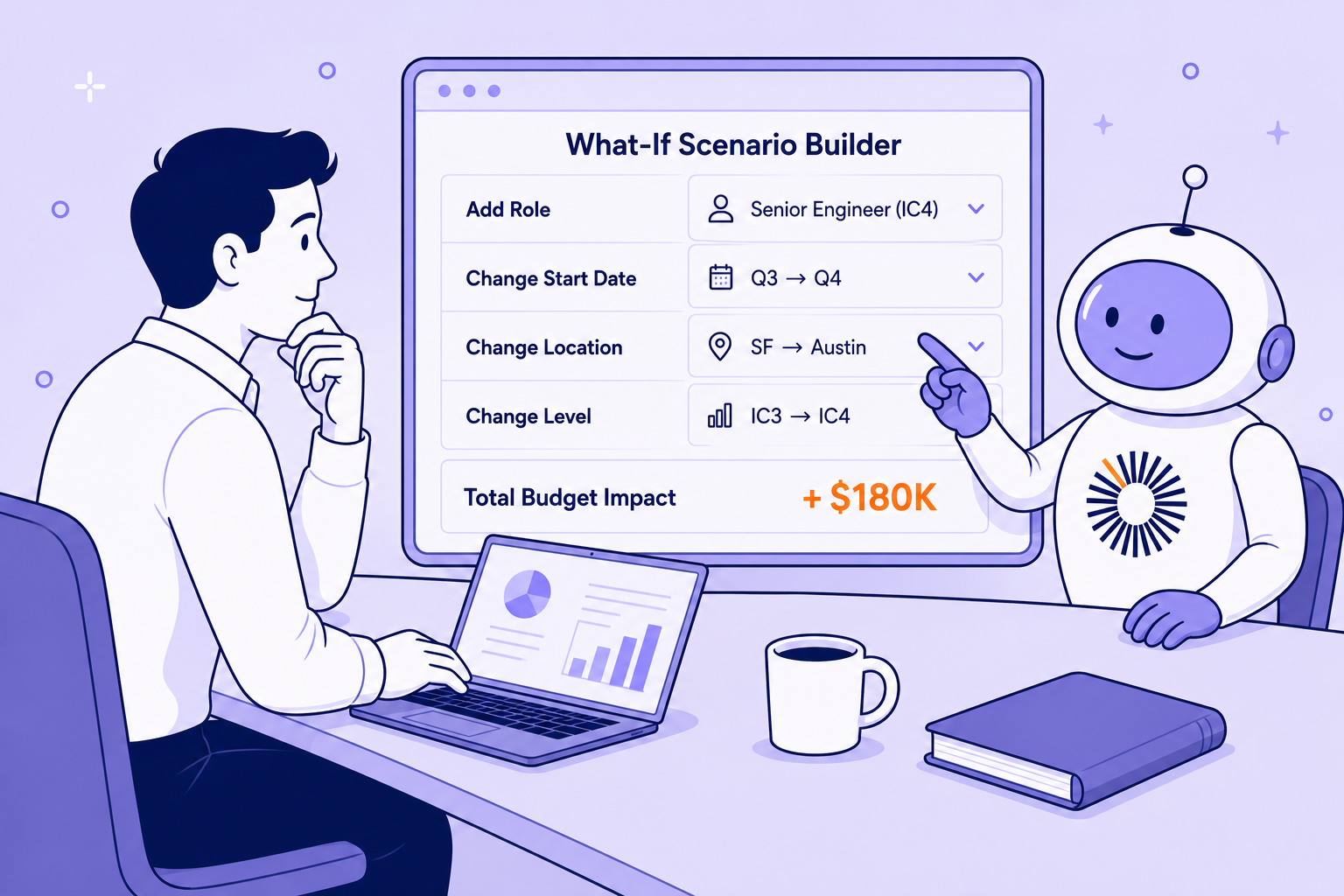
Scenario planning lets HR answer the executive's what-ifs in minutes: cutting contractors, moving roles to another geography, or taking a percentage off each level. With those scenarios ready, I can walk into the cost conversation with options instead of a single list.
Price every late add against next year's run rate
A role added late in the year looks cheap. It isn't. A go-to-market FP&A leader at a large public software company explained the pattern: "They add it two weeks before the end of Q4. Well, technically, that's really easy to solve for this year, but next year, that's going to add to our run rate."
A People operations lead at a healthcare analytics software company described their check. Every role, backfill, and net new request is assessed on business need, alongside actual headcount numbers. "We want to make sure we're not hiring a hundred people because we don't need a hundred people."
Run on one number everyone trusts
Discipline breaks down when Finance, HR, and Talent each hold a different number. Greenhouse tracked headcount across at least five systems before moving to TeamOhana. Today all three teams work from one number, and reconciliation takes 1 to 2 hours a week instead of roughly 60 hours a month.
At Rad AI, the same discipline supported growth. Will Barnett, Head of Talent, made the economic case: "If we make one mis-hire, that's potentially hundreds of thousands of dollars a year." Rad AI's new CFO later told him it was one of the tightest headcount models he had seen at a company of its stage.
How do you make the case for responsible growth to your executive team?
Lead with what it protects. Executives often hear "discipline" as slower hiring. Responsible growth means the company can keep hiring through a bad quarter because it knows exactly what it can afford. Bring two things to the next planning conversation: the run-rate impact of every open and planned role into next year, and a ready scenario for a downside quarter with the trade-offs already priced.
The next RIF is decided long before it's announced
Markets will keep moving, and some RIFs will come from shocks nobody saw. What HR controls is whether the next one is a surprise. That control starts with the hiring decisions in this year's plan.
See responsible growth in action. Watch a backfill go from departure to decision in a 20-minute demo. Book a demo.
Take control of your headcount spend

Responsible Growth and Layoff Prevention FAQs
Simplifying TeamOhana: your questions, answered.
Many layoffs trace back to hiring decisions made in a good year and priced against a best-case forecast. The cost of those hires lands in the following year, when revenue or funding may not keep pace. Not every reduction in force starts with over-hiring, since some come from demand shocks, but the hiring plan is the part HR can control.
Responsible growth is hiring against a plan you can defend whether the next year goes up or down. Every hire, backfill and late-year add is treated as a deliberate decision and priced against next year's run rate. It lets a company keep hiring through a weak quarter because it knows exactly what it can afford.
Glassdoor studied 304 layoffs at 197 companies and found active disengagement rose 26% afterward, while job hunting among remaining employees rose 40%, disproportionately among key talent. It estimated the first-year cost across those companies at $20.8 billion. Its later research found sentiment among remaining employees took more than two years to recover.
HR can prevent many future layoffs by building discipline into hiring decisions made today. Four habits help: treat every backfill as a decision, model potential cuts before they are needed, price late-year hires against next year's run rate, and run Finance, HR and Talent on one trusted headcount number.
No. A departure is the most common moment a company adds cost without a fresh decision. Reviewing each backfill and deciding whether to refill, repurpose or absorb the role keeps spend tied to real business need. Cedar surfaced more than $1.5M in headcount spend by making that change.
A role added a few weeks before year end costs very little in the current year, so it looks cheap. Its full salary and benefits then land in next year's run rate. Pricing every late add against next year's budget shows its true cost before the approval is made.
A reduction in force built in a week usually produces worse decisions than one modeled in advance. Scenario planning lets HR and Finance compare options such as cutting contractors, moving roles to another geography or reducing each level by a percentage, with the cost of each already calculated. Leaders can then walk into the conversation with options rather than a single list.