Conversational Workforce Intelligence
Your on-demand AI workforce analyst
Meet Teemo, TeamOhana’s AI Agent. Ask workforce questions and get instant answers on headcount, hiring, org structure, cost, and more.
A system of action where work gets done
Teemo makes strategic planning continuous. It transforms static annual cycles into an always-on system for faster decisions.
.svg)
Get instant answers, without the report queue
Teemo can answer any question, so you can check on things like open roles, view attrition, compare reporting lines, and more in seconds.
.svg)
Catch issues before they hit your plan
Teemo surfaces budget overages, incorrect titles, pending offers, and other issues so teams can fix problems before they start.
.svg)
Find what’s driving delays and risk
Teemo proactively shares critical insights so you can see trends, spot retention issues, and identify where hiring is slowing.

Test scenarios before you commit
Teemo models hiring timelines, compensation changes, and team structures so you can understand the impact before making a move.
.svg)
Move approvals forward with confidence
Teemo updates plans, reallocates headcount, and loops in the right people only when their judgment is required.
Workforce planning, without the report queue
Teemo translates your questions into queries against your live TeamOhana data. Then helps you refine the answer through conversation.
A conversation with your workforce data
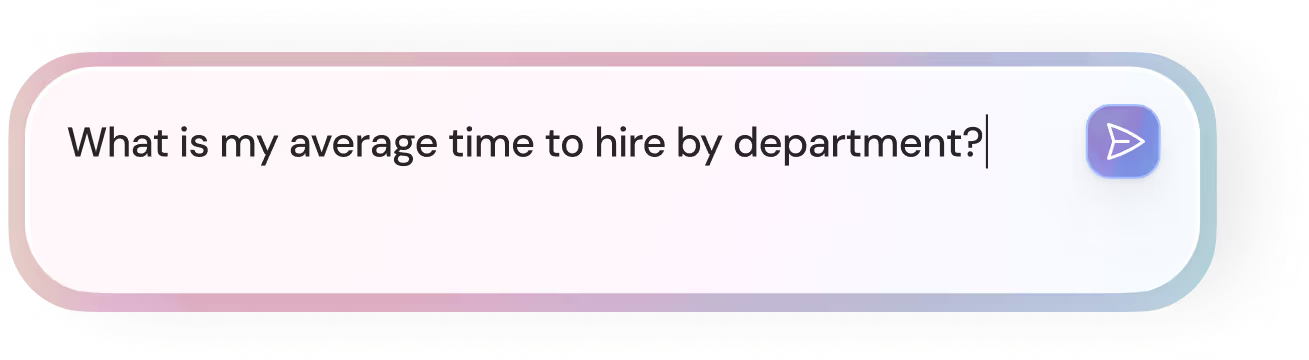
Start with a simple workforce planning question. Teemo returns results from your live TeamOhana data.
.svg)
Teemo queries your live data
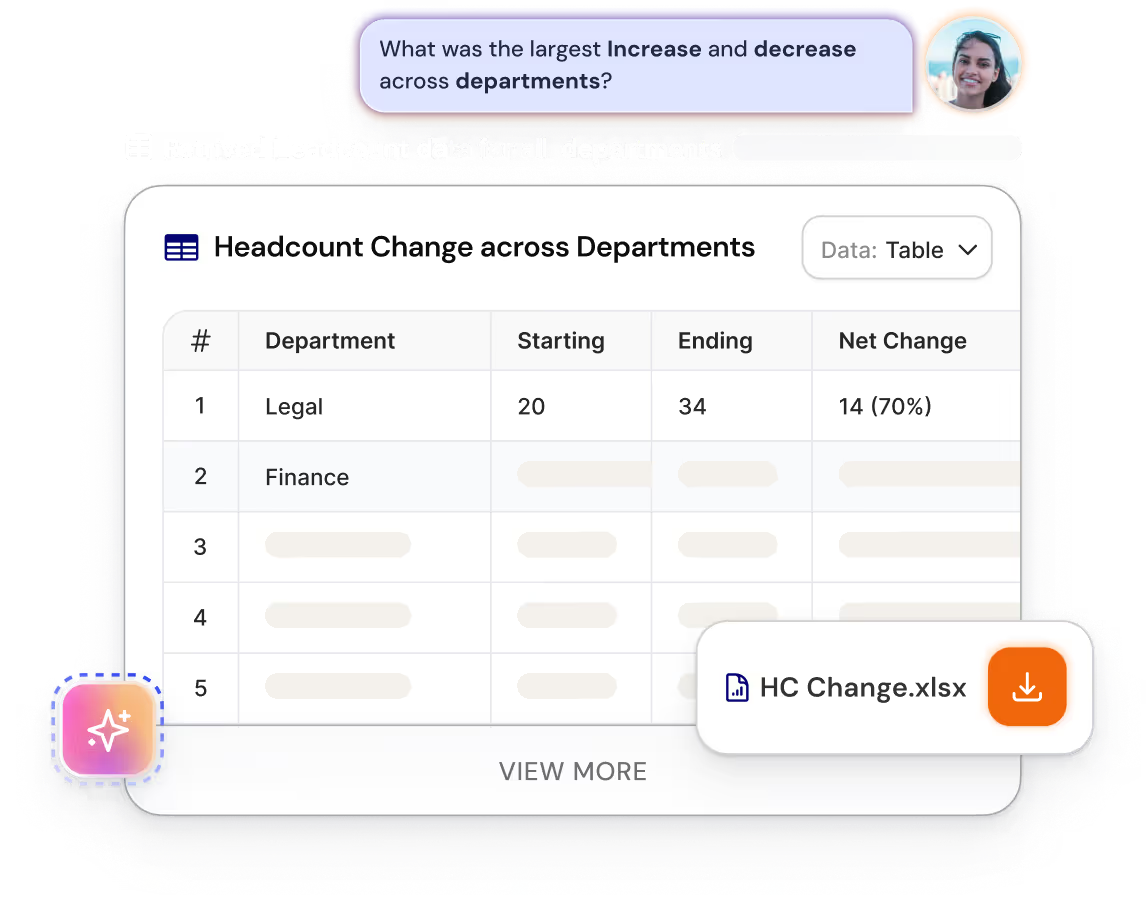
Behind the scenes, Teemo translates your question into a query and returns a table, chart, or summary.
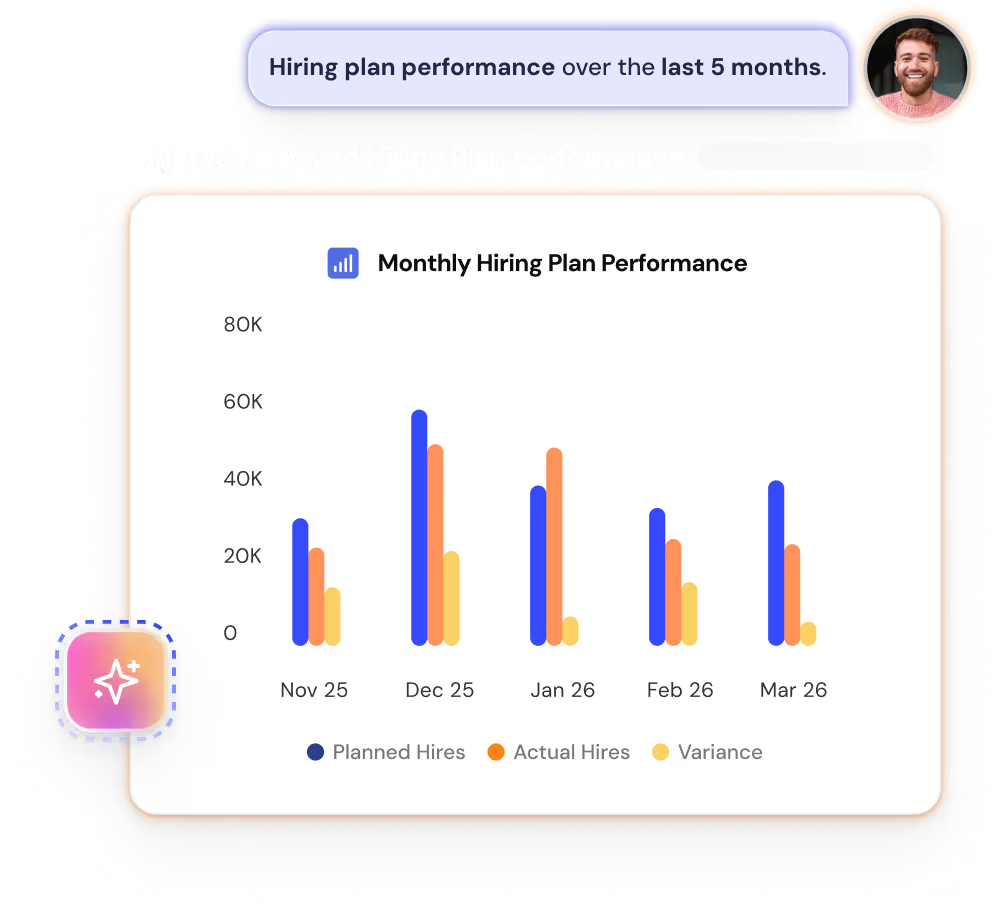
Refine the answer with follow-ups
Drill down by team, role, level, manager, location, or time period until you get exactly what you need.
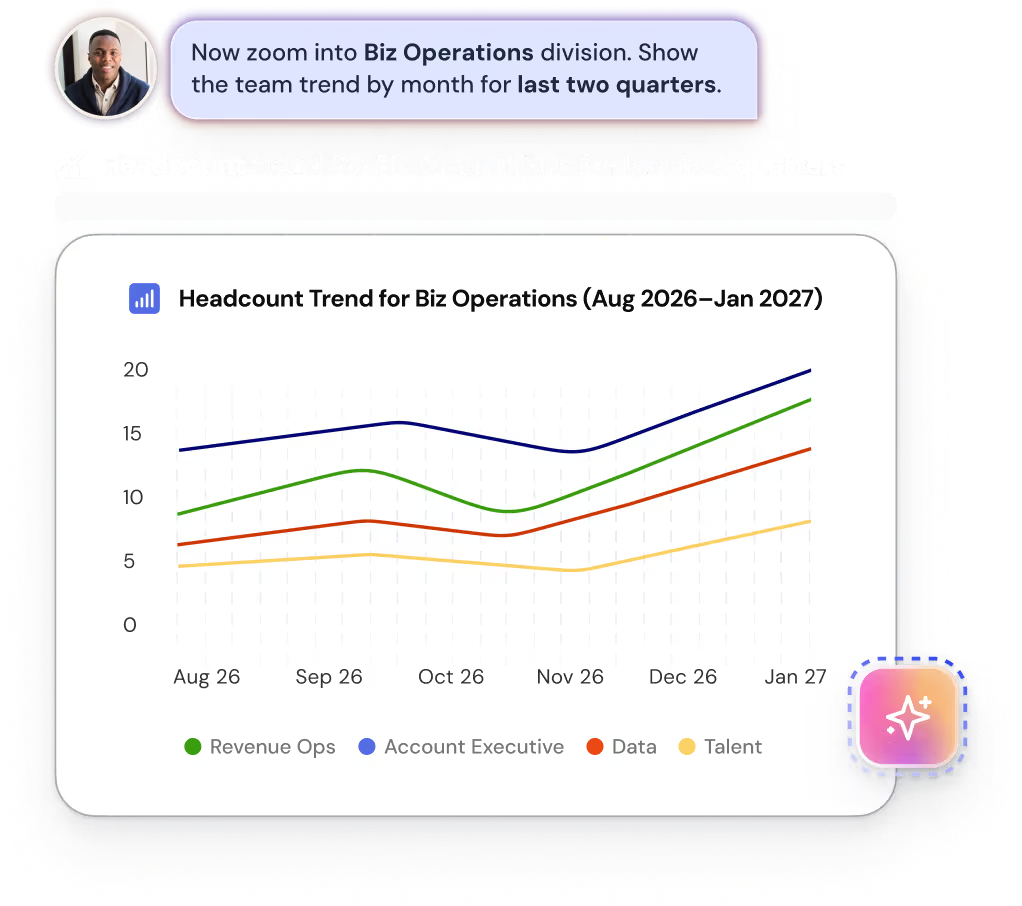
Built for exploration, not rigid reports
Teemo is designed for fast insight and flexible analysis. For repeatable reporting, use TeamOhana’s standard reports.
.svg)

“With Teemo, we won’t be waiting on reports or stitching together spreadsheets. We’ll get real-time answers on headcount, hiring progress, org structure, and cost so we can move faster with confidence.”
— Tommy Hansen, Senior Director of Recruiting
.avif)

“If I knew this tool was available when I first started four years ago, I would've said just do it right away because it'll just save you a lot of time and energy going forward.”
— May Lee, head of corporate finance


“I’m excited by where TeamOhana is taking workforce planning and intelligence. Teemo feels like a practical step forward that helps teams not just speed up tasks, but improve the quality of decisions.”
— Michele Yoshihara, Senior Manager, Talent Planning
.avif)
.svg)
FAQs for Teemo AI Workforce Planning
Is Teemo right for my team?
Teemo is TeamOhana’s AI Agent for workforce planning. It helps teams explore headcount, hiring, org structure, and workforce cost using natural language. Instead of building dashboards or pulling spreadsheets, you ask questions and Teemo returns answers from your live TeamOhana data.
Teemo interprets your workforce planning question and converts it into a query against your TeamOhana data to return an answer. You can refine results through follow-up questions, like a conversation with a workforce analyst.
AI workforce planning uses artificial intelligence to help teams forecast headcount, track hiring progress, understand org structure, and model cost impact faster. The goal is to move from questions to planning decisions without manual reporting or spreadsheet-heavy workflows.
Common questions include: “How many open roles do we have by department?”, “Approved vs filled headcount by team?”, “Which roles are past due?”, “What changed since last month?”, and “What is our hiring progress this quarter?” Teemo works best when you start broad, then narrow with follow-ups.
How Teemo powers AI workforce planning?
Data orchestration connects workforce signals across systems like HRIS, ATS, payroll, ERP, and planning so teams don’t rely on spreadsheets and exports. With orchestration, workforce planning starts from one aligned source of truth instead of mismatched data pulls and manual reconciliation.
A workforce context graph is a living map of your org’s structure and context, such as roles, cost centers, compensation, requisitions, reporting lines, and history. It helps AI understand the “who, what, and why” behind workforce questions so answers are more contextual and useful.
Agentic workflows turn workforce planning intent into guided next steps. That can include drafting plans, preparing scenarios, routing approvals, and prompting updates across teams. The goal is to help decisions get implemented with the right guardrails and human review where needed.
Workforce planning observability means monitoring for drift, anomalies, and policy risk over time. Instead of finding issues at quarter close, observability highlights what changed, what it impacts, and what to review next, so teams catch problems earlier.
Teemo is built for FP&A leaders, workforce planning teams, People Analytics, HR Ops, and Talent Ops. It’s especially valuable when Finance and HR need shared answers on headcount, hiring status, and workforce cost without waiting on report queues.
Teemo can answer questions using standard workforce and hiring data in your TeamOhana account, such as employee attributes (role, level, team, manager), headcount and open roles, hiring status and key dates, backfills vs net-new, and cost or compensation data where available. Access depends on configuration and user permissions.
Custom fields and Budget Envelope-related data may require enablement. If those fields are not available out of the box in your instance, your TeamOhana account team can help configure access so Teemo can include them in analysis where appropriate.
Teemo is designed for fast exploration and insight, not rigid, deterministic reporting. Results may vary in format, and sometimes you may need a follow-up question to refine filters or definitions. For standardized, repeatable outputs, TeamOhana’s traditional reports remain the best option.
Teemo reduces the need for ad hoc dashboards and one-off report requests by answering workforce questions on demand. It complements traditional reporting. Use Teemo for exploration, investigation, and quick insights, and use standard reports for recurring, structured reporting needs.
Teemo helps you compare planned vs actual headcount and hiring progress, then drill into the drivers by team, department, role, or location. Where cost data is available, it can also support analysis of the impact of hiring delays and workforce changes.
Yes. Teemo can help surface roles that are past due, stuck in process, or at risk based on hiring status and dates in your data. Teams can then break results down by department, recruiter, manager, or stage to find bottlenecks faster.
Trust, adoption, and time to value
Teemo respects TeamOhana permissions. If a user does not have access to certain data (like compensation visibility), Teemo should not expose it. Access depends on your configuration and what the user is authorized to view.
Start broad, then narrow. Ask simple questions first, then refine with follow-ups like “break it down by team,” “filter to this quarter,” or “summarize key insights.” Treat Teemo like a new analyst and guide it as you go.
Most teams get immediate value from answering common workforce planning questions like open roles, hiring progress, and headcount by org dimension. More advanced value comes as you expand available fields, align definitions, and build a consistent set of questions your teams repeat over time.
Data orchestration, Data observability, Decision traces, context graph is made up of micro decisions
Stop reconciling headcount. Start controlling it.
