AI spend is a workforce decision. HR should own it.
Finance and IT are already deciding how AI reshapes roles and budgets. This is the framework for HR to get in the room first, before the plan gets built without a workforce lens.
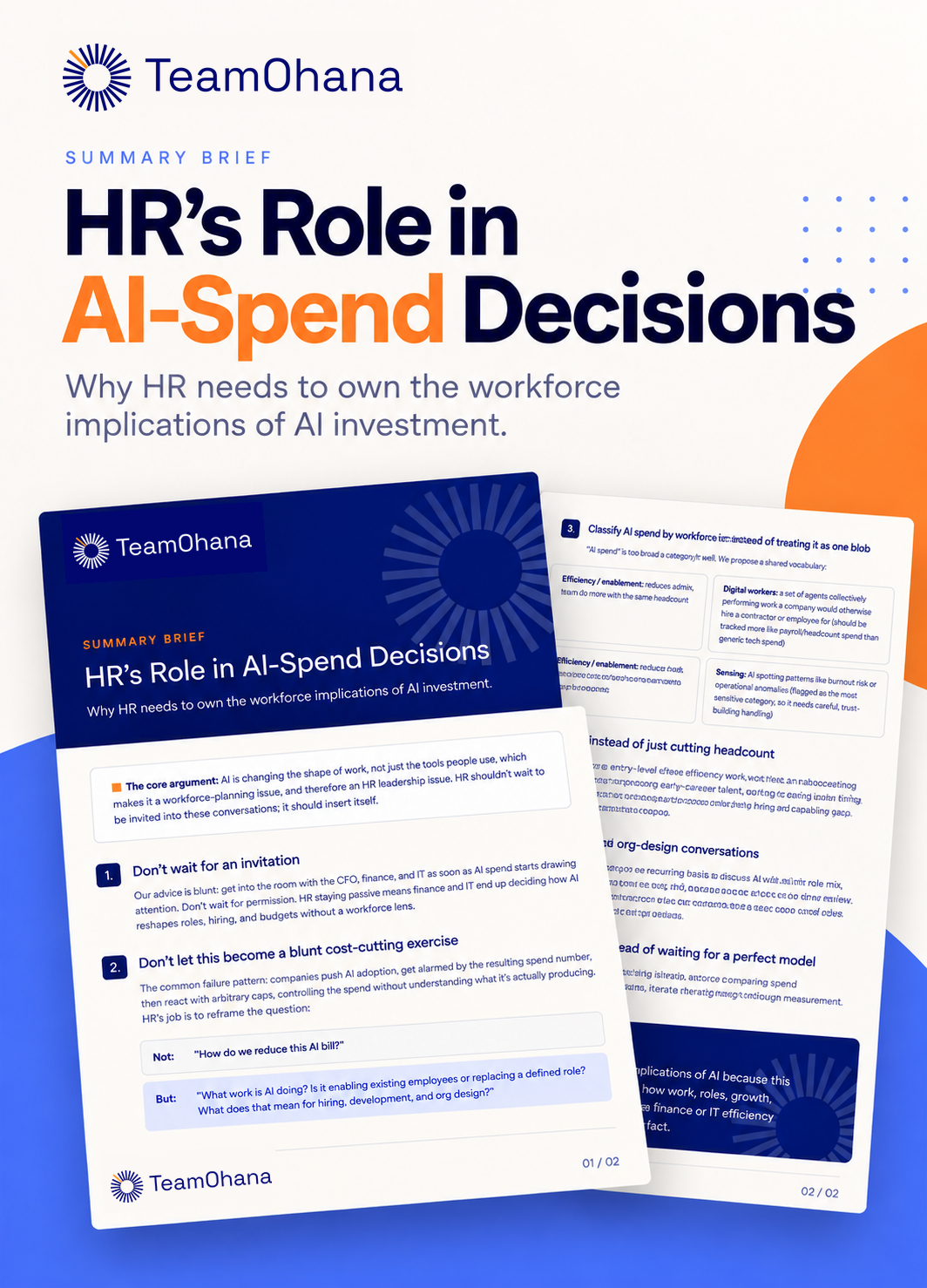
AI spend gets treated as a tech question until it starts reshaping who gets hired, what junior roles look like, and how teams are structured. By then, Finance and IT have already decided the org chart without HR in the room.
This framework is blunt: HR should not wait for an invitation into AI-spend conversations. It should insert itself, before "how do we reduce this AI bill" becomes the only question anyone is asking.
Inside, you'll find:
- Why HR can't wait for a seat at the table. How to get into the room with the CFO, finance, and IT as soon as AI spend starts drawing attention, instead of finding out after roles and budgets are already decided.
- The reframe that stops blunt cost-cutting. How to move the conversation from "how do we reduce this AI bill" to what the spend is actually producing, and what that means for hiring and org design.
- A shared vocabulary for AI spend, split into four categories: efficiency and enablement, digital workers, personalization at scale, and sensing, each with a different workforce implication.
- The talent-pipeline risk most companies miss when AI absorbs entry-level work: junior roles are often how people learn their craft, and cutting that hiring purely for margin risks a future capability gap.
- How to put HRBPs at the center of ongoing org-design conversations with functional leaders, not a one-time review.
- Why a perfect model isn't required to start. A simple baseline, like comparing departmental AI spend against headcount spend, is enough to act on now.
If HR is being asked to react to AI spend after Finance and IT have already made the calls, this framework is what changes that.
.avif)
Stop reconciling headcount. Start controlling it.