.svg)


.svg)


Integrations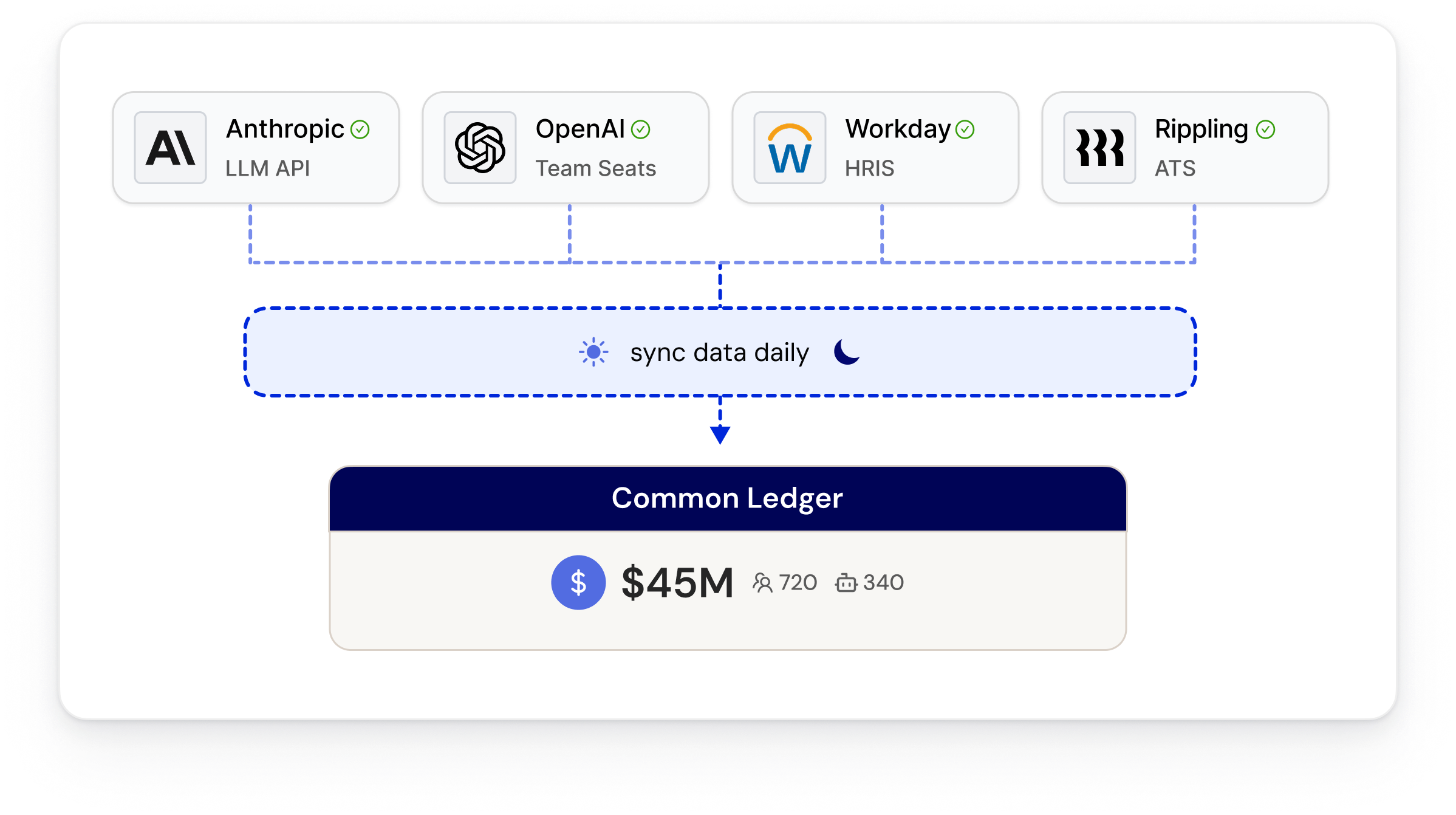
Two systems. One ledger.
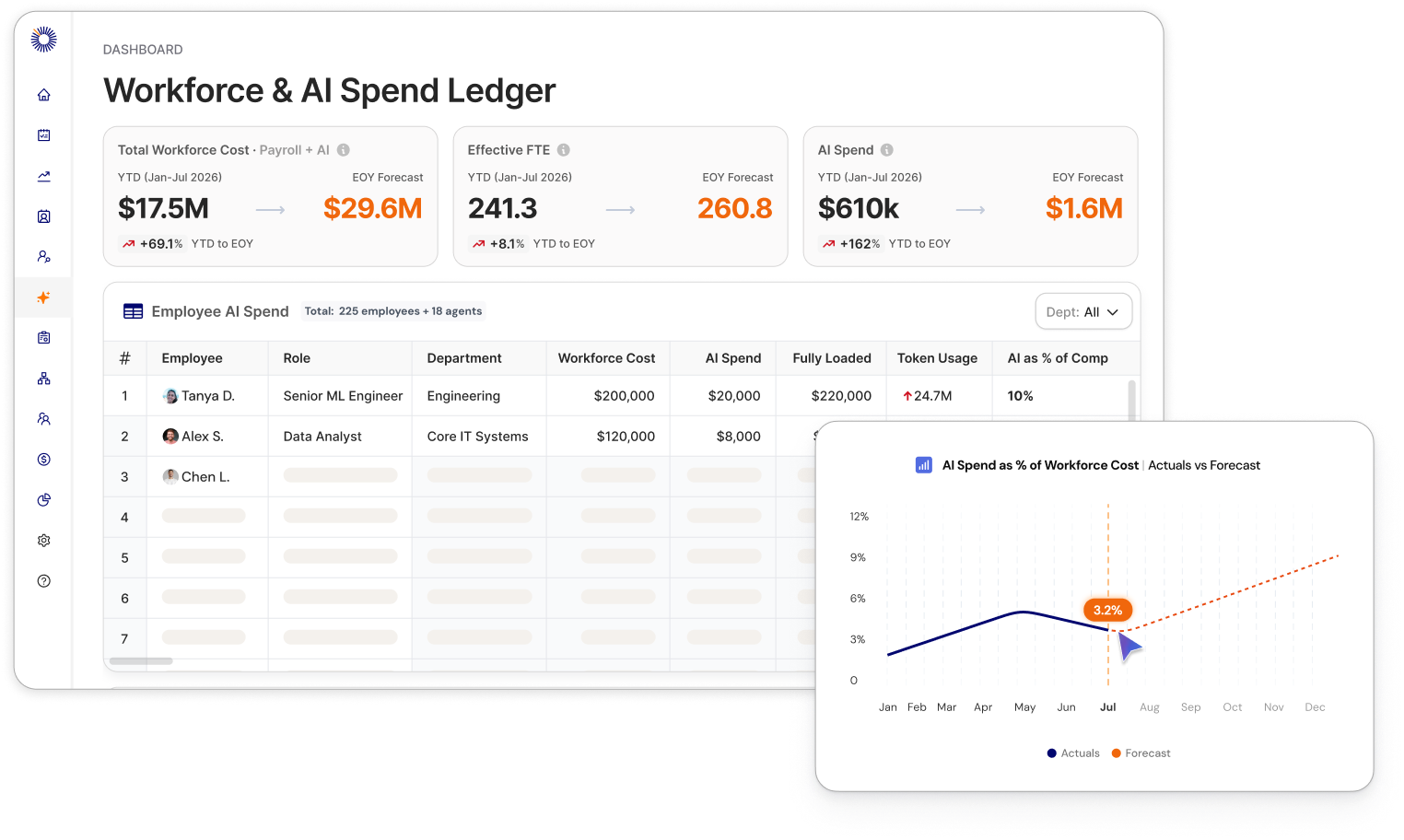
Token data tells you what was spent. The employee record tells you what it means. Only TeamOhana puts both inside the headcount plan. That is what makes fully loaded cost possible.
AI sources Anthropic
 OpenAI
 Cursor
 AWS Bedrock
 Glean
Glean
SC
Seat & contract importsWorkforce systems Workday
 BambooHR
 ADP
ADP HiBob
HiBob Rippling
 UKG
UKG
Every source. Even the ones that hide.
Your biggest spend sits where exports never reach: enterprise plans, agent cloud bills, contractor keys.
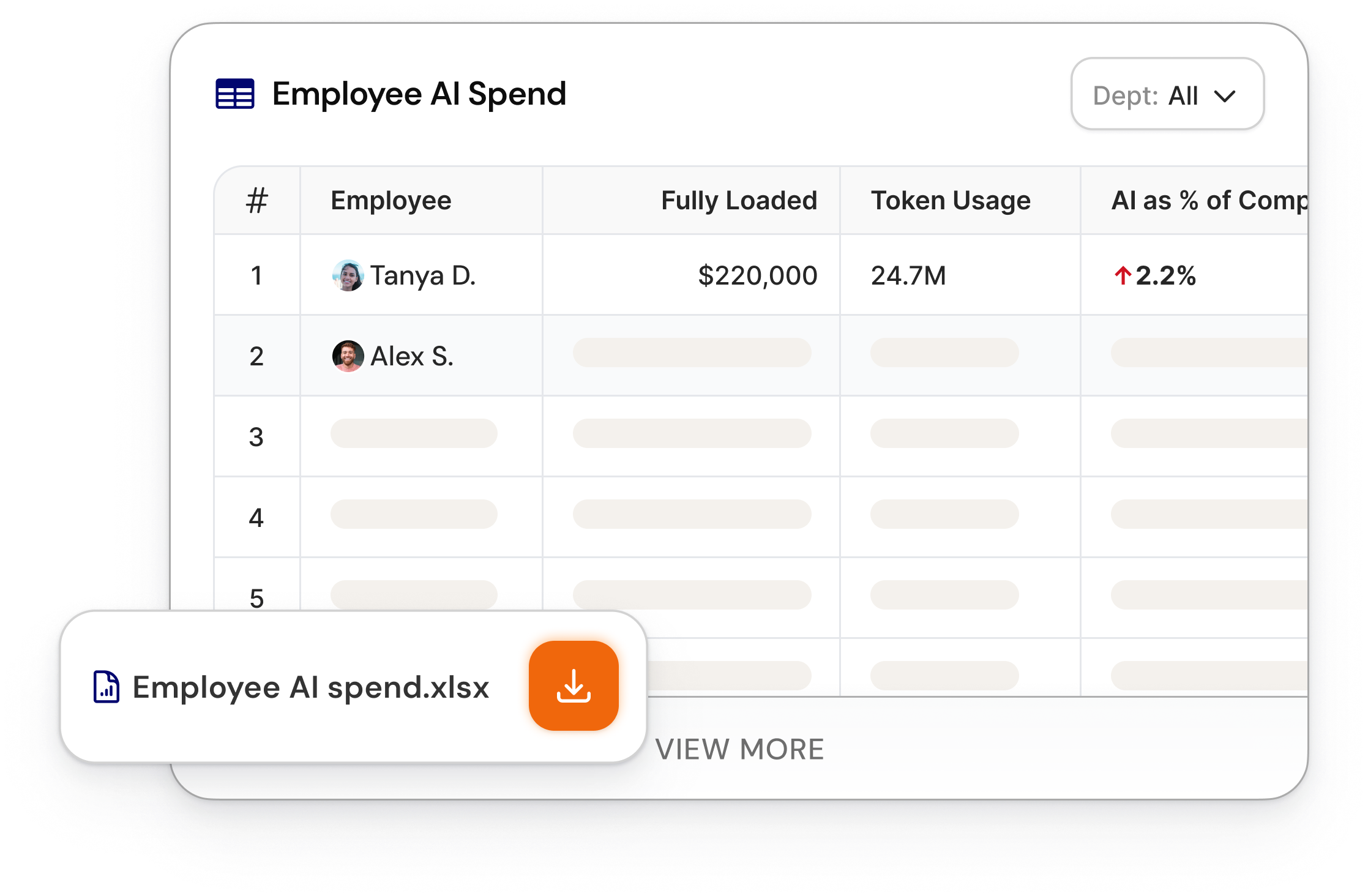
- Every dollar attributed to a person, a team, or an agent, with an owner to contact.
- No double counting. When two sources report the same dollars, the ledger keeps one clean number.
- Seats amortized daily. A license and an annual contract read as what they cost per day.
Catch what totals hide.
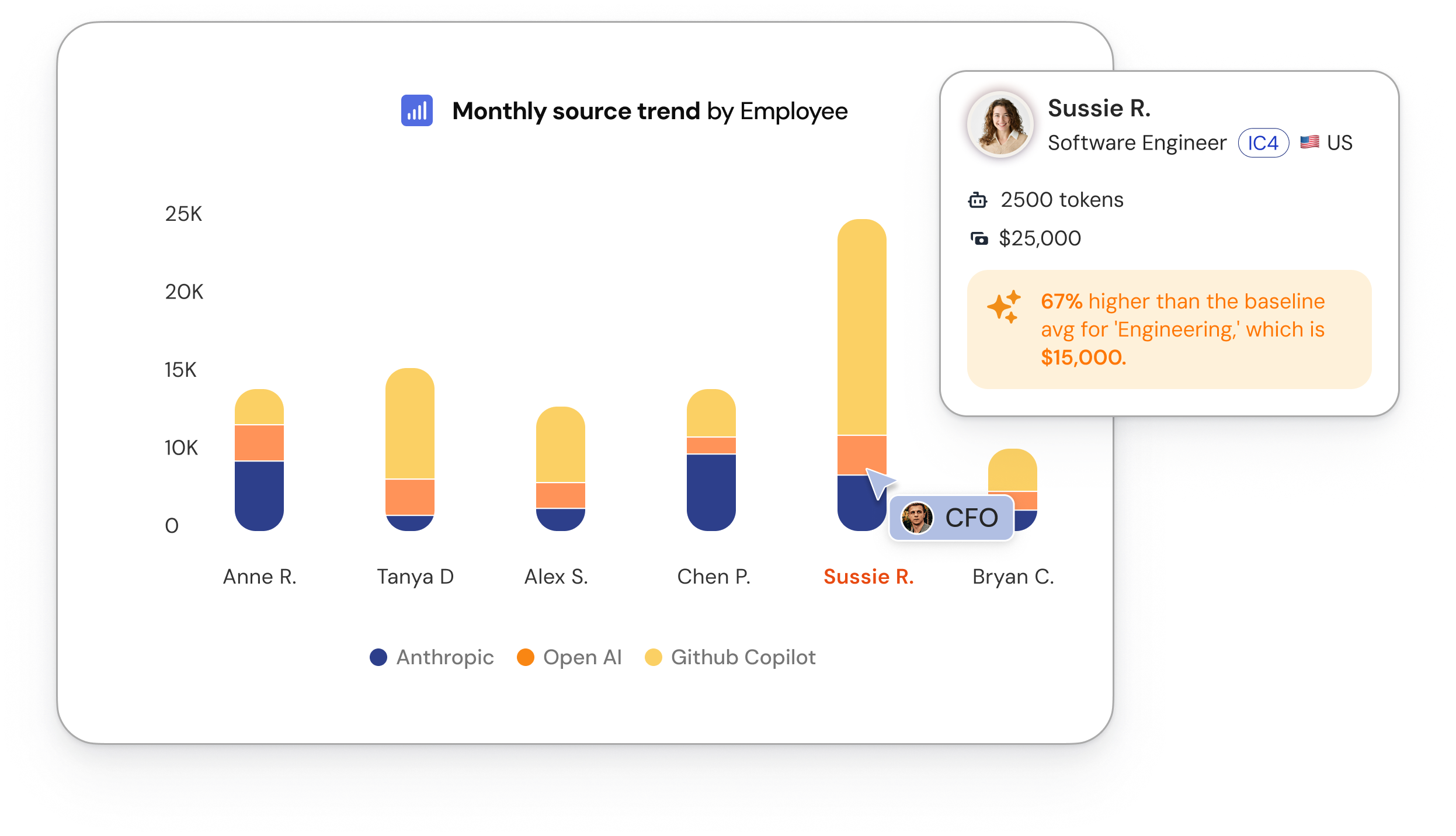
A team spending heavily can be a work style. One person spending ten times their team's baseline is a problem. Totals show neither. Baselines do.
- Outliers against team baselines, not raw totals, so a real anomaly surfaces in days.
- Model mix per person. See who runs the most expensive model on routine work.
- An owner on every key and agent, so a spike becomes a conversation, not a mystery.
Where finance plans both workforces.
Two workforces. One budget. No dashboard can do this.
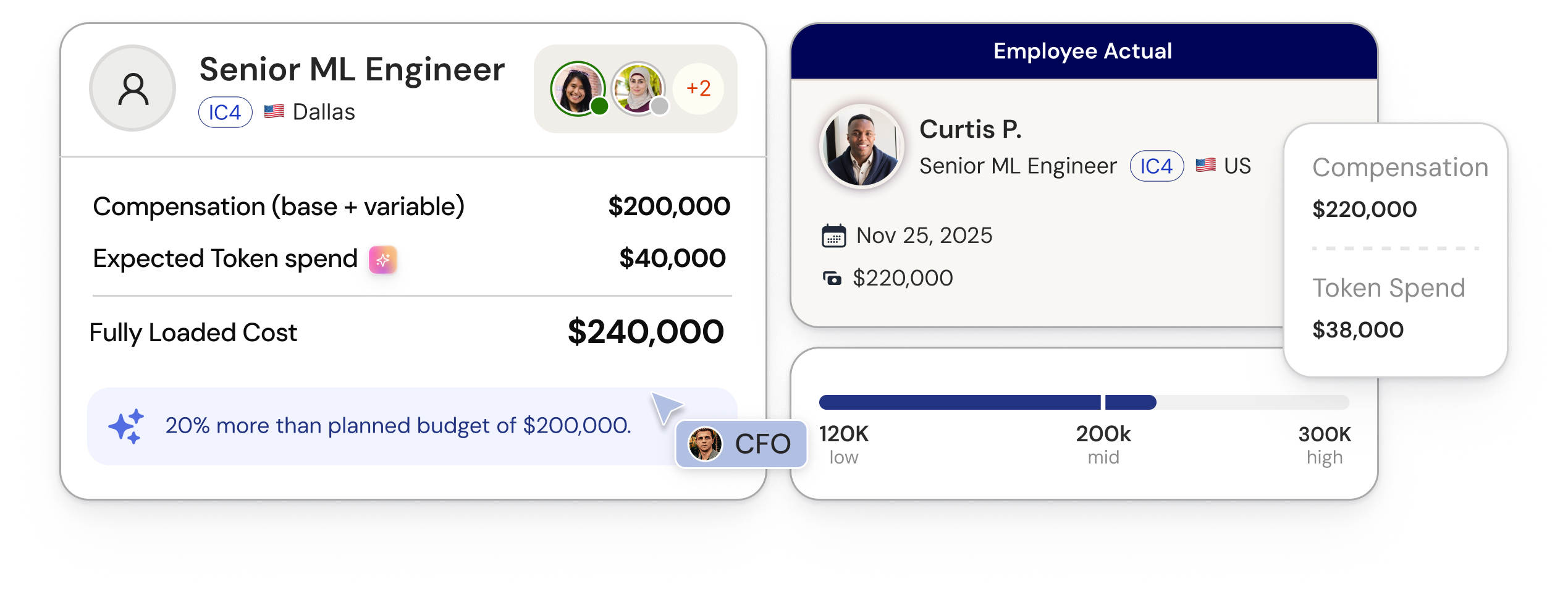
One budget. Three ways to spend
HireNew engineers, with token spend attached from day one.
FundMore tokens for the engineers you already have.
DeployStandalone agents, budgeted like the workforce they are.
See my fully loaded cost
20 minutes. Your own data.
Why not a free dashboardSpend dashboards are free now.
Spend dashboards are free now.
None of them can budget your next hire.
| Free spend tools | TeamOhana | |
|---|---|---|
| Spend by user and model | Yes | Yes |
| Employee-level attribution | Yes, per user | People and agents, with role, comp, and an owner |
| Fully loaded cost: comp + AI, one line | No | Yes, per employee |
| Forecast at the headcount request | No | Every planned hire, priced |
| The annual planning tradeoff | No | Hire, fund, or deploy from one budget |
Visibility is table stakes. The plan is the product.
New to TeamOhana? Read the founder's note on why we built this →
“The big thing is having all token spend in one place, so we can actually analyze what's going on.
A new engineer next year adds incremental payroll and incremental AI spend.
Budgeting for that is exactly where we're going."
Elisa Folden, Sr. Manager Business Systems

Annual planning is weeks away
Next year's plan is missing a line.
The missing line is AI spend. 20 minutes with your own data fills it before the plan locks.
See my fully loaded cost
Onboarding is limited ahead of planning season. Early access is open now.