Key Highlights
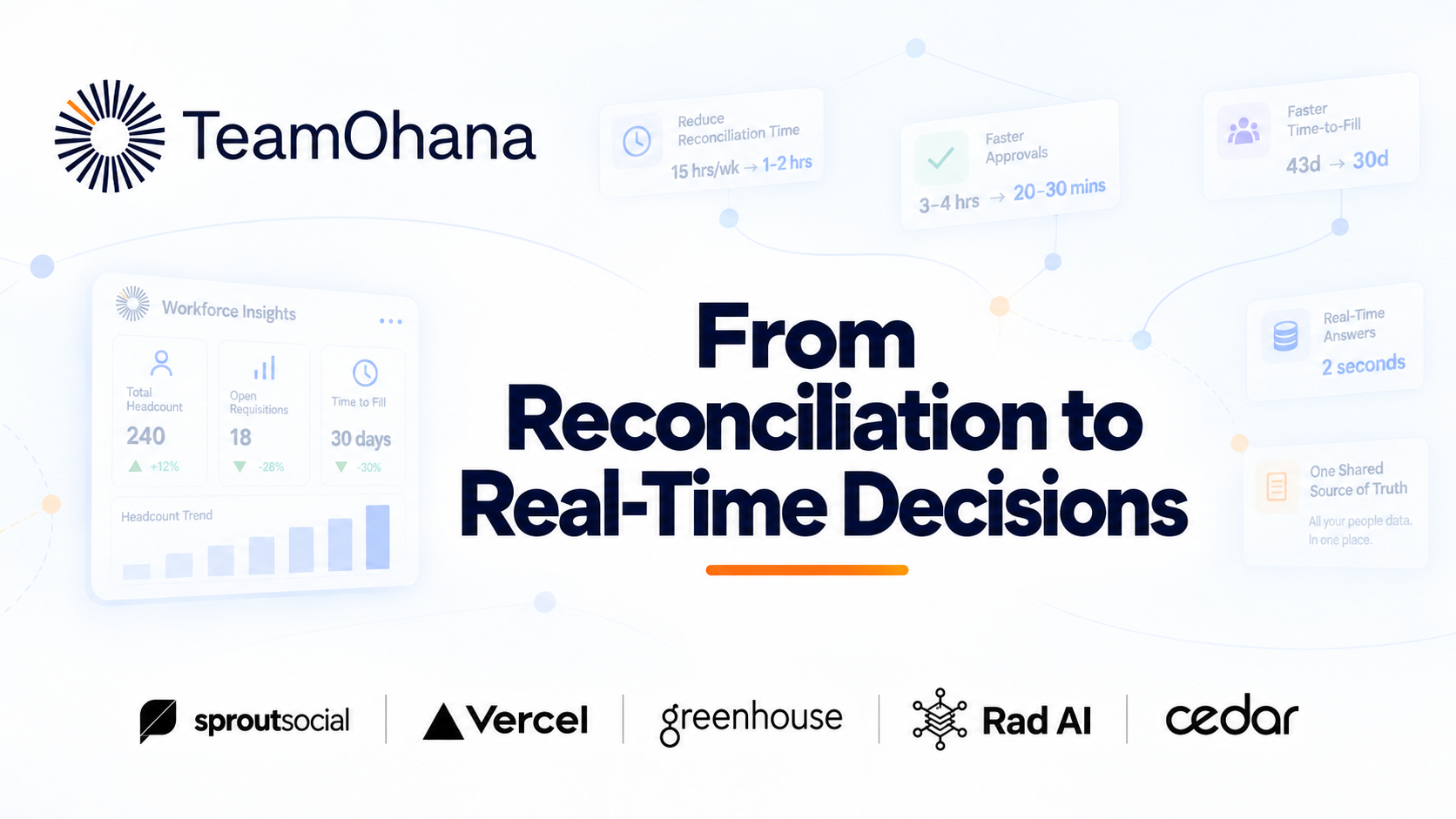
Workforce spend is 60 to 80 percent of operating expense, yet most companies still manage it like a tracking exercise. Leaders at Rad AI, Greenhouse, Vercel, Sprout Social, and Cedar explain what shifts when headcount moves from something you report on to something you actively govern. The result isn't cleaner spreadsheets. It's better decisions, faster reallocation, and millions in avoided misspend.
What you’ll hear
- Why headcount tracking is the wrong frame, and what "headcount engagement" replaces it with
- How Cedar reallocated $1.5M+ by governing every backfill decision instead of defaulting to auto-refill
- Why the wrong hire is more expensive than the unfilled role, and how to prevent both
- What Finance, HR, and Talent gain from operating off one trusted view instead of three disconnected ones
- How structured decision-making lets lean teams move faster on the roles that matter and kill the ones that don't
Takeaway #1: Tracking Doesn't Change Outcomes. Engagement Does.
Most headcount tools were built to show you what already happened. That's a rearview mirror on 60 to 80 percent of your P&L. The shift Will Barnett names is from tracking to engagement: leaders actively involved in every role decision, using the same data, at the moment the decision gets made. Engaged organizations don't just report better numbers. They make better ones.
Takeaway #2: Every Backfill Should Be a Decision, Not a Default
When someone leaves, most companies auto-open the req. Shubha at Cedar killed that default. Now every backfill triggers a conversation about business need, strategic fit, timing, and whether a duplicate role already exists. The result: at least $1.5M reallocated year to date, roles paused, roles pulled forward, and duplicates eliminated. The role you don't refill is often more valuable than the one you do.
Takeaway #3: The Wrong Hire Is the Most Expensive Line on the P&L
Will Barnett puts it plainly: nothing is more expensive than the wrong hire, or hiring for a team that wasn't aligned on the need. That cost never shows up as a single line item. It shows up as ramp time lost, backfill cycles restarted, and the strategic bet that didn't get funded because the wrong role took the budget. Governance at the moment of decision is what prevents it.
Takeaway #4: A Single Source of Truth Is How Lean Teams Stay Lean
Amy at Sprout Social frames it directly: a trusted, unified view of headcount is how you hold the line without flying blind. Amanda at Vercel adds the mechanism, structure and visibility lead to deliberate spending choices. Melissa at Greenhouse describes the personal impact, doubled capacity and time freed for strategic work. One dataset, seen by everyone who touches a hiring decision, is the foundation.
It's not cost savings. It's not headcount tracking. It's headcount engagement. An organization that is engaged with their headcount is making better decisions, and they're maintaining a stronger upward trajectory. — Will Barnett, Director of Talent, Rad AI